
Some of the most consequential secrets of the American century were not revealed in 1945.
They were revealed thirty one years ago next month in 1995.
That year, the United States government began publicly releasing material from a cryptologic program known as VENONA. For nearly half a century, VENONA had remained one of the most closely held intelligence successes in American history. It helped illuminate Soviet espionage networks operating inside the United States and Great Britain. It provided evidence that Soviet intelligence had penetrated parts of the Manhattan Project. It gave counterintelligence officers a partial, fragmentary, but extraordinary window into Moscow’s wartime and early Cold War collection effort.
Yet for decades, almost no one could talk about it.
That silence mattered.
Public debates over Soviet espionage in America were often bitter, political, and incomplete. Some accusations were exaggerated. Some were poorly supported. Some were true but difficult to prove without revealing sources and methods. VENONA did not settle every argument. Intelligence rarely does. But when the translations became public, historians gained access to a body of evidence that changed the conversation.
The story is not simply about spies.
It is about codebreakers, analysts, couriers, scientists, diplomats, case officers, and government officials making decisions under pressure. It is also about places: Arlington Hall in Virginia, wartime Washington, New York, London, Los Alamos, and the hidden geography of the atomic age.
That is why this series begins here.
VENONA is one of the bridges between intelligence history and travel history. It shows how world events move through real rooms, real streets, real laboratories, and real human relationships. For Tradecraft Travel, that is the heart of intelligence-history travel: not just asking what happened, but learning how to read the ground where it happened.
What Was VENONA?
VENONA was a long-running American and allied effort to exploit encrypted Soviet communications collected during the 1940s. The messages included traffic from Soviet diplomatic and intelligence channels. Some involved routine reporting. Others touched espionage operations, source handling, military information, political reporting, and scientific intelligence.
The project began under the U.S. Army’s cryptologic organizations and eventually became part of the larger American signals intelligence story. The National Security Agency’s VENONA collection remains the essential public starting point for the original translations and historical material.
VENONA was not like the famous Allied exploitation of Germany’s Enigma machine. It did not produce neat, daily access to an enemy’s communications. It did not give American officials a complete picture of Soviet intelligence. It did not reveal every source, every case officer, or every operation.
It produced fragments.
But the fragments mattered.
A cable might identify a Soviet cryptonym. Another might describe a meeting. A third might mention a scientific report. Years later, analysts might connect those pieces to an individual, a location, or a known investigation. The process was slow, uncertain, and cumulative.
That is one reason VENONA remains such a useful case study in intelligence work. It reminds us that intelligence is often less like opening a locked safe and more like reconstructing a shredded document after many pieces have been lost. Based on the declassified documents, many intercepted Soviet cables were published in classified channels several years after they had been collected.
The Secret That Stayed Secret
The first public release of VENONA translations came in July 1995, nearly 50 years after the first major breakthroughs. The release included messages related to Soviet efforts to collect information on the American atomic bomb project. Over time, roughly 3,000 translations were made public through additional releases.
That long secrecy was not accidental.
Revealing VENONA too early would have told Moscow that parts of its communications had been read. It also would have exposed how American cryptanalysts had done it. For intelligence services, that is often the core dilemma: revealing what you know may reveal how you know it.
The result was a long and uncomfortable gap between intelligence knowledge and public evidence.
Investigators could use VENONA to guide their work, but the decrypts themselves were often too sensitive to expose in court. The FBI could pursue leads, compare evidence, interview witnesses, conduct surveillance, and build cases from other sources. But VENONA itself had to remain hidden.
The FBI’s history of VENONA and American counterintelligence captures this point well: VENONA helped shift the Bureau toward a longer-term counterintelligence approach aimed at understanding, penetrating, and neutralizing hostile intelligence networks rather than simply reacting case by case.
That is a different kind of work. It requires patience. It requires restraint. It requires accepting that the most important intelligence may not be usable in the most visible way.
The Wartime Alliance Behind the Puzzle
VENONA also forces readers to look past the comforting public imagery of World War II.
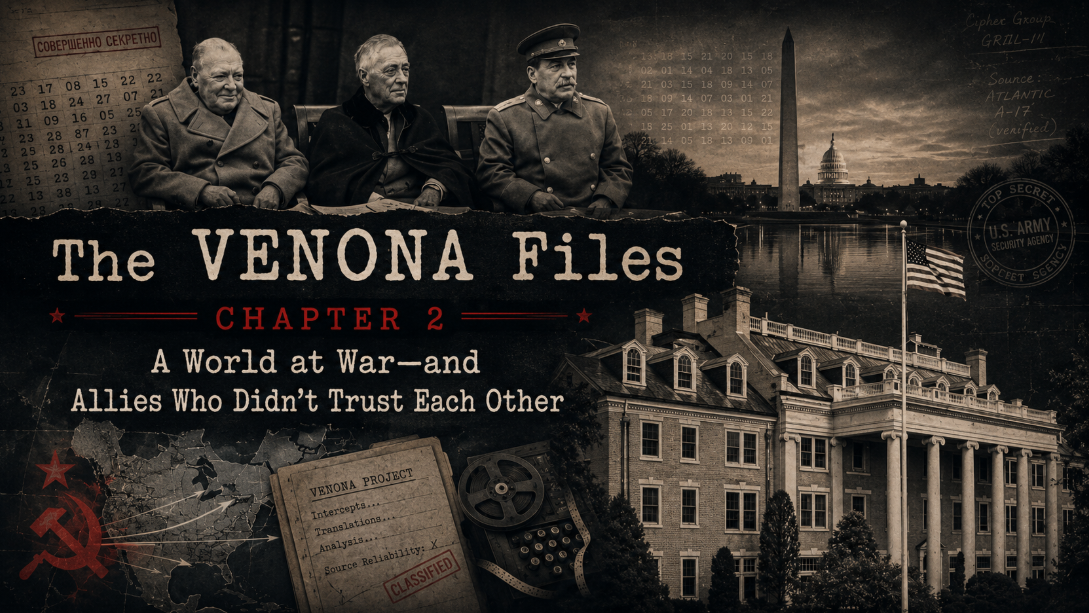
On paper, the United States, Great Britain, and the Soviet Union were allies. They fought Nazi Germany. Their leaders met at Tehran, Yalta, and Potsdam. American industry supported the Soviet war effort through Lend-Lease. Soviet forces bore an enormous share of the fighting against Hitler’s armies.
But wartime alliance did not mean strategic trust.
Stalin’s intelligence services continued collecting against their notional allies. From Moscow’s point of view, this was not a contradiction. It was statecraft. The Soviet Union wanted political, military, scientific, and economic intelligence wherever it could get it. The fact that the United States and Britain were wartime partners made them more important intelligence targets, not less.
That is one reason the atomic story became so urgent.
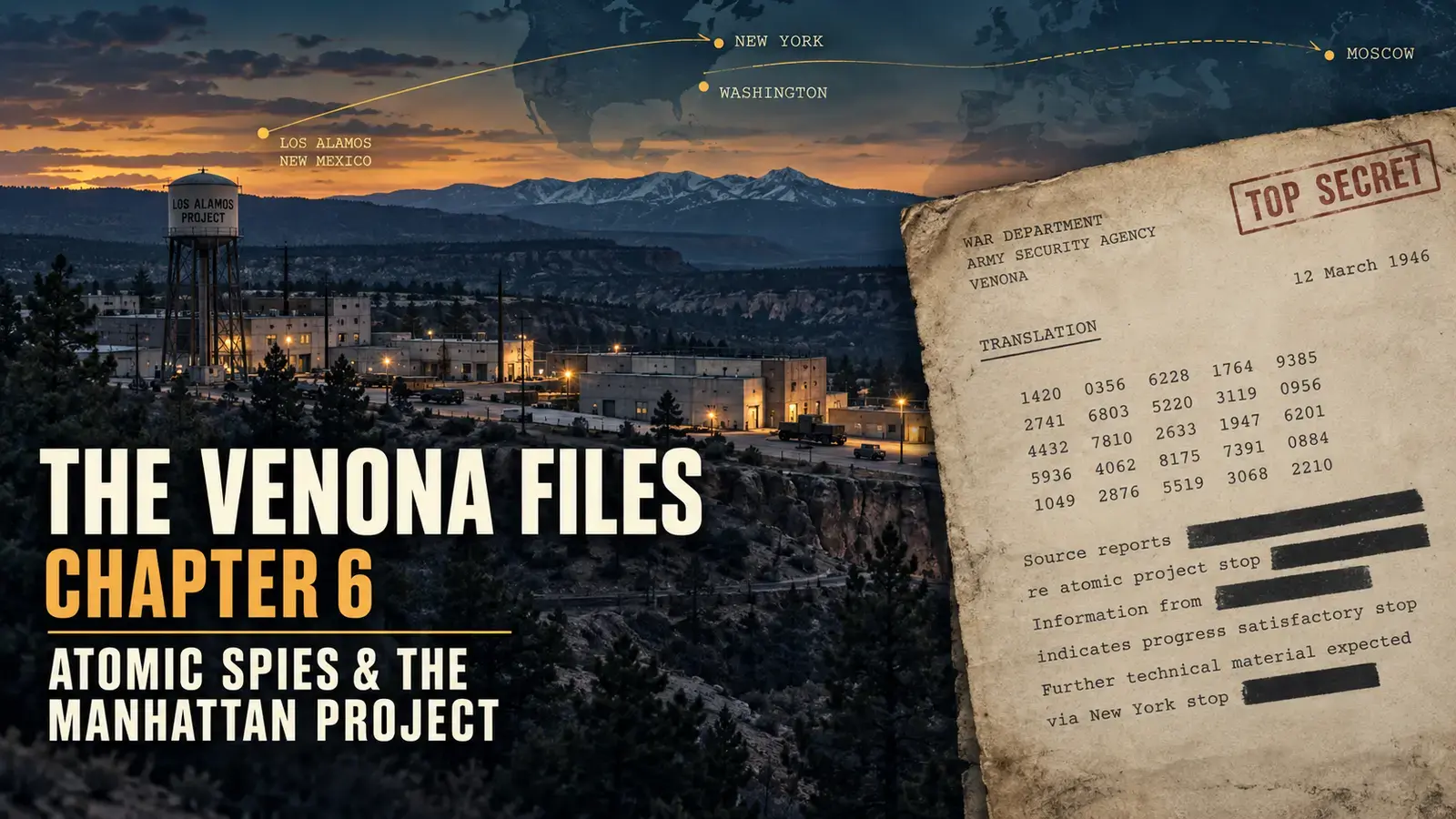
The Manhattan Project was not just another weapons program. It was the most consequential scientific and industrial secret of the war. The United States had gathered extraordinary talent, built enormous facilities, and created an entirely new kind of destructive power. If Soviet intelligence could shorten Moscow’s path to an atomic bomb, even by a year or two, the postwar balance of power would change.
That is exactly why VENONA matters to the later atomic spy story.
The story does not begin with a mushroom cloud in New Mexico in July 1945. It begins earlier, in the wartime networks, communications systems, and intelligence priorities that made atomic espionage possible.
Arlington Hall and the Work of Patience
The VENONA story also begins close to home for Tradecraft Travel: in northern Virginia.
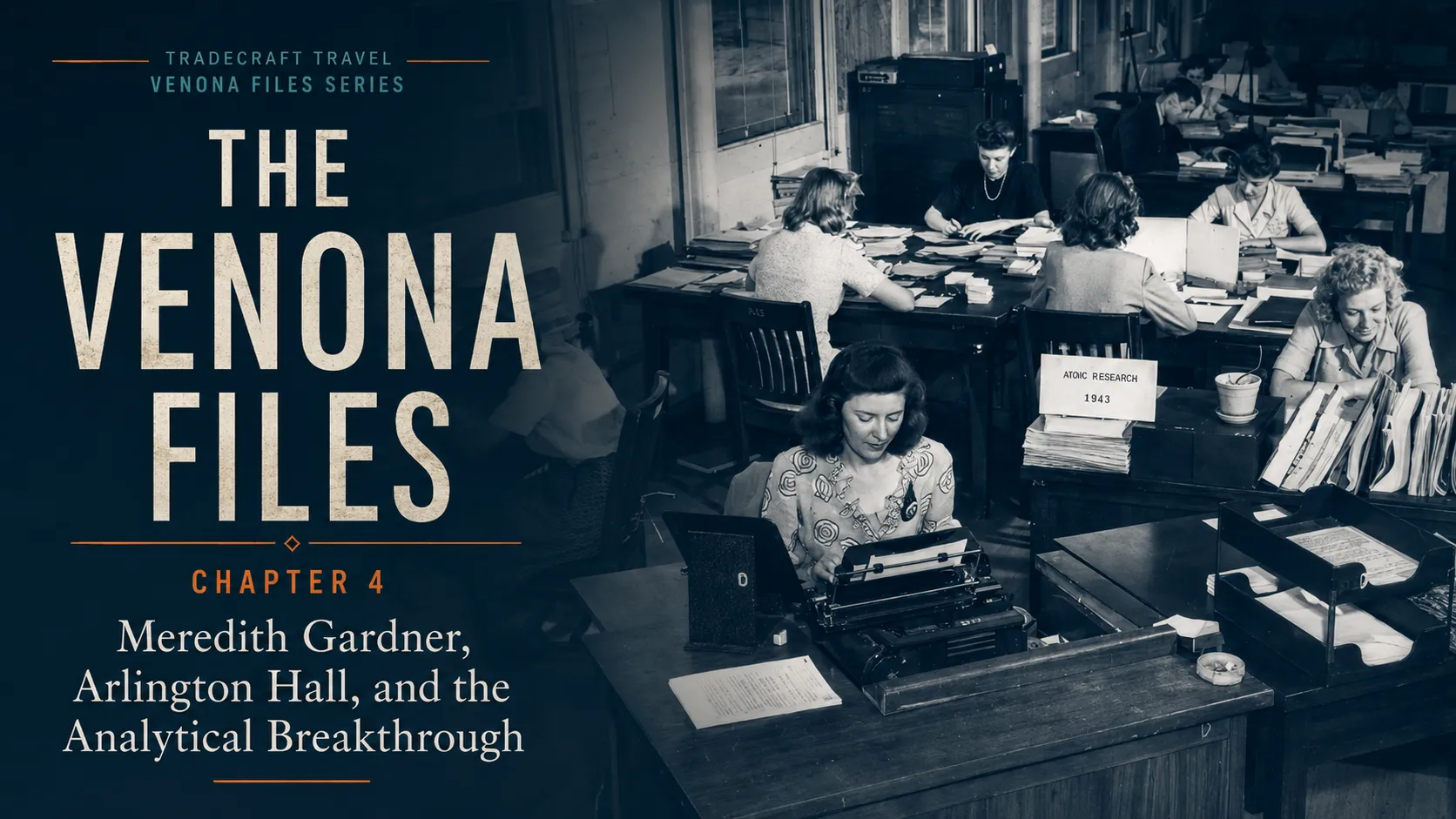
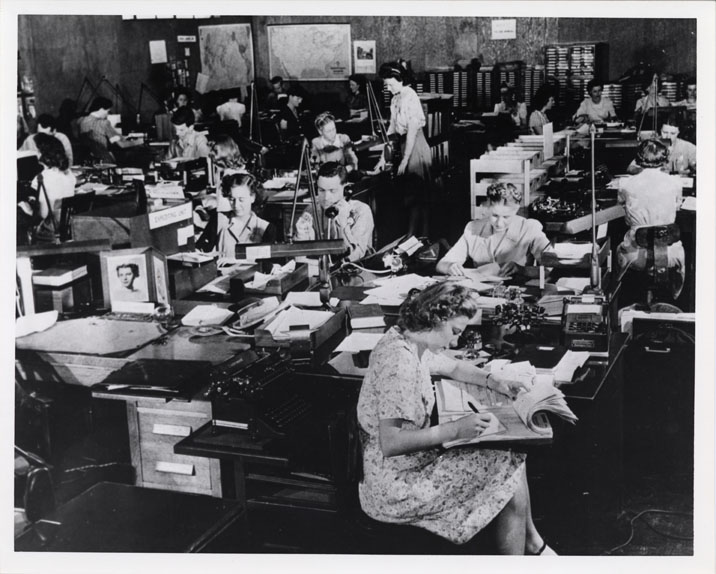
During World War II, Arlington Hall, a former girls’ school, became a major U.S. Army cryptologic center. Behind guarded fences, linguists, mathematicians, clerks, analysts, and cryptologic specialists worked through intercepted foreign communications. Much of their labor was anonymous. Much of it remained classified for decades.
One of the central figures was Meredith Knox Gardner, a gifted linguist who became one of the principal minds behind VENONA’s success. The NSA profile of Meredith Gardner describes his essential role in attacking the Soviet messages and reconstructing elements of the codebooks.
Gardner’s work was not cinematic. There were no chase scenes. No dramatic midnight exchanges. No single moment when the entire system collapsed.
Instead, progress came through small recoveries: repeated patterns, fragments of Russian text, likely phrases, code groups, message formats, and the careful comparison of one clue against another. A recovered word could lead to a phrase. A phrase could help identify a message type. A message type could point toward an organization or operation.
That is why VENONA is such a strong example of disciplined analysis.
Most real intelligence work is not theatrical. It is patient. It is often tedious. It depends on people willing to sit with uncertainty longer than most observers would tolerate.
Why the System Failed
At the heart of VENONA was a Soviet cryptographic mistake.
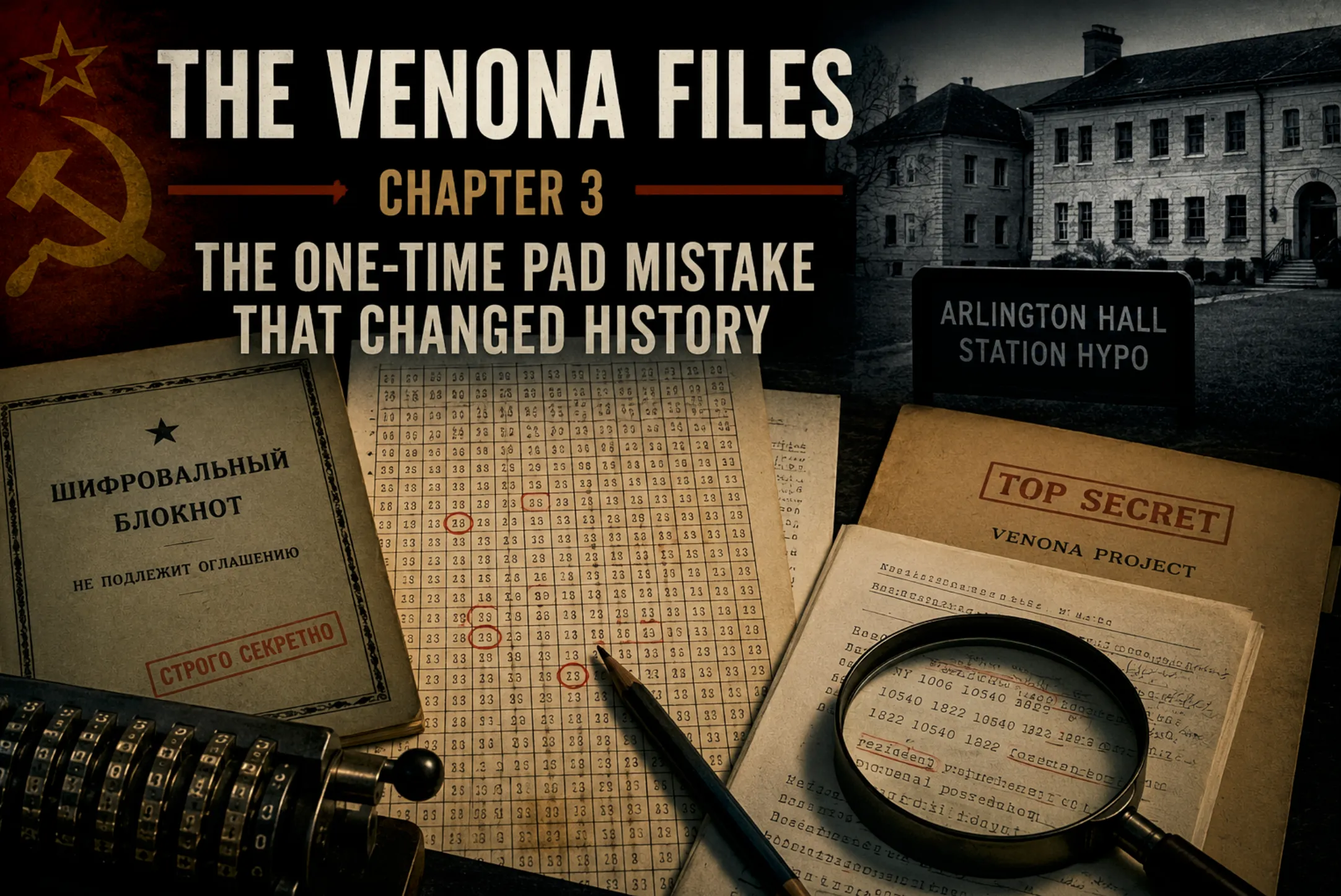
The Soviet Union used one-time pads, a method of encryption that can be mathematically secure if used correctly. The rule is simple but unforgiving: each page of random key material must be used only once, and then destroyed.
During the pressures of World War II, Soviet cryptographic production appears to have violated that rule. Some key material was duplicated. That did not make all Soviet communications readable. Most remained secure. But it created a small vulnerability inside an otherwise formidable system.
American analysts exploited that vulnerability over time.
The lesson is modern as well as historical. Strong systems often fail at the point where people, process, urgency, and quality control meet. The mathematics may be sound. The human system may not be.
That is one reason VENONA still resonates in an age of cybersecurity, encrypted communications, and digital intelligence. The underlying technology changes. The human factor remains.
What VENONA Revealed
VENONA did not reveal a single spy.
It revealed a system.
The decrypts showed Soviet intelligence operating through professional channels, using case officers, couriers, cryptonyms, clandestine meetings, source reporting, and careful compartmentation. The networks reached into government, science, industry, and political circles. Some sources were ideologically committed. Some were motivated by other pressures or relationships. Some cases remain debated. Others became central to the history of Soviet espionage in the West.
The CIA’s VENONA monograph remains one of the most important official studies of the subject, especially for readers who want to understand how the messages fit into the broader U.S. response to Soviet espionage from 1939 to 1957.
For the atomic story, the most important point is this: Soviet intelligence did not stumble into atomic secrets by chance. It collected against the Manhattan Project as a strategic priority. VENONA helped show the scale and seriousness of that effort.
This does not mean every public claim made during the early Cold War was correct. It does not mean every accusation was fair. It does not make the history simple. In fact, VENONA does the opposite. It complicates the story by giving us stronger evidence and more difficult questions at the same time.
That is usually what good intelligence does.
It does not remove the need for judgment. It demands better judgment.
Where This Story Lives on the Ground
VENONA is often treated as a document story: intercepted messages, decrypted fragments, archival releases. But it is also a place story.
It lives at Arlington Hall, where the puzzle began to yield.
It lives in Washington, where government agencies expanded rapidly during the war and became targets–often easy ones–for Soviet collection.
It lives in New York, where diplomatic cover, courier networks, political circles, and scientific connections intersected.
It lives in London and Cambridge, where British intelligence, wartime codebreaking, and Soviet penetration shaped the larger allied story.
It lives in Los Alamos and Santa Fe, where the atomic age moved from theory to weapon, and where human choices changed the strategic map.
Those places are why VENONA belongs inside Tradecraft Travel’s larger work on custom spy tours and intelligence-history travel. The goal is not to turn espionage into entertainment. It is to help travelers understand how history operated through streets, offices, laboratories, safe houses, embassies, and quiet conversations.
That is also the logic behind Dead Drops & Double Agents, Tradecraft Travel’s Central Europe Cold War journey through Berlin, Leipzig, Prague, and Vienna. The point is not simply to visit famous sites. It is to understand the terrain: who operated there, what pressures shaped decisions, and why the place mattered.
VENONA opens a different geography. It points toward the United States, Britain, and the atomic age.
Why VENONA Still Matters
Three decades after declassification began, VENONA remains one of the most important intelligence stories of the twentieth century.
It matters because it exposed part of a Soviet espionage network.
It matters because it reshaped how historians understood the Manhattan Project and early Cold War counterintelligence.
It matters because it showed the value and limits of signals intelligence.
It matters because it demonstrated that even fragmentary intelligence can change history when patient analysts know how to read it.
Most of all, VENONA matters because it reminds us that history is rarely visible all at once.
For nearly 50 years, one of the most important intelligence achievements in American history stayed hidden. Public arguments unfolded without the full record. People drew absolutist conclusions from incomplete information. Some mysteries remained unresolved because the most important evidence could not yet be shown.
Then, slowly, the messages began to speak.
Not completely. Not perfectly. But enough to change the story.
In the next chapter of The VENONA Files, we will turn to the world that made this possible: a wartime alliance built on necessity, not trust, and a Soviet intelligence service that never stopped collecting against its allies.
Related Tradecraft Travel briefings:
Custom Spy Tours & Bespoke Espionage Travel
Dead Drops & Double Agents
How Tradecraft Travel Built a Cold War Europe Spy Tour
Most Spy Tours Get the Cold War Wrong
Further reading:
NSA VENONA Collection
CIA: Venona — Soviet Espionage and the American Response
FBI: VENONA and the Maturation of American Counterintelligence
NSA: Meredith Gardner