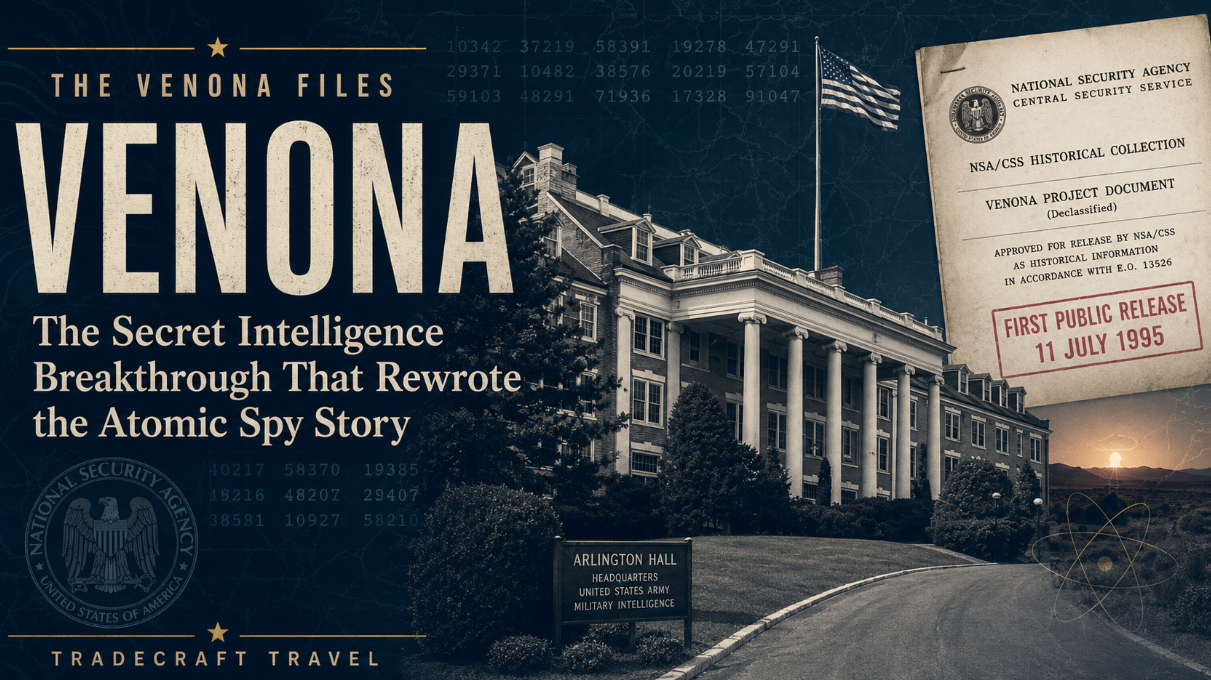

In brief: VENONA revealed that Soviet spy networks in America operated as connected systems—not as isolated agents. Soviet officers relied on recruiters, group leaders, sources, couriers, cutouts, and intermediaries across Washington, New York, and beyond. Analysts combined decrypted messages with defectors’ accounts, records, and surveillance to identify people and relationships.
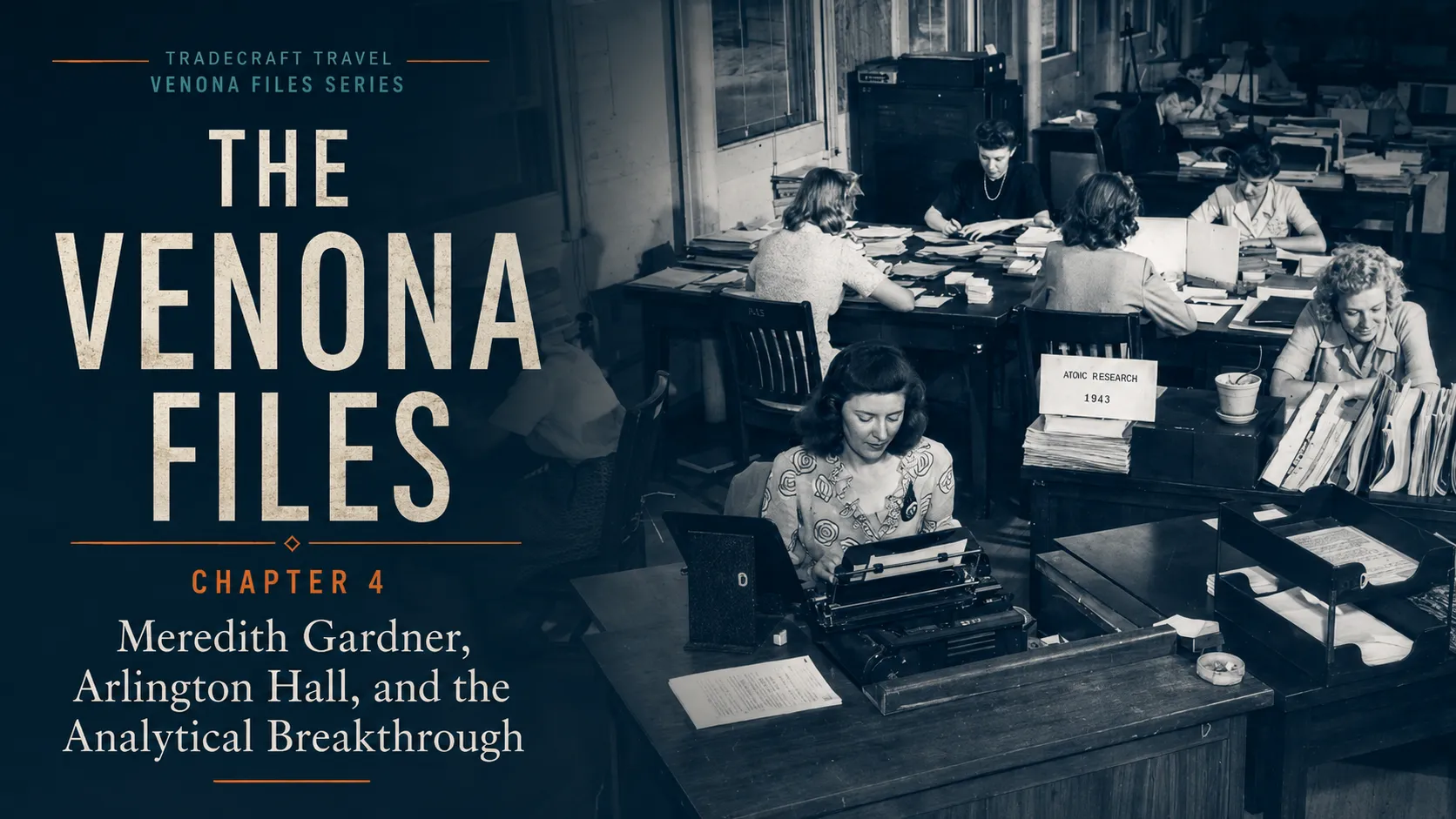
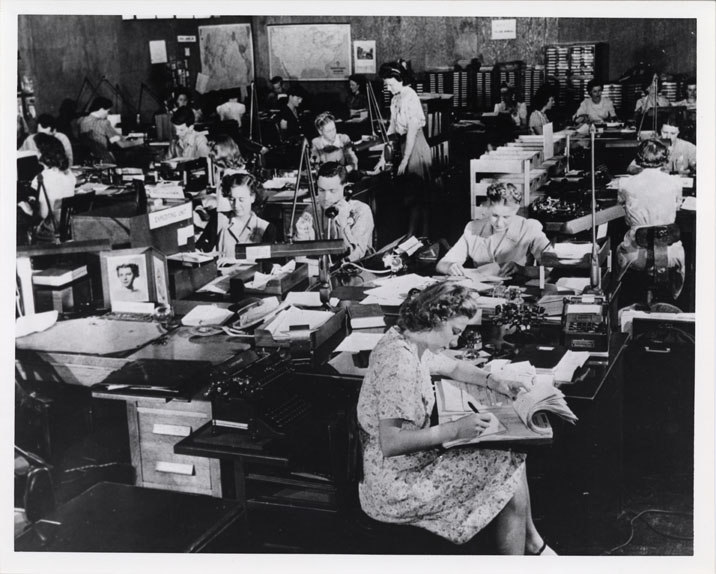
In Chapter 4 of The VENONA Files, Meredith Gardner and his colleagues at Arlington Hall turned partial cryptographic recoveries into fragments of readable Russian.
That achievement changed the problem.
The question was no longer only What does this message say?
It became: Who are these people?
The recovered traffic contained cover names, meetings, payments, reports, personal descriptions, operational complaints, and references to government offices. Some passages were clear. Others were damaged or incomplete. A cover name might remain uncertain for years. One message might suggest a relationship; several messages, a defector’s account, personnel records, travel, and surveillance might begin to establish it.
What emerged was not a neat roster of independent spies. It was a human system: Soviet officers, American recruiters, group leaders, sources, couriers, cutouts, safe contacts, and intermediaries connected to institutions across Washington, New York, and beyond.
The network—not the celebrity spy—is the real subject of this chapter.
Espionage was an organization, not a series of isolated betrayals
Popular history tends to remember a few names. That is understandable. A single defendant, defector, or dramatic confrontation makes for a cleaner story.
Intelligence services do not normally build operations around clean stories.
They build systems that move information while limiting exposure. One person may have access. Another knows how to recruit. Another collects documents. Another photographs them. Another carries film from Washington to New York. A Soviet officer receives the material, reports to Moscow, and gives instructions back through the chain.
Not everyone in that system performs the same function. Not everyone understands the whole system. Some participants may know that they are working for Soviet intelligence. Others may understand that they are helping a political cause without seeing the full operational structure. Some may begin in one category and move into another.
The official NSA history, The VENONA Story, describes several hundred named or cover-named people appearing in the traffic. It also notes that some Americans—including Jacob Golos, Elizabeth Bentley, and Gregory Silvermaster—occupied an ambiguous space between recruited agent and intelligence officer because they supervised or controlled networks themselves.
That distinction matters. Moscow did not have to manage every American source directly. Experienced local intermediaries could recruit, organize, collect, and pass material while Soviet officers remained one step removed.
How Soviet spy networks in America were organized
The recovered messages reveal a vocabulary of roles rather than a single model.
- Soviet intelligence officers directed collection, communicated with Moscow, assessed sources, managed security, and decided what information mattered.
- Illegals operated without an obvious official connection to the Soviet government, using aliases and constructed identities rather than diplomatic cover.
- Group leaders supervised sources or sub-networks. Some were Soviet officers; others were experienced Americans trusted with substantial responsibility.
- Recruiters identified people with access and cultivated willingness—often through political relationships that predated the formal espionage task.
- Sources obtained government, military, diplomatic, scientific, or industrial information through their employment or personal connections.
- Couriers and cutouts moved documents, film, messages, or money while separating sources from Soviet officers.
- Safe contacts and support personnel provided meeting places, communications help, cover, transportation, or other services that allowed the system to function.
The CIA and NSA collection of selected VENONA messages explains that a “group leader” could be a Soviet officer or a trusted local agent. It also describes how older Communist International or military-intelligence networks were sometimes absorbed into Soviet state-security control without discarding the American leaders who already knew the people and terrain.
This was efficient. It was also risky.
A local leader brought access and trust, but also concentrated knowledge. A courier who connected several sources could become a single point of failure. The same personal relationships that made a network possible could allow investigators to map it once one participant defected or began cooperating.
More than one Soviet service
“The Soviet spy network” is convenient shorthand, but it can obscure important distinctions.
Different Soviet organizations collected intelligence in the United States. The NKVD—the state-security service that would eventually feed into the KGB lineage—ran political, diplomatic, scientific, and other operations. The GRU, Soviet military intelligence, pursued military and technical targets. Networks could change hands, overlap, compete, or lose contact with Moscow during purges and wartime disruption.
For the Americans reconstructing the picture, organizational boundaries were not always obvious. A person’s history might involve the Communist Party, the Comintern, Soviet military intelligence, and later NKVD supervision. A message might show an operational relationship without providing a complete career history.
That complexity is another reason to resist turning VENONA into a simple list of villains. The important analytical question is not merely whether two people shared political beliefs or knew one another. It is whether the evidence shows tasking, clandestine collection, controlled contact, transmission of protected information, payment, or another feature of an intelligence relationship.
Washington supplied access
Wartime Washington expanded at extraordinary speed. New agencies, emergency boards, military offices, procurement systems, and international programs brought thousands of people into positions handling sensitive information.
The city offered access to diplomacy, military planning, economic policy, Lend-Lease, wartime production, and the rapidly growing national-security bureaucracy. A source did not need to sit inside the White House to be valuable. Analysts, economists, assistants, engineers, lawyers, and administrators could encounter documents that illuminated American capabilities and intentions.
Some networks reached across agencies rather than remaining inside one office. The group associated with Gregory Silvermaster, for example, drew information from people positioned in different parts of the federal government. Material could be collected, photographed, and passed onward through an intermediary instead of delivered by each source to a Soviet officer.
The FBI’s official study, In the Enemy’s House, says that VENONA helped identify 108 people involved in Soviet espionage, including 64 who had previously been unknown to the Bureau. The number is useful as an indication of scale. It should not be treated as though 108 identical cases arrived with identical evidence.
VENONA gave investigators leads and relationships to test. FBI agents then used personnel files, interviews, physical surveillance, travel records, defectors’ reporting, and other sources to turn fragments into a broader counterintelligence picture.
To explore the geography behind that work, see the Washington, D.C. Espionage History Map. Arlington Hall, federal offices, diplomatic sites, meeting locations, and later counterintelligence cases make clear why the capital must be understood as operational terrain rather than simply the seat of policy.
New York moved people, messages, and material
Washington generated access. New York often provided infrastructure.
Soviet diplomatic and consular offices, trade organizations, political networks, international businesses, ports, and dense urban anonymity made the city a natural center for intelligence activity. Soviet officers could operate under official cover. Couriers could arrive from Washington. American intermediaries could meet contacts without entering a conspicuous government building.
Many VENONA messages moved between Moscow and the Soviet station in New York. That does not mean every operation occurred there. It means New York often served as a communications and management hub for activity extending elsewhere.
Jacob Golos illustrates the importance of local infrastructure. A longtime Communist organizer with travel-business connections, he could support clandestine activity, help connect people, and perform functions that went well beyond passing one document. After his death in 1943, Elizabeth Bentley assumed responsibility for contacts tied to his networks.
Bentley’s 1945 decision to approach the FBI exposed the vulnerability inside a system built on human trust. According to the Bureau’s account, she identified dozens of government and non-government participants. Her reporting did not replace VENONA. VENONA did not replace her reporting. The two streams strengthened, complicated, and tested one another.
That is the pattern to remember: signals intelligence, human reporting, records, and investigation became more valuable when used together.
Ideology created access to trust
Money matters in espionage, but it does not explain every recruitment.
Many Americans drawn into Soviet networks came from political circles in which the Soviet Union represented antifascism, economic equality, or a hoped-for alternative to depression and authoritarianism. Communist Party connections could provide a social environment in which trust developed before intelligence requirements were introduced.
World War II made the moral picture easier to blur. The Soviet Union was an ally fighting Nazi Germany at immense human cost. Some participants may have told themselves that sharing information assisted a common war effort. Others had committed to the Soviet cause well before the alliance. Some continued after the war, when the argument of helping an ally was no longer plausible.
Motives varied. So did degrees of awareness and responsibility.
But ideology was not merely a private opinion when it became the basis for clandestine tasking, unauthorized removal of protected information, covert communications, or allegiance to a foreign intelligence service. The distinction is between belief and action.
That distinction also protects historical analysis from the abuses of guilt by association. VENONA confirmed extensive Soviet espionage. It did not justify treating every American communist, left-wing activist, union member, New Deal official, acquaintance, or person mentioned in fragmentary traffic as a spy.
From a cover name to a person
A cover name was designed to conceal identity, not reveal it to future historians.
Some identifications became strong because a message contained a distinctive combination of facts: an employer, spouse, travel date, age, meeting, technical specialty, or relationship. Some were corroborated by multiple messages or by information from defectors and cooperating witnesses. Other cover names remain debated or unidentified.
Analysts had to ask whether the proposed identity fit every available clue—not simply the most convenient one. Investigators had to distinguish between an intelligence lead and evidence suitable for court.
That gap created one of VENONA’s central dilemmas.
The U.S. government could not easily prosecute someone by revealing that it had exploited high-level Soviet communications. Disclosure would have alerted Moscow to the cryptographic vulnerability, endangered cooperation with Britain, and exposed capabilities that continued to produce intelligence. Even when VENONA shaped an investigation, the government often needed independent evidence that could be used publicly.
Some suspects were prosecuted through other evidence. Some lost access or left government. Some were watched. Some fled. Some were never publicly confronted. Some identifications remained uncertain.
Secret intelligence can establish a truth that policy, law, and public argument cannot immediately use in the same way.
What VENONA changed in American counterintelligence
VENONA did more than expose individual cases. It taught American counterintelligence to think in networks.
A document theft is an event. A network is a continuing capability.
Once investigators could connect sources to couriers, couriers to group leaders, leaders to Soviet officers, and officers to communications with Moscow, they could begin asking larger questions:
- Which institutions were being targeted?
- Which personal relationships created recruitment pathways?
- Who provided access without directly handling documents?
- Where did information converge before reaching Soviet hands?
- Which apparently separate cases shared people, locations, or tradecraft?
- What did Moscow’s requests reveal about Soviet priorities?
The FBI describes VENONA as an important part of the maturation of American counterintelligence. That is a fair description. The project encouraged a long view: hostile intelligence activity had to be understood as a system of intentions, organizations, people, methods, and targets.
The breakthrough did not make the United States invulnerable. Later penetrations—from the Cambridge Five in Britain to Aldrich Ames and Robert Hanssen in the United States—demonstrated that no security system reaches a permanent state of completion.
A restrained contemporary warning
It is tempting to look back at Soviet penetration in the 1940s and 1950s as an extraordinary failure belonging to a less sophisticated age.
That would be comforting. It would also be dangerous.
Contemporary U.S. and allied services have repeatedly warned that the People’s Republic of China uses a much wider collection environment: government targets, companies, universities, research institutions, supply chains, cyber access, professional relationships, and online recruiting platforms. The historical Soviet networks were serious. A modern service operating at global scale, aided by digital access and the enormous movement of people, data, research, and capital, may have opportunities those Soviet officers could scarcely have imagined.
In a joint 2022 address, the heads of MI5 and the FBI warned business and academic leaders about the breadth of the challenge from the Chinese Communist Party. In 2026, a Five Eyes joint bulletin warned that Chinese military intelligence services were using professional networking and online job platforms to target people with access to classified or privileged information.
The comparison should not be forced too far. China today is not the Soviet Union of 1944. The technologies, economies, institutions, targets, laws, and geopolitical relationships are different.
The enduring lesson is structural.
Foreign intelligence services look for access, grievance, ambition, ideology, money, ego, divided loyalty, professional opportunity, and human connection. They adapt legitimate institutions and ordinary relationships to clandestine purpose. The most consequential penetration may not initially look like a cinematic spy case. It may look like a colleague, consultant, recruiter, research partner, former classmate, or helpful intermediary.
The Soviet penetration of the United States and Britain was extensive. It could have been worse. The modern warning is that scale, technology, and connectivity make “worse” easier to imagine.
Where the network becomes the atomic story
Chapter 5 has treated the network as the unit of analysis. The next chapter will narrow the lens to the most consequential target inside that larger system: the Manhattan Project.
Atomic espionage connected Los Alamos, New York, Washington, Santa Fe, Albuquerque, and Soviet intelligence communications. It involved famous defendants, lesser-known scientists and engineers, couriers, handlers, family relationships, and identities that remained hidden for decades.
The FBI’s history of the Rosenberg atomic-spy case offers the familiar public entry point. VENONA and later archival work reveal a larger and more complicated system.
That is where Chapter 6 will begin.
Continue The VENONA Files
Return to The VENONA Files hub for the full series, people, places, and chronology.
- Chapter 3: The One-Time Pad Mistake That Changed History
- Chapter 4: Meredith Gardner and the Human Work of Cryptanalysis
- Next: Chapter 6—Atomic Spies and the Manhattan Project
You can also explore the wider geography through North America Espionage Travel, test a simplified version of the cryptologic problem in VENONA: Break the Traffic, or visit the broader Espionage Travel hub.
Primary sources and further reading
- NSA: VENONA Documents—the official collection of declassified translations and supporting material.
- NSA: The VENONA Story—the official narrative history of the project and the networks revealed in the traffic.
- FBI: In the Enemy’s House—the Bureau’s account of VENONA and the development of American counterintelligence.
- CIA/NSA: Selected VENONA Messages, 1939–1957—translations, terminology, and documentary context.