In 1992, Vasili Mitrokhin went to the American embassy in Riga with something the CIA should have wanted: an extraordinary record of its adversary’s work. The embassy was new. The visitor was not. He had spent decades inside Soviet intelligence, much of that time among files whose contents were never meant to reach the people they described. Now he was offering his own record of those secrets to the other side. In the Riga episode described in later accounts, the Americans did not take him up on it.
Mitrokhin did not give up. His search for a receptive audience would take in more than one Baltic capital, and months would pass between his first British interview and his family’s escape. Behind that personal struggle stood a peculiar historical collision. Washington was trying to build a new relationship with Russia while Mitrokhin was trying to expose the institution he believed had betrayed his country. The Cold War was ending, but he had not finished his own reckoning with it.
A second archive, made in secret
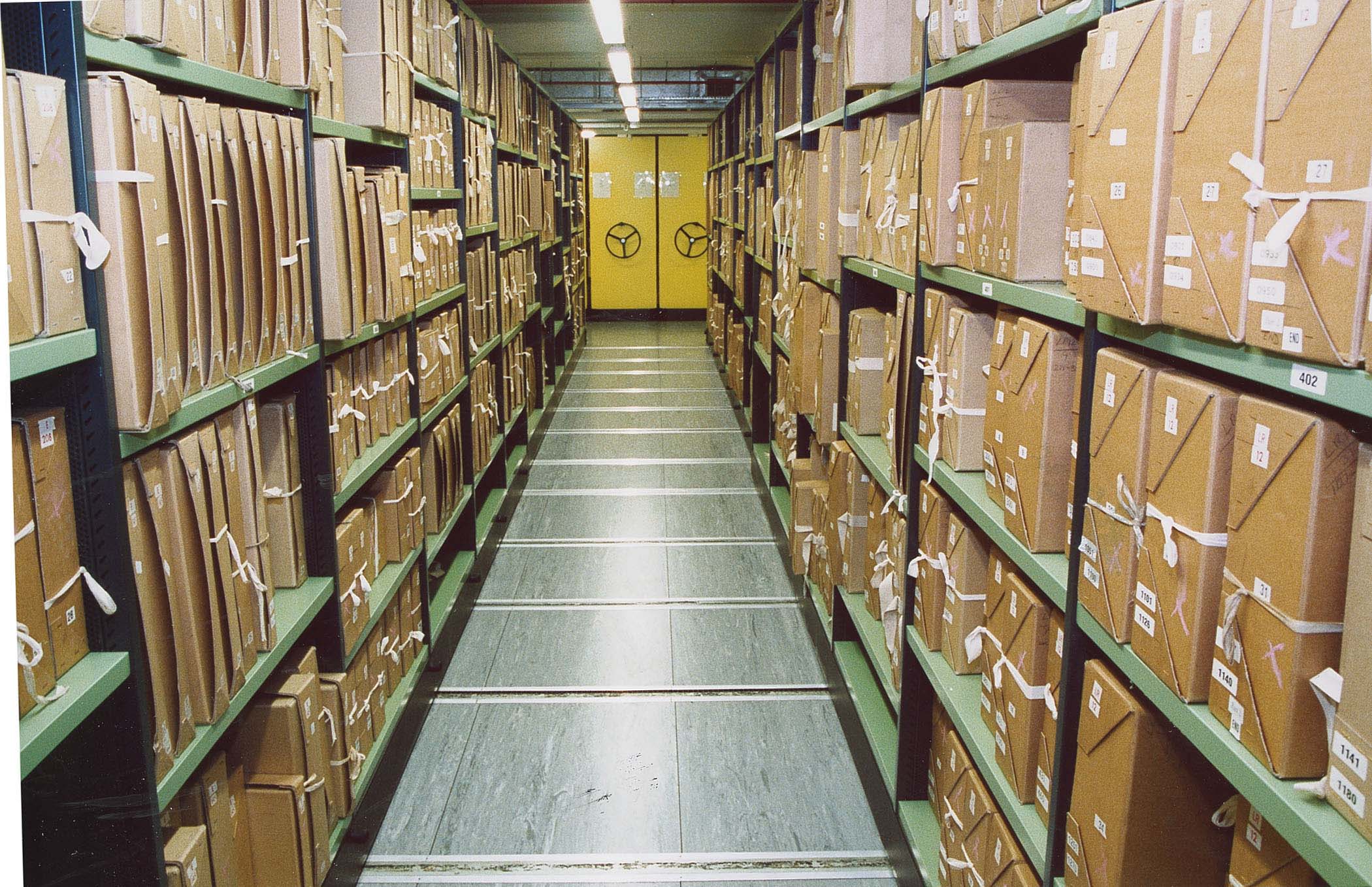
Long before the embassy doors, there were the files. Mitrokhin worked in the archives of the KGB’s First Chief Directorate, its foreign-intelligence service. In 1972, he was given responsibility for the records’ move from the Lubyanka in central Moscow to the new headquarters at Yasenevo. An assignment that looked administrative gave him a remarkable vantage point. Individual officers knew their agents and operations. An archivist handling the accumulated record could see across countries, careers, successes, and failures.
His disillusionment had developed inside the system. The Wilson Center’s introduction to his Afghanistan manuscript traces the importance of Soviet repression, particularly the crushing of the Prague Spring in 1968. He began creating a record beyond official control. This was not a Western intelligence service directing a recruited agent. Mitrokhin undertook the work himself, selecting and recording material from the institution that employed him.
The method was painstaking. As described in a CIA journal review of Gordon Corera’s biography, he concealed small notes in his clothing and footwear, then worked on them at home and at his dacha. The original files stayed behind. His private collection grew through repetition: reading, recording, carrying notes out, and turning them into something he could preserve. He retired in 1984. The secrets survived both his working life and, eventually, the state that had produced them.
The country outside the embassy had changed
Riga in early 1992 was not a Soviet provincial city offering a convenient back entrance to the West. It was the capital of restored independent Latvia. Washington had never recognized Latvia’s forcible incorporation into the USSR. Bush recognized the restoration of its independence on September 2, 1991; normal diplomatic relations resumed three days later. The American embassy was established on October 2. By the spring of 1992, it had been operating for less than six months. The new diplomatic presence was itself evidence of how much had changed.
There was no longer a single Soviet government for President George H. W. Bush to deal with. In his Christmas Day address of 1991, following Mikhail Gorbachev’s resignation, Bush recognized Russia and eleven other former Soviet republics. He supported Russia’s continuation in the Soviet seat on the UN Security Council, while distinguishing recognition of other states from the establishment of diplomatic relations. Nuclear safety, responsible security policies, democracy, and economic reform ran through his announcement. The Baltic states were on their own sovereign track, not part of Russia or the Commonwealth of Independent States.
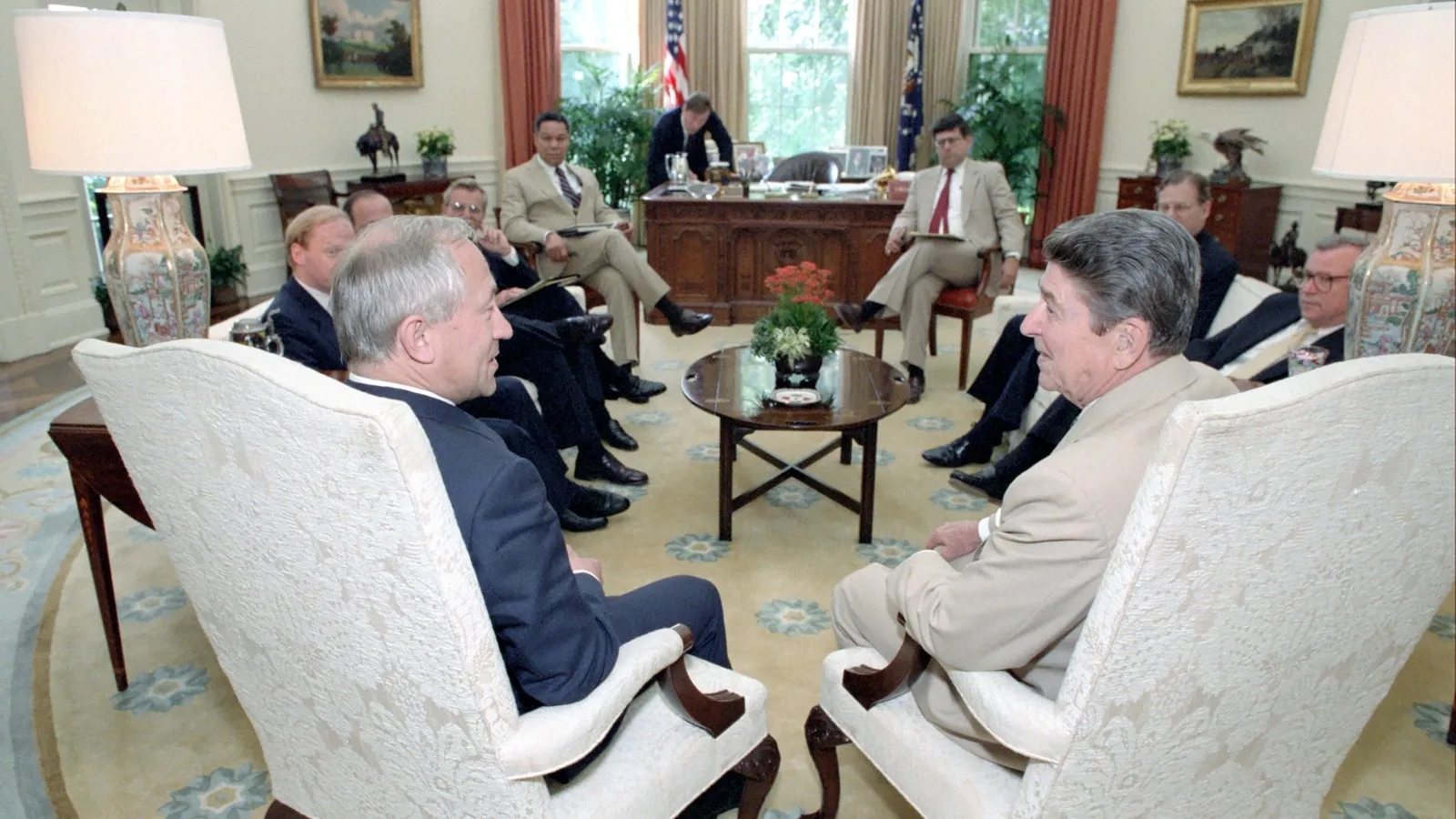
At Camp David on February 1, 1992, Bush and Boris Yeltsin presented themselves as friends building a different relationship. Their agenda was formidable: safeguarding nuclear weapons, negotiating further reductions, preventing proliferation, and supporting Russia’s economic transformation. Bush backed early Russian entry into the IMF and World Bank, but acknowledged that detailed nuclear agreements remained to be negotiated. The warmth was real; so was the unfinished business. In January, his administration had also convened an international humanitarian effort for the twelve newly independent states, addressing food, medicine, shelter, and energy. This was the setting in which Mitrokhin appeared, not proof of why anyone rejected him. Diplomatic cooperation did not mean that intelligence collection had stopped.
The Americans were his first choice
The failed American approach is not simply a story that appeared years later. The Intelligence and Security Committee’s 2000 inquiry, drawing on an SIS submission written in May 1992, records that Mitrokhin told the British he had already offered the material unsuccessfully to the Americans. The surviving public account is brief. Corera’s later reporting describes the repeated attempts behind that short statement, and the awkward passage from one potential listener to another.
In his discussion of the case on The Rest Is Classified, Corera describes approaches to the Americans in both Riga and Vilnius. According to people he interviewed, one CIA officer showed interest but was about to move to another posting; when Mitrokhin returned, the successor dismissed him. Corera also describes skepticism amid numerous offers from former Soviet intelligence personnel. Those details come from retrospective reporting, not a complete released CIA case file. They leave us with a history of missed opportunities, not a securely documented motive for every refusal.
For the visitor, the practical result was straightforward: the Americans were not taking possession of his project. Years of work could still end without a receptive reader. Britain became the alternative. The temptation is to make this a contest between foolish Americans and perceptive Britons. I find the more interesting story in the gap between what Mitrokhin knew he possessed and what a stranger could establish from an unfamiliar man carrying unofficial notes.
A different reception in Vilnius
The British encounter belongs in Vilnius in Corera’s reconstruction, rather than in Riga as some older retellings suggest. His published book excerpt describes a small, recently established embassy and a Russian-speaking junior diplomat who agreed to hear the visitor out. Mitrokhin used an assumed name. From a bag containing clothes and food, he produced pages about the KGB’s foreign operations. There were no original official files to authenticate on sight, only the material he had prepared himself.
In Corera’s account, she offered him tea and read what he had brought. He needed to return to Moscow by train that afternoon; a further meeting would have to wait. With the ambassador’s agreement, she arranged to alert London, traveling to Berlin because the new embassy lacked a secure communications link. The intervention was modest beside what followed, but indispensable: someone kept the conversation open long enough for intelligence officers to examine the claim.
Here the parliamentary chronology supplies firm dates while withholding the city’s name. Mitrokhin entered the British embassy on March 24, 1992. At the follow-up meeting on April 9, he delivered ten envelopes containing more than 2,000 closely typed pages. The American material included hundreds of codenamed agents and confidential contacts, with identifying detail. What had begun as an improbable visitor’s offer was becoming a collection against which investigators could test names, relationships, and unresolved questions.
Getting the man out was another operation
The embassy meeting did not end with Mitrokhin boarding an aircraft to freedom. Further meetings followed. In September, he agreed to a covert visit to Britain to help officials understand the material. Authorization for the family’s exfiltration was sought in October, and the operation was completed later in 1992. Those intervals matter. While officials assessed the collection, Mitrokhin’s future, his family’s safety, and the recovery of his accumulated work remained separate practical problems.
The British were receiving more than a stack of readable reports. They needed the person who had selected the material, understood his own abbreviations, and could explain how the pieces fitted together. The 2025 Studies in Intelligence review describes subsequent British-American cooperation in his debriefing. The country that had failed to take up his offer would nevertheless benefit from it. Rejection at the beginning was not exclusion from the intelligence afterward.
What escaped, and what it can tell us
Mitrokhin’s collaboration with historian Christopher Andrew brought the story into public view in 1999. In 2014, Russian-language typescripts opened to researchers at the Churchill Archives Centre. The distinction between notes and original files remains important. The public collection includes edited and sometimes redacted typescripts; his original manuscript notes remain classified and are not deposited there. What readers encounter is Mitrokhin’s selected, transcribed record, not the KGB’s complete filing system transported to Cambridge.
As a former intelligence analyst, that does not make the material less fascinating to me. It makes the questions more interesting. An account can identify a lead worth pursuing without proving every allegation in court. A source can be exceptionally valuable without being infallible. Mitrokhin gave Western services a way into operations they had not understood, and historians a way to examine an institution that had controlled its own story. His achievement does not need every sentence in the archive to be treated as a final verdict.
Following the story through the Baltic
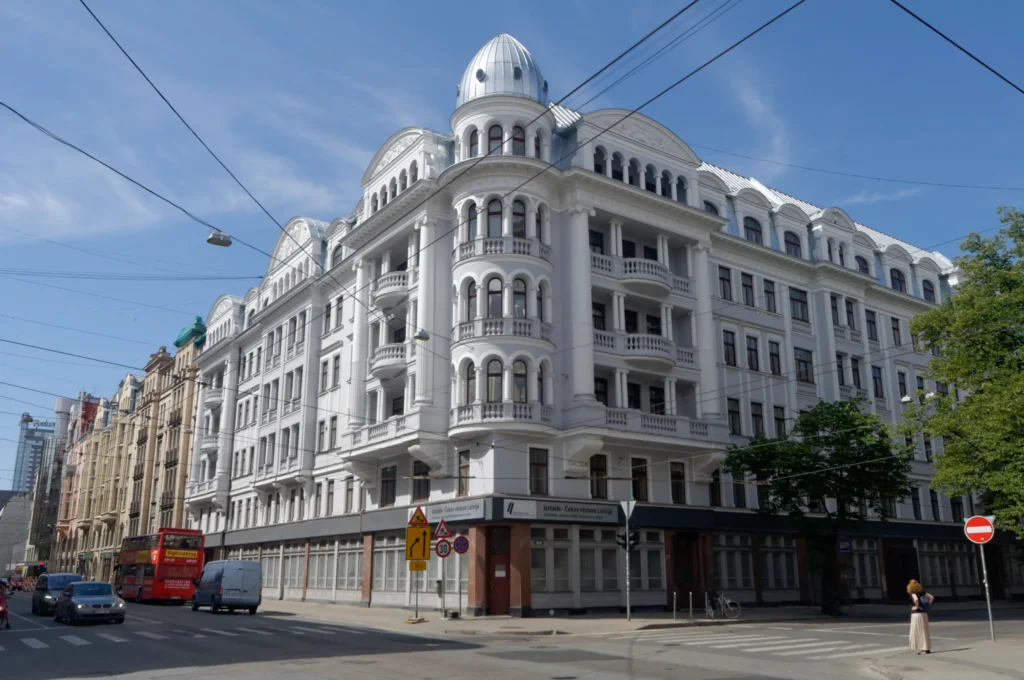
In Riga, the Corner House, the former headquarters of Soviet state security in Latvia, gives this history a different physical dimension: imprisonment and repression in an occupied country. The photograph above shows that building, not an embassy or a verified stop on Mitrokhin’s route. In Vilnius, the story turns toward the British reception. Keeping the cities distinct makes the journey richer. These were sovereign societies rebuilding their own futures, not interchangeable backdrops to a contest between great powers.
Both cities are part of In Moscow’s Shadow, our developing journey through Helsinki, Tallinn, Riga, Vilnius, and Warsaw. May 2028 remains tentative, and the interest list is nonbinding: no deposit, reserved place, or priority is created by joining. Mitrokhin is one reason I want to explore this history on the ground. The Soviet Union had disappeared, but its secrets had not. One retired archivist was still looking for someone prepared to read them.