On October 30, 1961, 65 years ago this week, the Soviet Union delivered a diplomatic note to Finland. Moscow wanted consultations about a threat it said was developing in northern Europe. For a small country trying to preserve its neutrality beside a much larger and more powerful neighbor, agreeing to discuss that threat carried potential consequences well beyond the meeting room.
The episode became the Note Crisis.
There was no deadline in the note. Finnish officials initially doubted Moscow intended an immediate occupation or demand for bases. The difficulty was subtler: could Finland enter military discussions without accepting the Soviet description of the danger, and without weakening the position it was trying to defend?
That question gives the Note Crisis its enduring interest. It was a diplomatic and security confrontation, with important domestic political consequences. The released record also offers an unusually revealing view of how officials read pressure while an outcome was still uncertain.
The treaty behind the request
Finland’s relationship with the Soviet Union rested partly on the 1948 Treaty of Friendship, Cooperation and Mutual Assistance. Its military provisions addressed an attack on Finland, or on the Soviet Union through Finnish territory, by Germany or a state allied with it. Article 2 provided for consultation if the threat described in Article 1 was established.
This was the opening Moscow invoked. The treaty offered a framework for security cooperation, but also a way to put Finland’s judgment about its own circumstances under pressure. A Soviet claim about danger elsewhere in Europe could become a demand for a Finnish response.
The geographic distinction mattered. Finland sought to keep its territory outside a wider confrontation. Moscow could argue developments involving Germany, NATO, and Scandinavia made Finnish territory part of its security problem. Once those positions collided, even the choice between diplomats and defense officials for a delegation became consequential.
Berlin set the tone
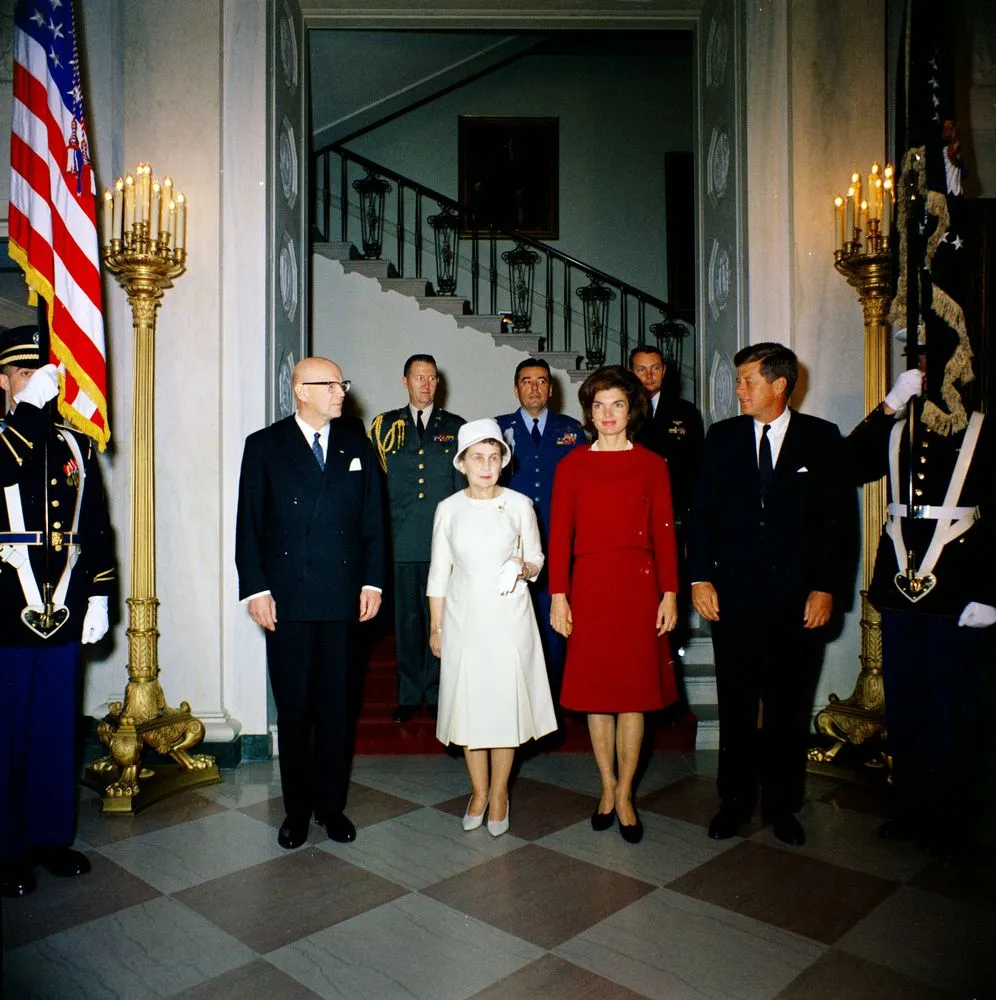
The autumn of 1961 was already dangerous. The Berlin Wall had gone up in August, and the future of Germany and Western access to Berlin dominated superpower diplomacy. Finland’s president, Urho Kekkonen, discussed those questions with John F. Kennedy in Washington on October 16, two weeks before the Soviet note.
The American record of that meeting shows Kekkonen passing on arguments he had heard from Soviet leaders, taking care to distinguish their positions from his own. He also drew attention to the 1948 treaty. Kennedy disputed its relevance to Berlin. Both men nevertheless understood that a crisis elsewhere could constrain Finland’s choices.
The note arrived while Kekkonen was still visiting the United States. Its timing put a northern European state into a confrontation whose most visible focus lay much farther south. Finland had its own interests to protect, but it could not choose the wider setting in which it would have to protect them.
Buying time without conceding the premise
On November 1, Finnish official Jaakko Hallama described a cautious response to the American ambassador in Helsinki. Hallama saw the note as part of a wider Soviet effort, noting that its principal attacks targeted Germany, its NATO allies, and Scandinavia. Finland should move slowly, show that it took the matter seriously, and avoid giving Moscow an excuse to escalate.
Hallama advised against Kekkonen rushing home. He also favored sending the foreign minister rather than a military delegation. The Finns could acknowledge international tension while disputing that their territory was threatened, or that the Soviet Union was threatened through Finland.
On November 14, Kekkonen dissolved parliament and called early elections. He later told the American ambassador that he had hoped the move would buy three months of breathing space. In his account, the respite lasted only two days.
By November 21, the strategy had become more personal. Kekkonen told Ambassador Bernard Gufler that Finland wanted to avoid military talks with the USSR because Moscow could read Helsinki’s participation as acceptance that the alleged threat existed. The earlier civilian mission and the dissolution of parliament had not secured the breathing space he wanted. Now he would go himself.
Gufler’s report at the time described Kekkonen as worn and anxious beneath a controlled manner. Kekkonen said he would try to persuade Nikita Khrushchev that preserving Finland’s existing position served Soviet interests. The account captures the uncertainty of the moment, before the later story of a successful presidential intervention had taken shape.
An agreement in Siberia
Kekkonen met Khrushchev in Novosibirsk on November 24. The resulting communiqué postponed the proposed military consultations. Finland had avoided the immediate step its leaders feared would draw it more closely into Soviet military planning.
The wording left room for sharply different interpretations. An initial American assessment on November 25 credited Kekkonen with at least temporary success, while warning that future consultations still hung over Finland. Moscow had deferred its request rather than surrendered the treaty mechanism behind it.
Finland’s ambassador in Washington, Richard Seppälä, presented a more satisfied account on November 28. His government considered the problem settled. He said there had been no secret arrangements and explained that postponement simply recognized that the treaty still existed.
The political cost of reassurance
The crisis also changed Finland’s presidential election. Olavi Honka, the principal challenger to Kekkonen, withdrew during the crisis. To Kekkonen’s supporters, the outcome demonstrated the value of a leader able to manage Moscow. To his opponents, it raised troubling questions about the relationship between Soviet influence and political competition at home.
The contemporary American and Finnish accounts diverged openly. Seppälä told Washington that Honka withdrew on his own. The State Department blamed Soviet pressure for effectively securing Kekkonen’s reelection by causing the leading challenger’s withdrawal.
Historians have debated not only whether Moscow intended to help Kekkonen win reelection, but whether Kekkonen helped engineer the crisis. Those are separate questions, and his political gain does not by itself prove complicity. Whatever its origins, the Note Crisis produced consequential results: external pressure, a presidential intervention, the postponement of military talks, and a weakened electoral challenge.
For Finland, the government had a substantial achievement: it had avoided the immediate consultations. For American officials, the troubling precedent was clear: Moscow had shown it could influence Finland’s choices without using force.
The crisis could subside while leaving Helsinki’s relationship with Moscow less equal than before.
Reading Finland on its own terms
Kekkonen returned to Helsinki on November 26. A photograph in the Finnish Heritage Agency’s collection records his arrival at the city’s railway station. It gives this diplomatic story a concrete place on the Helsinki map: a familiar public building associated with a moment when a president came home with an agreement whose meaning would remain contested.
It is tempting to give this episode a simple label and move on. Finland’s position was more demanding. Its leaders were trying to preserve freedom of action while knowing that a confrontation with the Soviet Union would not be fought on equal terms. It is fair in hindsight to scrutinize their decisions, but not without also considering the context in which they were made.
For intelligence-history travelers, the Note Crisis is useful precisely because it widens the frame beyond agents and stolen documents. Intelligence judgments operate within political relationships. What does the other government fear? Which of its claims are bargaining positions? How much reassurance can be offered before it becomes an obligation?
In 1961, Finnish and American officials did not always give the same answers.
That is one reason Helsinki belongs at the beginning of In Moscow’s Shadow, our developing journey through Helsinki, Tallinn, Riga, Vilnius and Warsaw. Finland’s experience must be distinguished from the Soviet occupation of the Baltic states. Putting those histories beside one another makes the differences in power, sovereignty and survival easier to understand.
This is a journey for travelers who enjoy careful interpretation and difficult questions, alongside the cities themselves. May 2028 remains tentative, and the interest list is nonbinding. Joining it requires no deposit and does not reserve a place. The Note Crisis offers a good question to carry into Helsinki: how much independence can a state preserve when its powerful neighbor insists on exerting influence?