
Walk west along Unter den Linden toward the Brandenburg Gate and you pass the embassy where a young Oleg Gordievsky watched the Berlin Wall go up. In August 1961, East German forces sealed the crossing a few hundred meters from his workplace. He had grown up inside the Soviet system. Now he could see what that system would do to keep people from leaving.
You may know Gordievsky for his escape from the Soviet Union in the trunk of a car. By then, he had spent more than a decade secretly working for Britain’s foreign intelligence service, MI6. He kept his KGB job and eventually led its London station while passing secrets to the British. MI5’s history records how much his reporting mattered.
His decision took years. Berlin unsettled beliefs he had inherited from his family. Copenhagen showed him a different way to live. London put him in a position to influence decisions at the highest levels. Along the way, he had to keep his doubts and his secret work from the people closest to him.
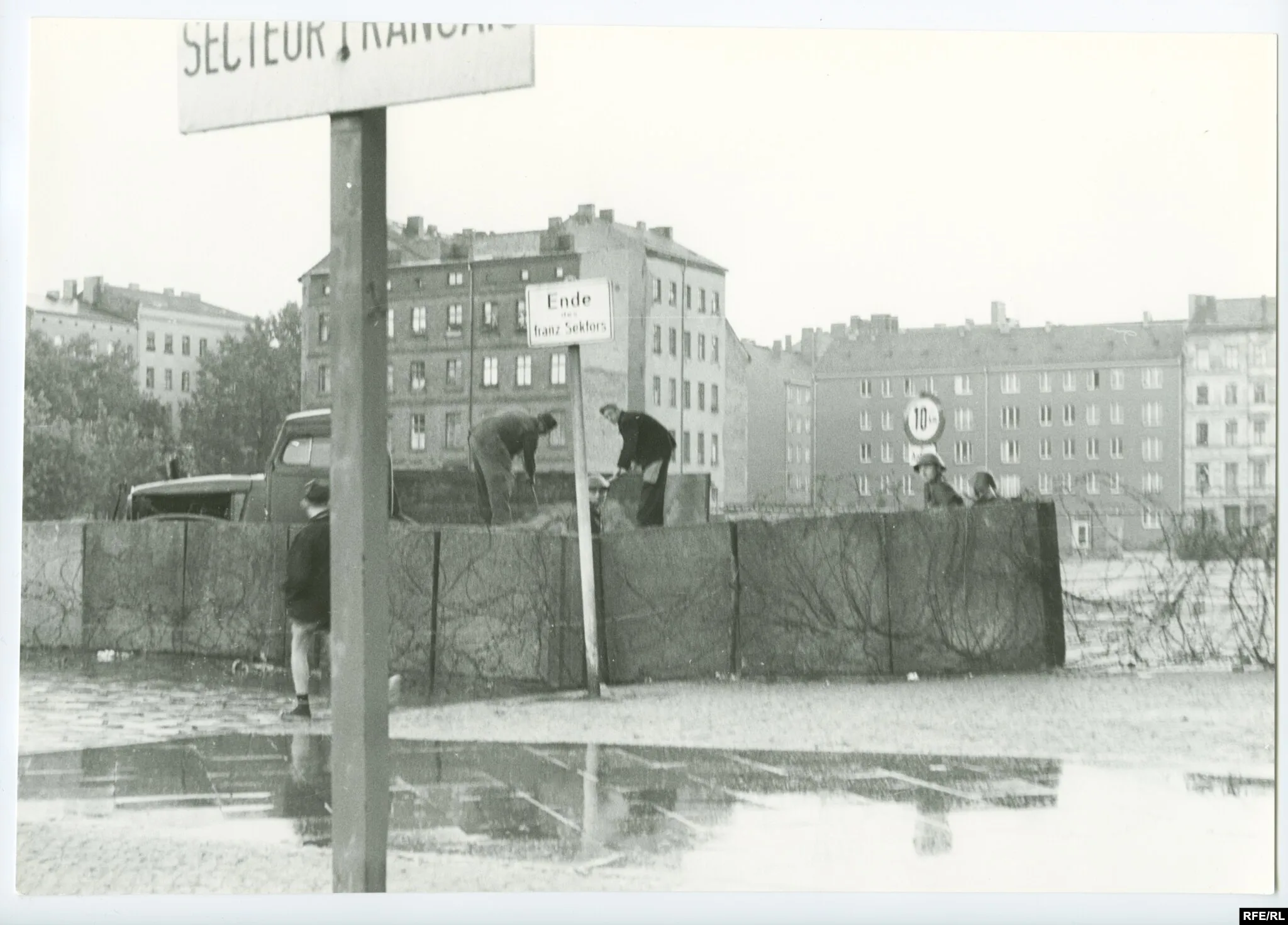
Berlin when the Wall went up
Gordievsky grew up inside the Soviet system. His father served in state security; his brother followed him into intelligence work. Macintyre describes their father wearing his uniform even on weekends. Questioning that world meant questioning his family’s profession, too.
In Next Stop Execution, Gordievsky remembers reaching Berlin’s Ostbahnhof on the evening of August 11, 1961. He was a student on a six-month placement. A car took him to quarters in the Soviet intelligence enclave at Karlshorst, in eastern Berlin.
He worked at the Soviet Embassy on Unter den Linden, today’s Russian Embassy at Unter den Linden 63–65. He later described the trainees’ desks on the fourth floor, in a corridor leading to the great hall. On August 13, he watched reports arrive as East German forces closed the border. He recalled seeing the barrier at the Brandenburg Gate. Wire and armed guards came first; the concrete wall followed.
That was a difficult sight to reconcile with the promises he had heard at home. If socialism offered a better life, why did the authorities have to stop people from leaving? He continued his intelligence career, but the question stayed with him.
Two places help you understand the Berlin he encountered. The Museum Berlin-Karlshorst at Zwieseler Straße 4 tells the wider story of Soviet power in the district where he stayed. Germany signed its surrender there in May 1945. The museum is a separate site from his quarters.
Across the city, the Berlin Wall Memorial on Bernauer Straße shows how the barrier cut through ordinary lives. Families and neighbors suddenly found themselves on opposite sides. The Berlin espionage history map connects these places with the city’s wider Cold War history.
Leipzig and a different life in Copenhagen
Gordievsky’s older brother, Vasili, had already joined the family profession. Their father had served in Soviet state security, and Vasili worked under a false identity in Leipzig. In The Spy and the Traitor, Ben Macintyre describes the brothers meeting at Christmas and hearing Bach’s Christmas Oratorio. The music moved Oleg deeply. He found something abroad that he felt his life in the Soviet Union lacked.
He did not tell Vasili how much the Wall had disturbed him. The brothers shared music, but Oleg kept his doubts private. That silence foreshadowed the divide between his outward life and the convictions he would act on.
After his studies and intelligence training, he joined the KGB’s foreign intelligence service. His first Copenhagen posting began in January 1966. Diplomatic duties covered his intelligence work, including support for Soviet “illegals”: officers who lived abroad under identities that hid their connection to Moscow.
The embassy occupied three villas on Kristianiagade in northern Copenhagen. He arrived with his first wife, Yelena, and moved into an apartment with high ceilings, wooden floors, and a fitted kitchen. Concerts and a comfortable home made Denmark more than an abstract political alternative.
In Denmark, he could watch Western life for himself. People read what they wanted, traveled and discussed politics without the controls he knew at home. He could compare that daily experience with the claims he had grown up hearing. Copenhagen made it harder to dismiss the West as propaganda had taught him to do.
What Prague changed in 1968
In August 1968, Soviet-led Warsaw Pact forces invaded Czechoslovakia and crushed the Prague Spring’s attempt at reform. Gordievsky followed the events from Copenhagen. The invasion deepened his disillusionment with the Soviet system. It became much harder to believe that the leadership would allow meaningful change.
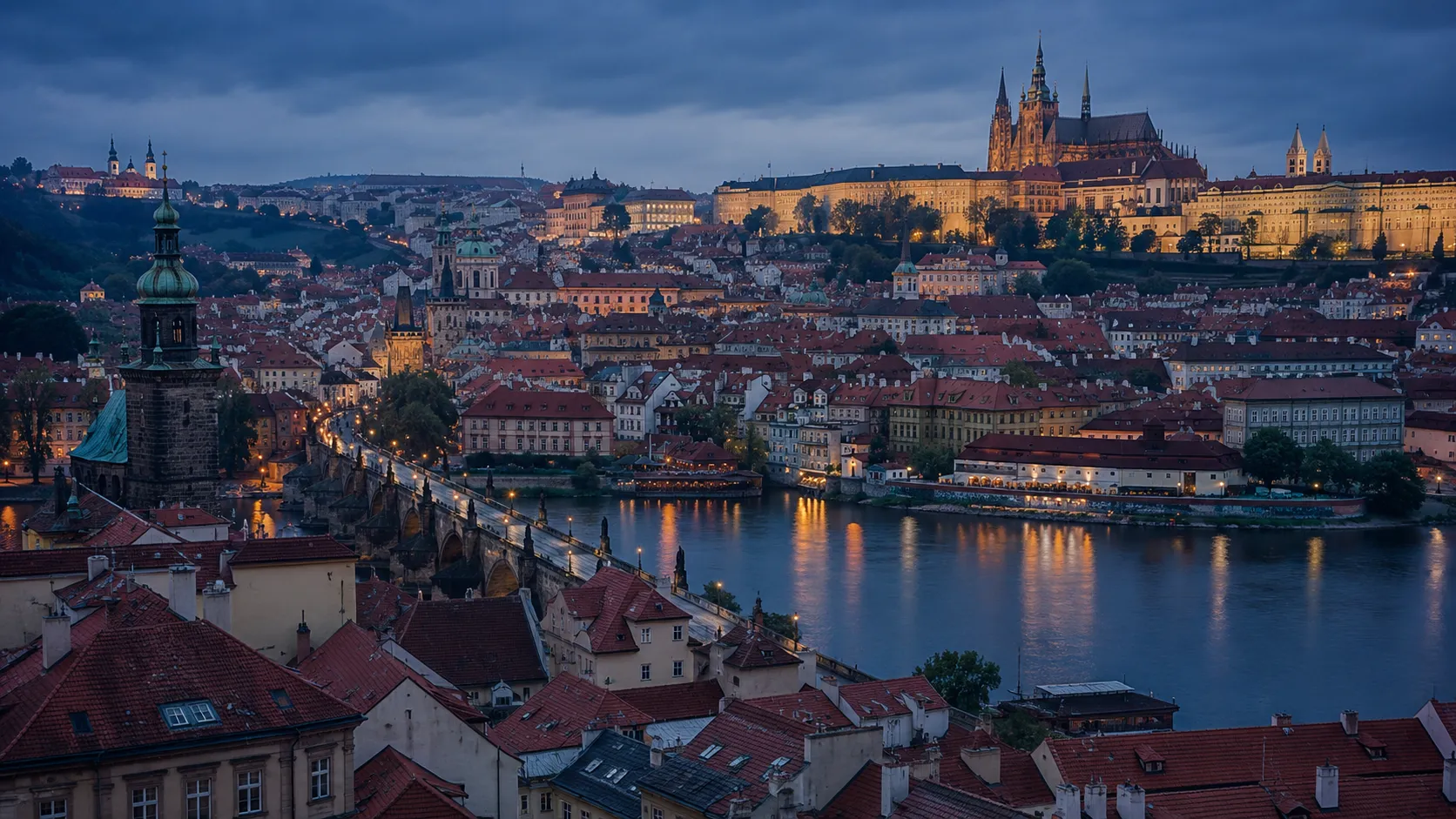
One building in Prague brings those events close: Czechoslovak Radio at Vinohradská 12. Residents gathered to defend the broadcaster. After Soviet troops took the building, radio staff kept reporting from hidden locations. Czech Radio’s account describes their resistance.
For Gordievsky, Berlin and Prague now pointed to the same problem. When people tried to leave or change the system, the authorities answered with force. He still worked for the service that helped sustain it.
Becoming a British source in Copenhagen
Private doubts alone would not bring him to MI6. The British first had to learn that he had them, then work out whether they could trust him.
That gap between doubt and action matters. By 1968, he had seen the Soviet state close the border in Berlin and send troops into Czechoslovakia. But he still worked for that state. Rejecting its claims did not give him an easy way out of his job, his obligations, or the danger that would follow a decision to help the other side.
His university friend Standa Kaplan, who had defected to the West, alerted Western services to Gordievsky’s doubts. Danish security officers also took an interest in him. When he returned to Copenhagen for a second posting in 1972, MI6 officer Richard Bromhead began developing contact. A Studies in Intelligence review follows the recruitment and the British concern that he might be a dangle—a planted source sent to deceive them.
The relationship developed during 1973–74. A later interview with Gordievsky dates his recruitment to 1974. He would keep working for the KGB while secretly supplying MI6 with intelligence about it.
Staying inside mattered. If he defected, he could tell the British what the KGB had done and how it worked. By keeping his position, he could also tell them what Moscow wanted to do next. New instructions, personnel changes and current plans gave his handlers information they could use as events unfolded.
That choice tied his safety to a convincing performance. He had to look like an officer Moscow should trust and promote, even as he worked against it.
Becoming a British source did not mean leaving his old life behind. It meant continuing it: going to work, dealing with colleagues, and earning the confidence of people whose secrets he passed to MI6. The better he performed for Moscow, the more useful he could become to London. Success brought access, but it also made the consequences of discovery more serious.
London and the pressure of serving two sides
The KGB posted him to London in 1982. His official work centered on the Soviet mission in Kensington Palace Gardens. Harrington House at No. 13 served as the ambassador’s residence. A 1981 parliamentary answer distinguishes that building from the proposed embassy offices at Nos. 1–7.
A short drive away, he met his British handlers at a safe house on Bayswater Road. Macintyre describes how Gordievsky entered through an underground garage, hiding which flat he visited. He could leave his Soviet workplace at lunchtime and meet the people who were using his secrets.
Those meetings gave the British more than a list of Soviet agents. In 1983, his reporting helped expose Michael Bettaney, an MI5 officer who tried to sell secrets to the KGB. MI5 credits Gordievsky with helping catch him.
He also helped British and American leaders understand something more dangerous: Soviet leaders genuinely feared a surprise Western nuclear attack. Through Operation RYaN, the KGB looked for signs that the West was preparing one. That fear shaped how Moscow read NATO’s Able Archer exercise in November 1983.
PA’s account of his career credits his warnings with helping avert nuclear war. American officials also questioned how much danger Soviet fears had created. In declassified talking points from August 1986, CIA analysts challenged reports of threatening Soviet military actions while acknowledging what the episode revealed about Soviet perceptions.
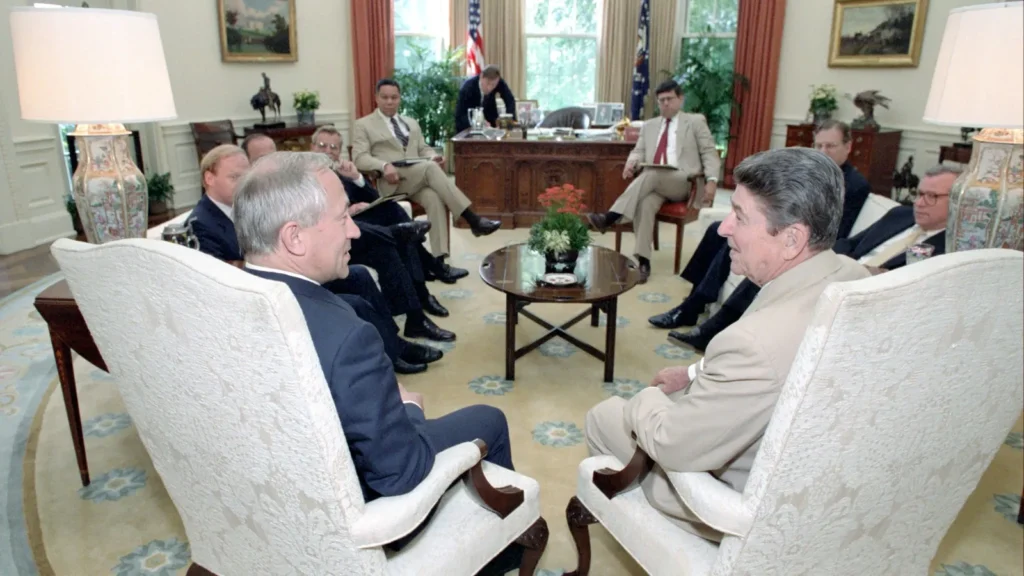
The Margaret Thatcher Foundation’s account of her 1983 papers explains how his reporting persuaded the prime minister to take those fears seriously. His access also put him in an unusual position during Mikhail Gorbachev’s December 1984 visit to Britain: he helped both sides prepare, including Gorbachev’s understanding of Thatcher. He could explain how each leader looked at the other.
His second wife, Leila, did not know about his work for Britain. That left a secret running through their family life as well as his working day. Macintyre’s account of the case stresses the divide between Gordievsky’s outward life as a Soviet officer and the allegiance he concealed. Leila and their daughters shared his London years without knowing the full story behind them.
Meanwhile, his family shared the ordinary parts of his London life. In May 1985, he took his daughters to Coram’s Fields in Bloomsbury while carrying out a Soviet dead drop nearby. Macintyre describes a signal on a bollard at Gray’s Inn Road and Guilford Street and British surveillance officers watching the operation. His daughters could play nearby as British officers watched their father carry out a KGB operation.
Moscow and Operation Pimlico
In May 1985, the KGB called him back to Moscow. He was leading its London station, but now his own colleagues suspected him. Before he went, MI6 considered whether he should defect instead. Macintyre describes the decision to return as Gordievsky’s own: he chose to go back rather than abandon the role he had worked so hard to secure.
That choice took him away from the British officers who could protect him. In Moscow, his colleagues drugged and interrogated him, then kept him under surveillance. The organization he knew from the inside now watched him as a suspect. He could no longer count on the title, position, or professional standing that had helped him gather intelligence in London.
The sequence of his exposure remains uncertain. CIA officer Aldrich Ames gave the KGB his name in June, but Moscow had already recalled and questioned him. That timing matters: the June disclosure alone cannot explain why the KGB called him back in May.
MI6 had prepared Operation Pimlico years before: an emergency escape plan for an asset in danger. Now Gordievsky needed to activate it without openly contacting his handlers. He had to get a message out while the KGB watched him.
In his 2015 account of the escape, he recalled reading invisible-ink instructions beneath his bedcovers. MI6 had hidden them in Shakespeare’s sonnets. A book could carry a route to freedom; he still had to trust that the rescuers would come.
Outside a bakery on Kutuzovsky Prospekt, he displayed a Safeway bag. A British passerby carrying a Harrods bag and eating a Mars bar acknowledged the signal. The rescue account explains this exchange. Ordinary shopping objects told him the British had received his request.
The road to Finland
In his first-person account of the escape, Gordievsky recalled leaving his Moscow flat on Friday, July 19, 1985. He reached Leningradsky railway station and took an overnight train to Leningrad, now St. Petersburg. From there, he caught a suburban train to Zelenogorsk and a bus toward Vyborg.
The final stretch did not run as neatly as a line on a map. He recalled missing the bus stop, getting off farther along, and walking back. Then he waited in the woods for about three hours.
For those hours, the escape depended on people he could not see. The British cars had to reach the meeting place, and the rescuers had to lose their KGB tail long enough to pick him up. He had left the familiar machinery of trains and buses behind. Now a wooded bend in the road separated him from either a rescue or the failure of the plan.
British officers Raymond Asquith and Andrew Gibbs drove under diplomatic cover, accompanied by their wives and a baby. They collected Gordievsky and hid him in the trunk of a Ford Sierra. At the crossing, the women helped distract attention, including by changing the baby’s diaper. The published rescue narrative describes their roles.
He crossed into Finland on July 21. From inside the trunk, he heard the music change to Sibelius’s Finlandia. That was the agreed signal that they had made it across. He had finally left Soviet territory. The journey to Britain still lay ahead.
Music had accompanied very different moments in his life: Bach with his brother in Leipzig, concerts in Copenhagen, and now Sibelius through the body of a car. This time, the music carried a practical message. He did not need to see the border from the trunk to know that the rescuers had brought him across it.
Through Norway to Heathrow
Gordievsky’s memoir traces the rest of the journey. The rescue cars continued to Helsinki. He transferred to other vehicles and traveled north through Finland and Lapland into Norway. He names Tromsø as his overnight stop, then describes flights through Oslo to London Heathrow. Special Branch officers met him there.
He had reached Britain, but MI6 still needed to hear what he knew. Officers later debriefed him at Fort Monckton in Gosport, on England’s south coast. Historic England locates the fort on Military Road, in Alverstoke, overlooking the western approach to Portsmouth Harbour. The Studies in Intelligence review describes four months of debriefing.
The border crossing makes a natural climax to an escape story. Four months of debriefing gives us a different ending: the long work of explaining what he knew after the immediate danger had passed. He could help British intelligence understand the organization he had served. He could not, simply by reaching England, bring his wife and daughters out with him.
What escape cost his family
Gordievsky escaped without his wife, Leila, and their two daughters, Maria and Anna. They remained in the Soviet Union for six years. While he began a protected life in Britain, they waited for permission to leave. His rescue had solved one urgent problem and left the family with another that British officials could not quickly resolve.
A parliamentary answer in June 1991 records repeated British efforts to secure their release. The government stressed that Leila and the girls had done nothing wrong and wanted to join him. Those few lines in Hansard make the cost of the escape plain: a husband and father lived safely in Britain, but his family still could not travel to him.
They finally joined him that September. Reunion did not restore the life they had shared before his escape. The Studies in Intelligence review records the end of the marriage in 1993. The story does not require us to choose between the value of his intelligence work and the damage to his family. Both belong in it.
Gordievsky eventually made his home in Godalming, Surrey, under British protection. The town lies southwest of London. This was not another embassy posting. Britain had become the country where he would spend the rest of his life, although protection still shaped how he lived and whom he could meet.
Everyday life in Surrey
Journalist Henry Dodds offers a small, firsthand glimpse of that life. For a Radio 4 interview, he took a midday train from London Waterloo to Godalming. Gordievsky met him at the station in an ordinary family car and drove him to a bungalow a few minutes away. Dodds remembered books, a television, and dumbbells beside a chair. He could not be sure whether he had visited Gordievsky’s home or a separate interview location, so we should not treat it as a confirmed residence.
The journey gives the later years a recognizable geography: Waterloo, a Surrey railway station, a short drive, and a room where two people could sit and talk. Those everyday details sit alongside the extraordinary reason for the meeting. Dodds had come to ask about Soviet intelligence. His host also had books to read and routines to keep.
Nearby Hambledon supplies another glimpse. In a local recollection of the Merry Harriers pub, former publican Colin Beasley remembered Gordievsky as a polite, quiet regular who came for a lunchtime pint of bitter and a sandwich. He did not talk much about himself. It is a modest memory, and a useful one. Alongside the officer who supplied secrets and escaped in a car trunk, it leaves room for the man who wanted an ordinary lunch.
He lived the rest of his life in Britain and died in March 2025, aged 86. His escape preserved an important source. It also left a husband and father waiting years to see his family again.
Explore the places behind the story
The embassy on Unter den Linden and the playground at Coram’s Fields still connect us to those choices. At one, a young man began questioning the world his family had served. At the other, he mixed a day with his daughters with the dangerous work he kept secret. These places bring the Cold War close to the people who lived through it.
Gordievsky’s case is one of the Cold War’s most fascinating stories, and it connects several of the European cities we explore on our tours. Berlin, where he saw the Wall go up, and Leipzig, where he heard Bach’s Christmas Oratorio, are part of Dead Drops & Double Agents. War Rooms & Walk-Ins explores Britain’s intelligence history from a London base, with visits to Bletchley Park and Cambridge. Our planned In Moscow’s Shadow journey begins in Helsinki and follows the wider story of Soviet power and resistance through the Baltic capitals to Warsaw.
That’s what I want these journeys to convey: human stories in the places where they happened, often within living memory. Standing in those cities gives us a different way to understand the choices Gordievsky and others made—and the world they helped change.
If his story has you looking differently at a map of Europe, explore our espionage history journeys. I’d be glad to help you find a tour that fits the history you want to understand and the places you want to see.


.jpg)