
On the nights of September 23 and 24, 1944, four vessels left Finland’s western coast for Härnösand and Gävle. The people gathering at the quays did not look like a military formation. Intelligence personnel wore civilian clothes. Wives and children traveled with them. Around them, men loaded crates of radio equipment, technical records, and secret material for the passage across the Gulf of Bothnia.
The departure was hurried, but it was not improvised. Finland had been preparing for this possibility for months.
The operation was called Stella Polaris—the Pole Star. Its purpose is often compressed into a simple claim: Finland evacuated its signals-intelligence capability to keep it out of Soviet hands. That is directionally true, but incomplete. Finland did not remove its entire intelligence service, and the transfer was not merely an act of concealment. It was a contingency designed to preserve people, equipment, expertise, and records so intelligence work could continue from Sweden if the Soviet Union occupied Finland.
That distinction matters. Stella Polaris was not only about protecting secrets. It was about preserving a national capability when Finland could not be certain that the state itself would remain free to use it.
A country leaving one war—and facing another danger
Finland entered September 1944 in an exposed position. The Red Army’s summer offensive had forced the country to seek a way out of its war with the Soviet Union. Finnish forces had prevented a complete military collapse, but the balance of power was unmistakable.
The Moscow Armistice of September 1944 left Finland at its weakest and most
vulnerable. Finland had to demobilize rapidly, expel German forces from its territory, accept a Soviet-led Allied Control Commission, and lease the Porkkala area—barely 20 miles from Helsinki—to the Soviet Union as a naval base. Territory was ceded, reparations imposed, and the country’s political freedom of action sharply constrained.
With hindsight, we know that Stalin did not order the occupation of Finland. Finnish democracy survived. But those making decisions in September 1944 did not possess that hindsight. They knew what Soviet rule had meant for neighboring states, and they understood how exposed Finnish intelligence officers would be if Soviet forces entered the country.
The possibility of occupation was therefore not a theatrical pretext. It was a scenario serious enough to demand preparation.
Finland’s wartime radio-intelligence service
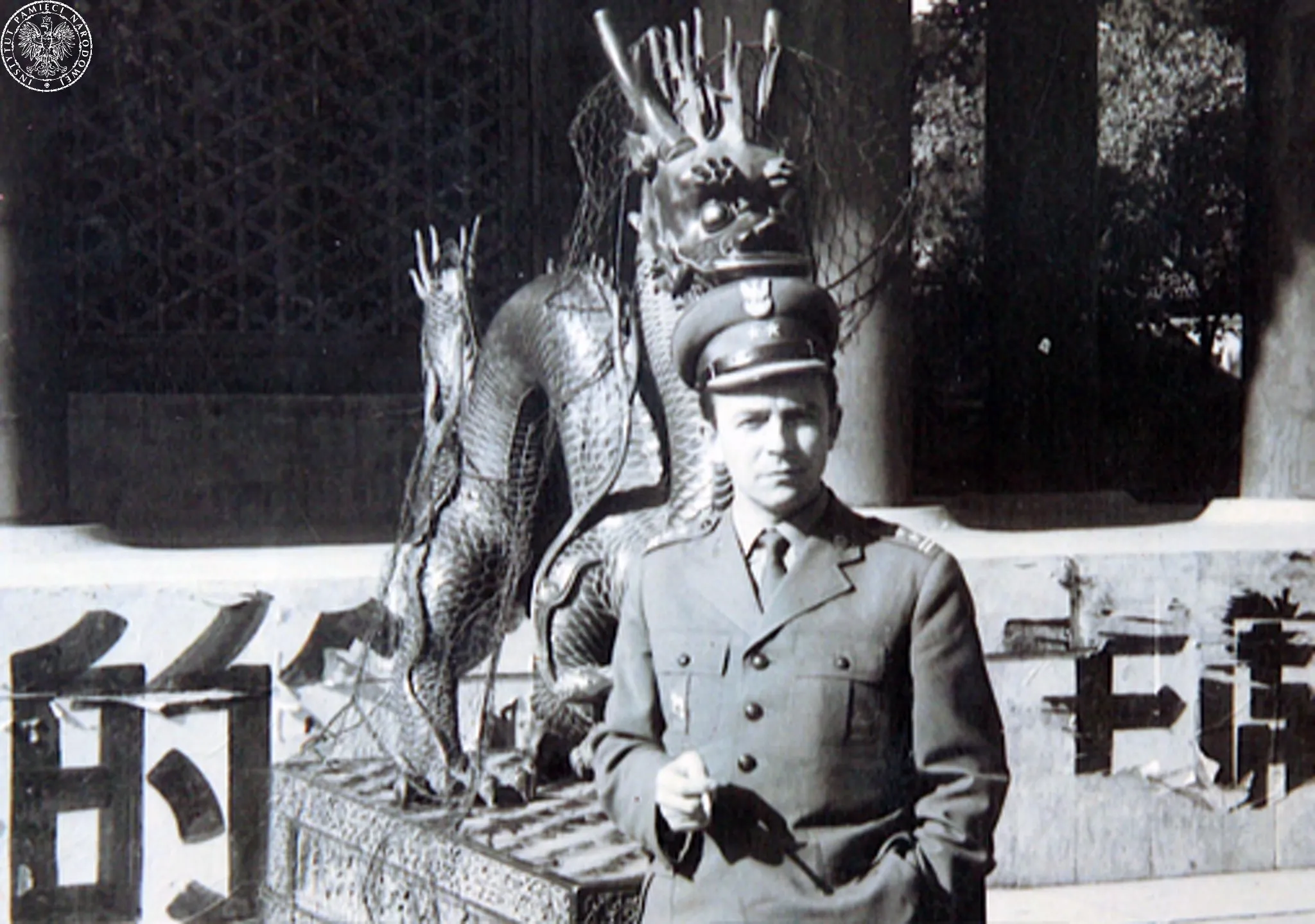
The capability at risk had been built over years. Finland added radio intelligence to the responsibilities of its Statistical Bureau in 1927, and Colonel Reino Hallamaa became one of the central figures in its development. By the later stages of the Continuation War, Finnish personnel were intercepting Soviet communications, studying operating patterns, breaking ciphers, and turning fragments of radio traffic into military intelligence.
The scale was substantial for a small country. The Finnish Military Intelligence Review 2025 estimates that the headquarters intelligence organization had between 1,600 and 1,800 personnel by late summer 1944, about 1,200 of them working in interception activities. It also credits Hallamaa with building Finland’s radio-intelligence capability during the 1920s and 1930s.
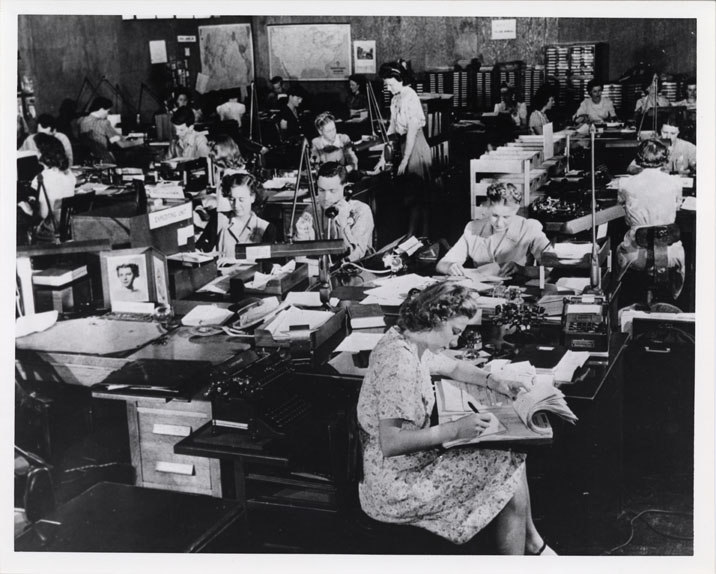
This was not simply a collection of receivers and codebooks. It was an institutional memory: linguists, cryptanalysts, intercept operators, engineers, analysts, procedures, target knowledge, and accumulated understanding of Soviet communications. Equipment could be seized or destroyed. Expertise could be imprisoned, coerced, or dispersed. Rebuilding either would take years.
Finland did not face that problem alone. Finnish and Swedish signals-intelligence organizations had cooperated since the Winter War, exchanging raw intercepts, analysis, and reporting on the Soviet Union. They also cooperated against diplomatic communications. According to the Swedish National Defence Radio Establishment’s official history of the FRA, planning for a possible evacuation to Sweden began during the summer of 1944, when Soviet occupation still appeared possible.
Stella Polaris grew out of that existing relationship. Sweden offered geography, institutional partners, and a place from which Finnish specialists might continue their work. Finland brought deep experience against the Soviet target and equipment that Sweden itself badly needed.
The contingency crosses the Gulf of Bothnia
In the nights around September 23–24, the plan became movement. A Swedish Radio documentary on Operation Stella Polaris describes four ships departing for Härnösand and Gävle with roughly 750 people connected to Finnish signals intelligence, including family members, and hundreds of boxes of equipment and records.
Those numbers require care. They do not mean that 750 Finnish intelligence officers—or the entire Finnish SIGINT establishment—were permanently transferred to Swedish control. The group included families, and the operation moved a significant portion of personnel and materiel as a safeguard against a possible occupation. Intelligence activity also continued inside Finland.
The operational logic was nevertheless clear:
- Move vulnerable specialists and their families beyond immediate Soviet reach.
- Prevent critical equipment and secret material from being captured.
- Retain the option to resume or continue collection and analysis from Sweden if Finland were occupied.
- Preserve enough knowledge and technical capacity to support Finland even if its wartime intelligence structure could no longer operate at home.
This was strategic insurance, arranged under extreme uncertainty. It also reflected a hard intelligence reality: a capability survives through people and accumulated knowledge, not through hardware alone.
What returned—and what did not
The feared Soviet occupation never came. Most of the Finnish evacuees therefore returned home. The FRA records that about twenty remained in Sweden and joined the Swedish service. Finnish radio equipment also provided Sweden with a valuable wartime and postwar technical boost. The records followed a more complicated path.
Material brought to Sweden was sorted, copied, divided, returned, transferred, or destroyed at different stages. Not every archive traveled together, and not every document can now be accounted for. The Finnish Embassy in Stockholm’s account of Operation Stella Polaris captures why the subject continues to attract attention: the operation preserved expertise and material, but it also scattered the documentary record and created questions that outlived the emergency itself.
The returning personnel also came back to a country whose political and security environment had changed. The Soviet-led Control Commission was present. Finnish military intelligence was reduced, and those associated with secret wartime preparations could expect scrutiny. The Finnish Defence Forces’ history notes that the wartime intelligence organization was dismantled, while a much smaller and deliberately quiet capability continued to provide military information. A more formal rebuilding came only later, including the creation of a signals-testing establishment in 1960.
Stella Polaris therefore produced no simple ending. Sweden gained equipment, knowledge, and a small number of experienced specialists. Finland recovered most of its people but not the wartime organization they had known. Archives were dispersed. Senior figures left the country. The capability survived, but in altered form and under political constraints that would shape Finnish intelligence throughout the Cold War.
Why In Moscow’s Shadow begins in Helsinki
Stella Polaris is one reason Helsinki belongs at the beginning of a serious journey through the intelligence history of the Baltic region.
Finland’s experience was not the same as Estonia’s, Latvia’s, or Lithuania’s. Finland was not incorporated into the Soviet Union. Its parliamentary democracy and market economy survived. Yet survival required constant attention to geography, military vulnerability, Soviet pressure, and the boundaries of what could safely be said or done. Helsinki became a capital where sovereignty endured, but never abstractly and never without cost.
That makes it an essential starting point for understanding the wider intelligence terrain of Continental Europe. The story begins with Finnish wartime survival and the contingency planning behind Stella Polaris, then crosses the Gulf of Finland to Baltic capitals that experienced direct Soviet occupation, repression, resistance, and restored independence. It ends in Warsaw, where wartime destruction and postwar Soviet control created yet another version of life in Moscow’s shadow.
The contrast is the point. Finland’s leaders prepared for an occupation that did not occur. Across the water, occupation became the defining political fact of the next half-century.
Helsinki also allows the journey to connect past and present without forcing a false equivalence. Finland’s decades of military nonalignment ended when it joined NATO on April 4, 2023. The strategic circumstances are different, but the underlying questions remain recognizable: How does a smaller state preserve freedom of action beside a much larger power? Which capabilities must survive a crisis? What can cooperation with neighbors make possible? And what does prudence look like before the outcome is known?
Those are intelligence questions, but they are also questions that can be read in the streets, harbors, museums, memorials, and defensive landscapes of the region. That is the purpose of Tradecraft Travel’s place-based approach to espionage history: to connect decisions made under pressure to the ground on which they were made.
Operation Stella Polaris offers a particularly clear example. The ships crossing the Gulf of Bothnia carried more than radios and files. They carried a contingency for national survival.
If you would like to follow development of the tentative May 2028 route, you may join the In Moscow’s Shadow interest list. It is nonbinding, requires no deposit, and does not reserve a place.