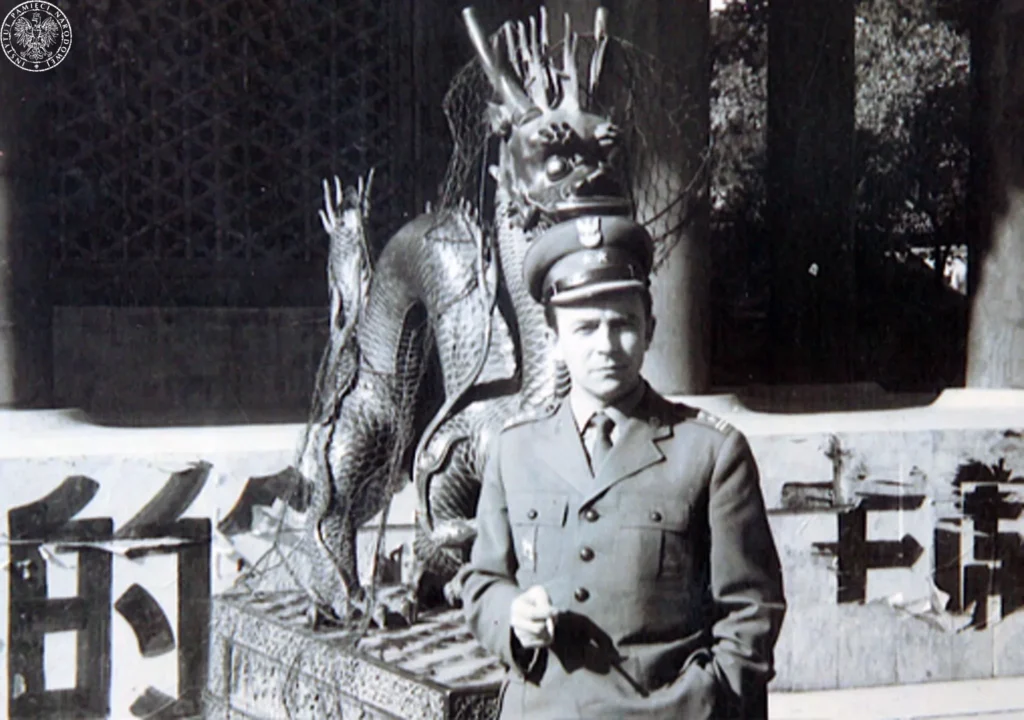
On Monday, November 2, 1981, Colonel Ryszard Kukliński walked into an afternoon meeting in Warsaw and immediately sensed that something was wrong.
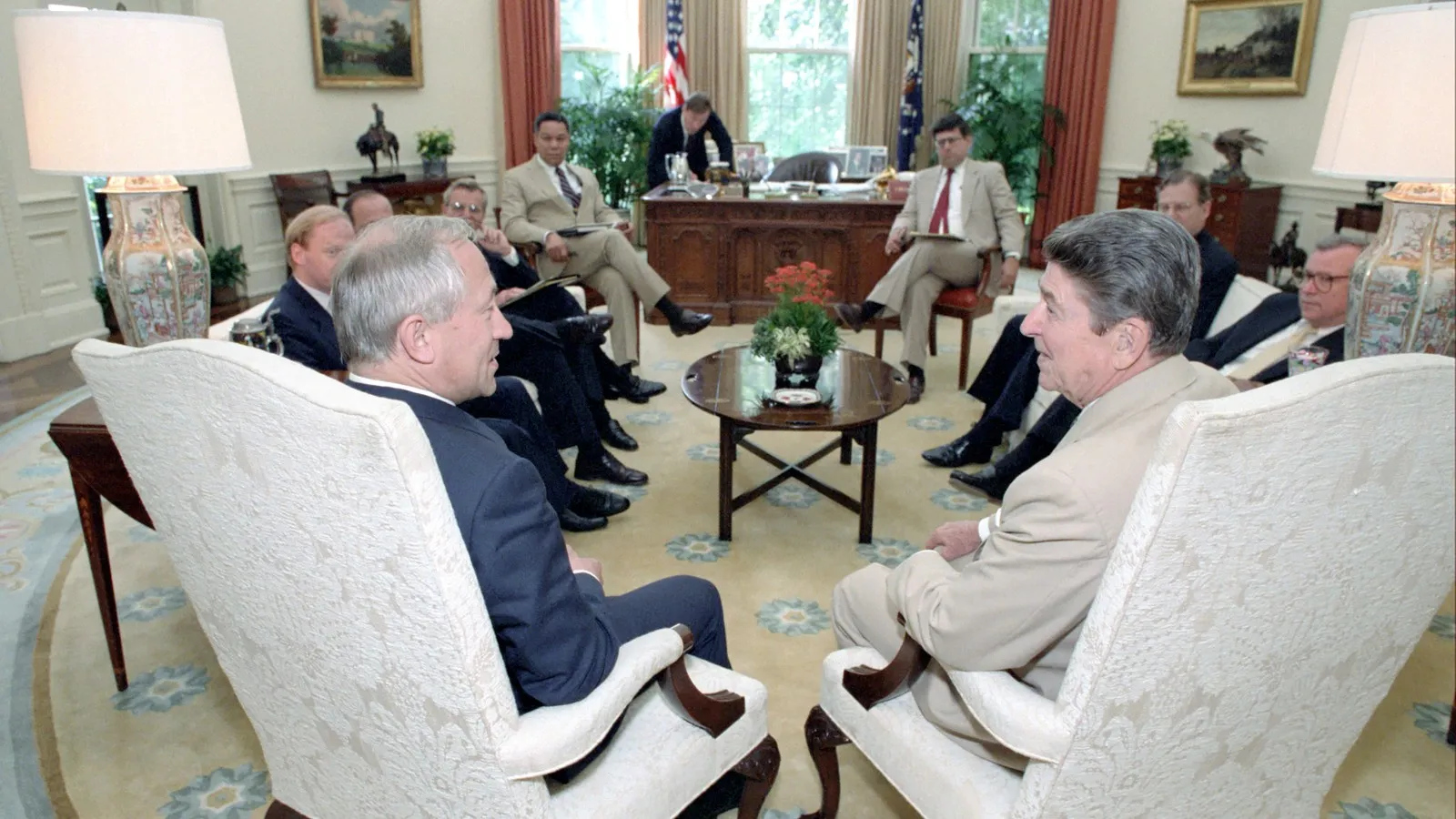
In the best-known public reconstruction, six officers sat around a T-shaped table. Their faces were pale. General Jerzy Skalski told them that “Rome sources” had learned the CIA possessed the final martial-law plan. Kukliński took that phrase to mean information originating with the Soviets, but neither Benjamin Weiser’s 1992 reporting nor the declassified record identifies the sources or establishes how the warning reached Warsaw. What the warning did establish inside the room was that the CIA held material available to only a very small circle of the Polish General Staff.
Kukliński joined the others in denouncing the betrayal. He also understood that the circle had narrowed around him.
For more than nine years, the Polish officer had secretly supplied the CIA with the inner workings of the Warsaw Pact. Now he had to solve a different operational problem. He could not simply disappear alone. His wife and two sons knew nothing of his clandestine life, yet the danger attached to all four of them. Getting the family out of a capital watched by civilian and military counterintelligence would require several attempts, a change of plan, a long drive, diplomatic cover, and luck.
The escape is often treated as the final scene in Kukliński’s story. In fact, it reveals nearly everything that makes the case so difficult: the quality of his access, the pressure under which he worked, the human cost of a secret kept even from his family, and the unresolved question of whether he betrayed Poland or acted to defend it.
An officer inside the Warsaw Pact
Kukliński was born in Warsaw in 1930. His father, involved in resistance to the German occupation, died at Sachsenhausen concentration camp. After the war, the younger Kukliński entered the new Polish military and rose through an institution rebuilt under Soviet domination.
He was not an outsider looking in. He became a staff officer with the access, credibility, and technical knowledge needed to help design major exercises and study the operational plans of both the Polish armed forces and the wider Warsaw Pact. That made him valuable to his superiors. It also gave him an unusually clear view of the strategic assumptions governing a war with NATO.
Kukliński later described those plans as fundamentally offensive despite the Warsaw Pact’s defensive rhetoric. They envisioned forces moving rapidly into Western Europe while Poland supplied troops, command infrastructure, roads, rail lines, river crossings, airfields, and the territory through which Soviet formations would move west. The corresponding NATO response could turn Polish territory—particularly the corridor between the Oder and Vistula—into a nuclear battlefield, a danger emphasized in the Polish Institute of National Remembrance’s historical analysis of his case.
In Kukliński’s later account, the Soviet-led invasion of Czechoslovakia in 1968 and the Polish government’s bloody suppression of workers on the Baltic coast in 1970 sharpened his conviction that Moscow regarded Poland less as a sovereign ally than as strategic depth: a corridor, staging area, and potential nuclear battlefield. That is his explanation of his motives, not an independently provable account of the precise moment his loyalties changed.
That distinction became the moral foundation of his later defense. He would say that he had not betrayed Poland; he had acted against a Soviet-imposed system that endangered it. His critics would answer that a serving officer does not get to decide privately which state secrets may be handed to a foreign intelligence service. Both arguments begin with real obligations. Neither makes the choice simple.
The officer who recruited the Americans
In August 1972, Kukliński joined other officers aboard Legia, a yacht associated with the Polish General Staff, on a voyage to ports in Western Europe. The official party was observing Western harbors. Kukliński had another purpose.
He mailed a letter in broken English to the U.S. Embassy in Bonn requesting a secret meeting with an American military officer. Two CIA officers then met him at the central railway station in The Hague and moved with him to a nearby hotel. The CIA-derived chronology summarized by Wesleyan University dates the initial encounter to August 17; the Polish Institute of National Remembrance dates the recruitment interview to August 18. The one-day difference may reflect a distinction between the first encounter and the fuller interview, but the public sources do not resolve it. Kukliński identified himself as a lieutenant colonel on the Polish General Staff and described the access he could offer: Soviet and Warsaw Pact war plans, military exercises, force structures, equipment, and the thinking behind them.
He initially imagined something larger than a one-man operation. According to an account based on CIA case material and interviews with his longtime handler, David Forden, Kukliński proposed organizing other like-minded Polish officers into a conspiracy that could warn the West of a Soviet attack. The Americans rejected the idea. Polish security services would be far more likely to penetrate a network. One carefully handled officer might survive.
Even one was a formidable risk. The CIA still carried the lesson of Soviet military intelligence colonel Oleg Penkovsky, arrested and executed after providing crucial intelligence during the Cuban Missile Crisis. In Warsaw, an American officer exposed in clandestine activity could be expelled. A Polish citizen caught cooperating with the CIA could be executed.
Kukliński accepted the risk. The Polish Institute of National Remembrance states that he received no fees from the Americans, and he did not tell his family.
Running an operation in Warsaw
Espionage is often remembered through the exceptional document or the dramatic escape. Kukliński’s operation depended on something harder to sustain: years of disciplined repetition in a hostile counterintelligence environment.
In the operation reconstructed from CIA case material and interviews, an early meeting in Poland produced eighteen rolls of film containing photographs of classified documents. The CIA supplied Kukliński with a miniature camera concealed in a cigarette lighter. Handlers established dead drops, chalk signals, emergency communications, and procedures for passing film and packages. Later, a device called Iskra gave him another means of communicating with the CIA station.
The physical exchanges exploited small breaks in surveillance. A CIA officer might spend hours driving through Warsaw to determine whether Polish security personnel were following. If the officer appeared clear, a vehicle could make a carefully selected turn, briefly obscuring the exchange from anyone trailing behind. Kukliński would step into that moment, pass or receive a package, and disappear back into the city. The technique was known as operating “in the gap.” If surveillance was too close—or if unidentified bystanders lingered near the site—the meeting was abandoned.
His access created its own workload. He had to identify material worth taking, remove it without attracting notice, photograph it at home or in his office, and return it before anyone found it missing. A productive source could become an endangered source simply by producing too much. By November 1981, he had completed roughly sixty exchanges. The Wilson Center’s summary of the declassified files says he supplied more than 40,000 pages, while the Polish National Security Bureau gives 35,000. Because official summaries differ, no single total should be treated as uncontested. The extraordinary range is clearer: war plans, command arrangements, force deployments, weapons data, air defenses, methods for hiding military activity from satellites, and the preparations for martial law in Poland.
The operation also depended on his official life remaining convincingly ordinary. Face-to-face meetings with Forden usually occurred during summer yacht trips, when Kukliński could invent a plausible reason to separate from his colleagues—once, to shop for automobile parts that were difficult to obtain in Poland. Most of the year, however, he worked in Warsaw with only brief, clandestine contact. He later wrote that when he left for a risky exchange, he quietly said farewell to his family without telling them why. He could not know whether he would return.
A close call in a cream-colored Fiat
Counterintelligence pressure did not arrive all at once in November 1981. It accumulated through the normal hazards of operating in Warsaw and through the growing realization inside the bloc that sensitive information was reaching the West.
One exchange nearly ended the operation early. As Kukliński received a package from a CIA vehicle, a cream-colored Fiat 125 illuminated him with its headlights. Two men inside leaned forward, apparently trying to see his face. Kukliński ran. The Fiat followed.
He escaped through alleys and buildings, reached Warsaw Central station, boarded a train toward the suburbs, and returned to the city by bus. He then called home, slurred his speech, and told his teenage son that he had become too drunk at a vodka party to drive. He needed a ride. The cover story explained both his condition and his late arrival.
The CIA suspended contact for several months in case he had been identified. Kukliński stopped meeting the station—but continued copying documents he considered too valuable to leave behind. That decision illustrates both his commitment and the operational danger in it. The more consequential the intelligence, the harder it was for him to stop. The more he collected, the greater the possibility that access patterns, missing documents, or an uncontrolled disclosure elsewhere would point back toward the small group allowed to see them.
The detailed account published by Wesleyan University, drawing on Benjamin Weiser’s research and interviews with Forden, makes clear that the source survived repeated close calls rather than enjoying nine years of invisibility. His security depended on habits, judgment, and the willingness of both Kukliński and the station to abort an exchange. It also depended on factors neither side controlled.
Solidarity, “Plan Spring,” and Moscow’s pressure
After Solidarity emerged in 1980, the intelligence became more urgent and more politically sensitive.
The independent trade union quickly became a national movement and a direct challenge to a one-party state. Polish leaders debated how to contain it while Moscow pressed them to restore control. Soviet intervention remained a possibility, but Polish authorities were also developing their own machinery for a crackdown: mobilization orders, detention lists, communications controls, military deployments, and the legal architecture of martial law.
Kukliński sat close to this process. The CIA’s declassified collection, Preparing for Martial Law: Through the Eyes of Col. Ryszard Kuklinski, describes his reporting from July 1980 through late 1981. He followed the repeated revisions of the plans, disagreements among Polish leaders, and what the agency calls Moscow’s almost constant pressure to “do something” to destroy Solidarity.
The Wilson Center archive identifies forty-two reports carrying martial-law planning documents, along with eighteen reports based on Kukliński’s contacts inside the General Staff and with Soviet officers. This was not a single warning. It was continuing coverage of a state moving from political crisis toward organized coercion.
The value of that reporting also made the source vulnerable. At a secret meeting on September 15, Polish leaders disclosed that details of the crackdown—including its closely held code name, variously translated as “Operation Spring” or “Plan Spring”—had somehow reached Solidarity. As Weiser’s contemporary profile recounts, only a handful of people knew the code name, and an internal investigation began. The disclosure alarmed Kukliński, although it did not by itself establish that the CIA had penetrated the General Staff.
The completed martial-law plan was even more tightly compartmented. According to Weiser’s reconstruction, it had been printed in Moscow to guard against leaks in Poland; Kukliński had helped draft much of it, and a complete copy sat in his safe. Once Polish authorities learned that the CIA possessed the final plan, investigators did not need to search the entire military. They needed to examine a very small circle.
The meeting on November 2
At about 1:00 p.m. on November 2, Kukliński entered the meeting that confirmed his fears.
General Skalski informed the officers that a disastrous leak had occurred. He said “Rome sources” had learned that the CIA possessed the latest Polish plan for imposing martial law. Kukliński interpreted the phrase as information originating with the Soviets, but the surviving public record does not identify those sources or establish the precise route by which the warning reached Warsaw. The counterintelligence implication was nevertheless unmistakable: possession of such tightly controlled material pointed toward an insider within a very small circle of the General Staff.
No one accused Kukliński by name. That distinction matters. The meeting was not his arrest, and the surviving public record does not establish that investigators had already proved he was the source. But from his perspective, the warning transformed a long-term danger into an imminent one. He had drafted much of the compromised plan. He could expect his safe, movements, contacts, and recent work to receive intense scrutiny. He estimated that he had days.
He maintained his composure and joined the ritual denunciation of the unknown traitor. Then he went home and told his family the truth for the first time.
The operation became a family exfiltration
His wife, Joanna—often called Hanka—and their sons, Waldemar and Bogdan, had lived for years beside an operation they did not understand. Now they learned that their husband and father had been working with the Americans against the Soviet Union, that he might soon be exposed, and that all four of them had to leave Poland.
The public accounts place the family request at slightly different points in the sequence. Weiser’s 1992 account says Kukliński used Iskra on November 2 to request an emergency meeting after the warning, prompting Warsaw Station to send a “Flash” cable—the highest priority—to headquarters. At a clandestine meeting the following evening near Warsaw’s fire academy, the deputy station chief told him that independent information confirmed his danger and that the CIA could take him out immediately. He replied that he would not leave without his wife and sons.
A later account from a CIA historical symposium reproduces an urgent request for instructions to evacuate both Kukliński and his family, including his fear that the border might already be closed to them. Whatever the exact channel on which he first stated it, the operational requirement was clear: an emergency plan for one source had to become an extraction of four people.
That wording captures the scale of the problem. Exfiltration was not a vehicle arriving for one trained officer carrying a small bag. It meant moving four people, including a wife and two sons who had just been told the reason their lives were about to disappear. They had to leave without creating the preparations that normally precede emigration: no farewells, no explanation to friends, no visible packing, and no assurance that the first plan would work.
Three attempts, three aborts
Over the following days, the CIA tried three times to begin the family’s evacuation at clandestine locations in Warsaw.
Each attempt was aborted.
Poland’s civilian security service, the SB, was maintaining surveillance too closely for the Americans to approach without risking the family, the station officers, and the entire extraction. This is one of the most important parts of the story because it strips away the false inevitability that often accompanies a successful escape in retrospect. The family did not proceed smoothly from warning to rescue. They waited through repeated starts and stops while the investigation that threatened them was beginning.
An abort is a success when the alternative is capture. It is also psychologically brutal. Each delay gave counterintelligence more time. Each new rendezvous created another opportunity for misunderstanding or surveillance. Kukliński had to continue appearing normal while knowing that the next summons might not be a general meeting. Joanna and the boys had to remain ready to abandon their home on short notice without revealing why.
The Warsaw station needed a new approach.
A twelve-hour drive into Warsaw
In the most detailed published reconstruction, Warsaw station chief Tom Ryan and his wife happened to be in Berlin when the crisis broke. David Forden, then leading the CIA division responsible for Soviet and East European operations, instructed them to stay there while planners considered another possibility.
The SB routinely watched known American officers in Warsaw. It did not normally begin surveillance on them the moment they crossed the border into Poland. If the Ryans drove from Berlin and timed their arrival carefully, they might enter the city before a surveillance team attached itself to them.
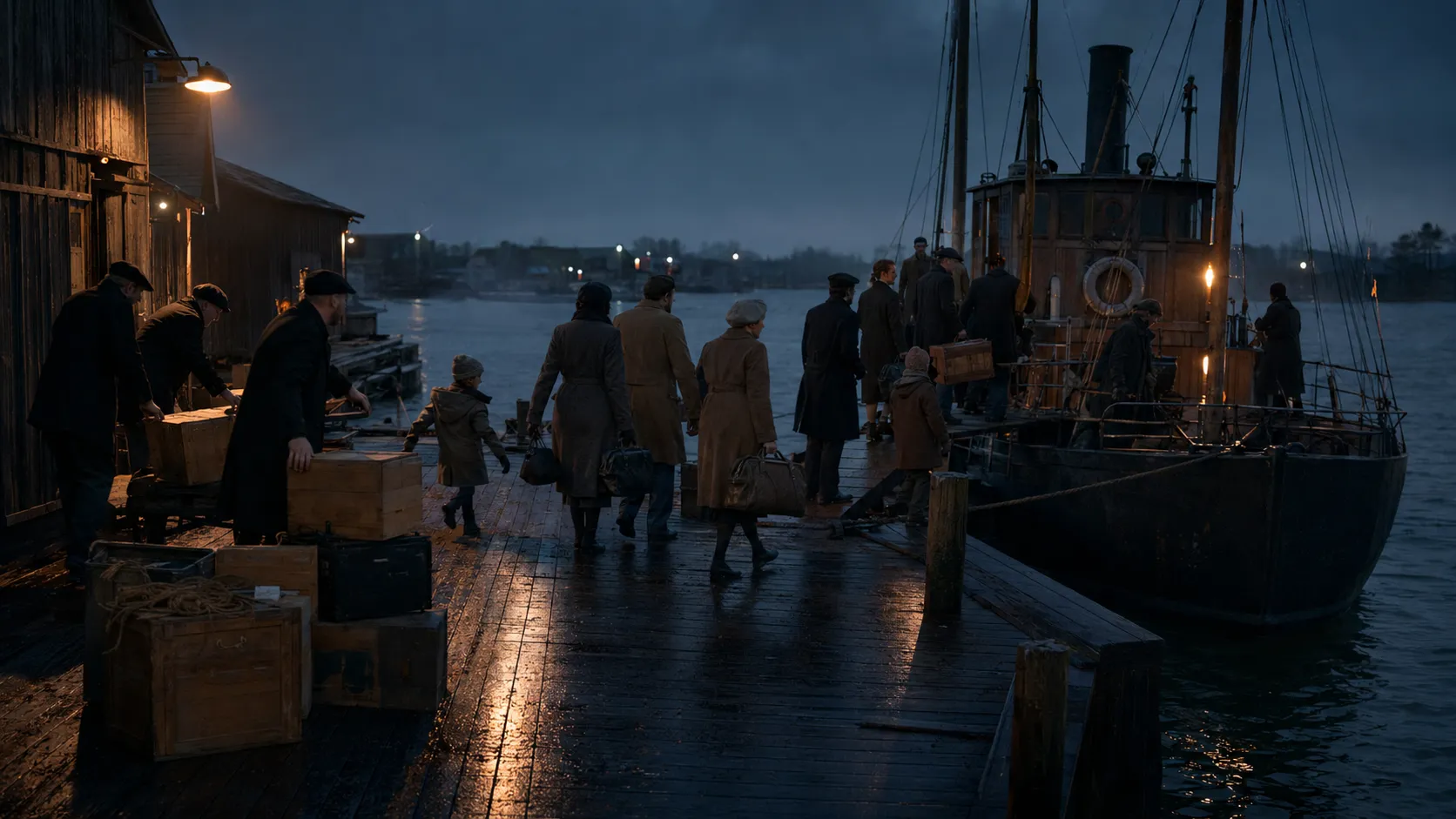
In that reconstruction, the Ryans took a circuitous route and spent roughly twelve hours reaching Warsaw. They collected Kukliński, Joanna, Waldemar, and Bogdan, concealed them under blankets and raincoats in the vehicle, and drove them to the U.S. Embassy. There, the four were transferred into a diplomatic van and hidden inside large boxes.
The van then began the long trip west. The CIA-symposium account cited above says the vehicle passed three checkpoints. A retelling based on Weiser’s book adds that border guards found the diplomatic vehicle’s plates were not properly registered with border control. The family, sealed in the rear, heard an argument and then footsteps approaching. A search would have ended the operation.
The doors remained closed. The vehicle was allowed to proceed.
The Wesleyan account places the family at an American military base in West Berlin at 9:55 a.m. after the overnight journey. The Polish Institute of National Remembrance records that all four reached the United States on November 11, 1981; they were then placed under new identities.
The extraction mechanics should be treated as a sourced reconstruction, not as a fully declassified record. Weiser’s 1992 profile confirms the November 2 warning, the emergency meeting, and three aborted starts, but reported that Kukliński and American officials then declined to discuss how the final escape worked. The later Wesleyan account, summarizing Weiser’s 2004 book after his access to CIA case material and interviews, supplies the Ryan–embassy–van sequence. The CIA’s declassified Kukliński collection documents the wider martial-law reporting but not every extraction detail, while the Polish Institute of National Remembrance notes that Kukliński himself gave two versions, one of which described a different route involving a disguise and air travel. The firm public facts are that the family of four left Poland on the night of November 7–8 and reached the United States on November 11. The vehicle-and-boxes sequence is the best-known detailed account, but it is not the only version in the public record.
What his disappearance told the Warsaw Pact
Extraction saved the family. It also imposed an unavoidable counterintelligence cost.
Before Kukliński vanished, Polish authorities had been warned through the still-unidentified “Rome sources” that someone within a narrow compartment had passed the martial-law plan to the Americans. The warning may have originated through Soviet or Vatican-related channels; the public record does not resolve that question. Polish investigators did not yet have a public confession, an arrest, or a completed case. When Kukliński failed to appear and his wife and sons disappeared with him, uncertainty largely collapsed.
His flight did not reveal precisely how every exchange had occurred, which American officers had participated, or how much material had been compromised. As a counterintelligence inference, however, it effectively answered the first question in the investigation: which of the few officers with access had been the source? The timing of the family’s disappearance—days after the internal warning—made an innocent explanation implausible.
That is the paradox of exfiltration. It protects the source from arrest while often confirming the hostile service’s suspicions. Remaining in place might have preserved uncertainty for a little longer, but Kukliński believed it would end in interrogation and death. Leaving sacrificed deniability to save four lives.
In 1984, a Polish military court convicted him of treason in absentia and sentenced him to death. The communist state could now portray his disappearance as proof of betrayal. It could not recover the thousands of pages already in American hands.
The warning that could not stop martial law
Just over a month after the escape, on December 13, 1981, General Wojciech Jaruzelski imposed martial law.
Security forces detained Solidarity leaders and other opposition figures, restricted travel and communications, occupied workplaces and public spaces, and attempted to break the movement through coercion. Kukliński’s reporting had given Washington exceptional insight into the planning. Intelligence, however, is not control. Knowing that a government is preparing repression does not necessarily provide the political leverage or operational means to prevent it.
His contribution was broader than one forecast. For nearly a decade, he had allowed American analysts to compare what the Warsaw Pact said with what its officers planned. That continuing access helped U.S. officials assess force structures, exercises, command relationships, strategic intentions, and the role Poland would be expected to play in a European war, with direct implications for NATO defense planning. It gave policymakers a human source inside a system otherwise designed to conceal its internal logic.
The official Polish National Security Bureau summary of the material includes nuclear-war planning, weapons and equipment data, Soviet air-defense locations in Poland and East Germany, methods of avoiding satellite observation, and plans for attacking NATO countries. That breadth explains why American officials later described Kukliński as one of the most consequential sources of the Cold War.
Hero, traitor, or the wrong binary?
The operational record does not settle the argument over loyalty. It sharpens it.
Kukliński was a serving Polish officer who deliberately transferred military secrets to a foreign state. That is the core of the case against him, and it should not be softened into abstraction. Other officers who disliked Soviet domination nevertheless believed their oath and professional duty prohibited what he did.
His defense begins from another fact: the Polish People’s Republic was not strategically sovereign. The Soviet Union dominated the alliance, stationed forces in Poland, and expected Polish territory and lives to serve a wider Soviet war plan. Kukliński concluded that obedience to the state could become betrayal of the nation.
Calling him simply a hero makes an agonizing private choice look preordained. Calling him simply a traitor assumes that the Polish state, the Polish army, the Warsaw Pact, and the Polish nation all had the same interests. They did not.
He also made the decision alone. His wife and sons carried consequences they had not chosen and did not understand until the final days. That does not erase his stated motives. It does prevent the story from becoming a clean parable about courage. Espionage creates concentric circles of risk, and the people closest to the source are often inside them without consent.
Exile and the price paid by his sons
In the United States, the family lived under assumed identities and remained separated from Poland. The CIA awarded Kukliński its Distinguished Intelligence Medal, but recognition could not restore the lives they had left in Warsaw.
The Cold War ended. Poland’s communist system fell. The Warsaw Pact dissolved. Then both sons died in the United States within a short period.
Bogdan was lost at sea when his boat capsized; his body was never recovered. Waldemar was struck and killed by a vehicle on a college campus. The circumstances inevitably produced suspicion that the deaths were retaliation for their father’s work.
No publicly established evidence has proved that either death was an intelligence operation. The Polish Institute of National Remembrance describes the circumstances as unresolved, while the published account of the 2008 CIA historical symposium says no evidence beyond the circumstantial pointed to a conspiracy. Suspicion belongs in the history. It should not be presented as proof.
The deaths remain essential to the story for another reason. Both sons were part of the exfiltration. They had climbed into the vehicle in Warsaw, hidden at the embassy, crossed the checkpoints, and begun new lives because of an operation their father had concealed from them. Whatever caused their later deaths, Kukliński spent his remaining years after losing both children whose lives had already been transformed by his choice.
Return and burial in Warsaw
After communism collapsed, Poland began revisiting the legal and historical judgment against Kukliński. His death sentence was overturned, and the renewed case was discontinued in 1997. He returned publicly to Poland in 1998, welcomed as a patriot in some places and condemned as a traitor in others.
Kukliński died after a stroke in Tampa, Florida, on February 11, 2004. His ashes were taken to Poland, and on June 19 he was buried in the Avenue of the Deserving at Warsaw’s Powązki Military Cemetery, together with the remains of Waldemar.
Powązki is a fittingly complicated resting place. Its graves contain officers, political leaders, resistance figures, victims of repression, and people situated on opposing sides of Poland’s twentieth-century struggles. Kukliński’s burial there did not end the debate. It placed the debate inside the country’s landscape of national memory.
In 2016, President Andrzej Duda posthumously promoted him to brigadier general. The Polish state that had once condemned him to death had formally recast him as a senior officer. History reversed the official verdict. It did not make the choices behind it less difficult.
Following Kukliński’s Warsaw
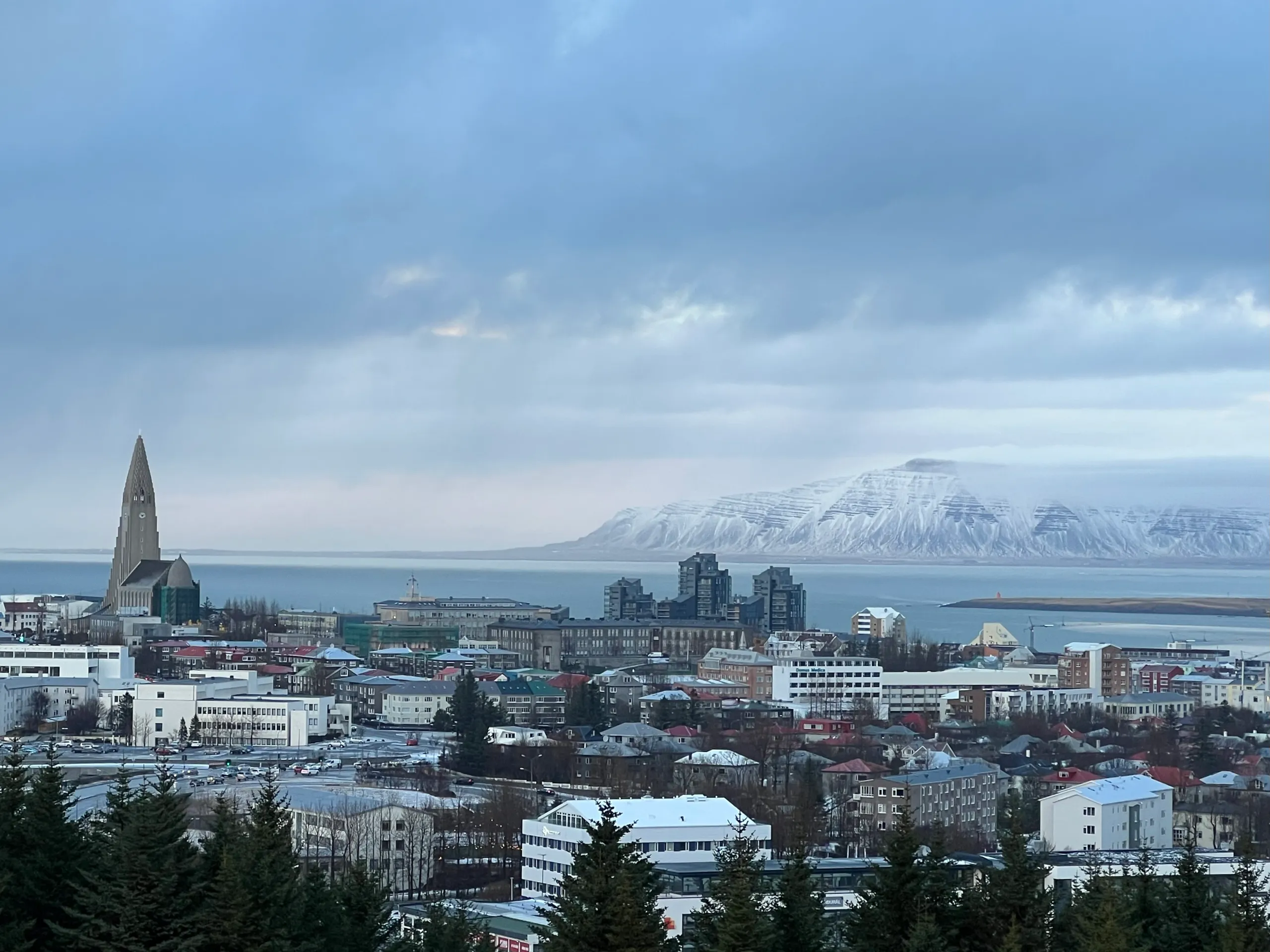
The operation becomes easier to understand when Warsaw is treated as terrain rather than backdrop. The Warsaw Espionage History Map connects the General Kukliński Cold War Museum, his former family home, the institutional setting of the General Staff, and his grave at Powązki with the wider landscape of communist security, censorship, Solidarity, and resistance.
Tradecraft Travel has also added intelligence-history maps for Leipzig, Vienna, Helsinki, Tallinn, Riga, and Vilnius. They are resources for reading the surviving geography of Cold War choices, not substitutes for the history itself.
Five of those capitals form the route of In Moscow’s Shadow, a developing intelligence-history journey from Helsinki through Tallinn, Riga, and Vilnius to Warsaw. Kukliński’s case gives the journey’s central question a human scale: how did people and nations make consequential choices while living beside, beneath, or against Soviet power?
Continue the conversation on October 13
On Tuesday, October 13, 2026, at 7:30 p.m. Eastern, John Sipher, Silvia Cilia of Kensington Tours, and I will host a live online conversation about Tradecraft Travel’s intelligence-history journeys—including In Moscow’s Shadow—and the people, places, and historical questions that shape them.
Register for the October 13 live event to join the discussion. Registration is required.