
Continental Europe · Espionage Travel
Espionage History Travel in Continental Europe
Cold War cities, divided ground, surveillance states, defections, and intelligence operations across the places where Europe’s secret history became visible.
Follow Berlin, Leipzig, Prague, and Vienna through Dead Drops & Double Agents—or continue north and east through Helsinki, Tallinn, Riga, Vilnius, and Warsaw in In Moscow’s Shadow.
Divided Ground
Cities shaped by occupation zones, borders, walls, and the daily pressure of living between East and West.
Surveillance States
Places where internal security services, informant networks, and political control entered ordinary life.
Resistance & Dissent
Streets, churches, civic spaces, and private networks where people pushed back against authoritarian power.
Clandestine Contact
Crossroads where diplomats, defectors, intelligence officers, and sources moved through the gray zones of the Cold War.
CONTINENTAL EUROPE
Where the Cold War became visible
Continental Europe gives intelligence history a physical landscape. Berlin, Leipzig, Prague, and Vienna were not just backdrops to the Cold War. They were divided cities, surveillance environments, border zones, occupation capitals, listening posts, meeting grounds, and places where ideology and personal risk collided.
This regional guide connects those places to the larger intelligence contest between East and West. It is built for travelers who want to understand how espionage, counterintelligence, resistance, repression, and diplomacy unfolded on real streets, in real buildings, and across borders that shaped modern Europe.
What this region covers
Cold War Berlin, divided Germany, East German surveillance, Prague under occupation and resistance, Vienna as a four-power intelligence crossroads, and the broader European terrain of defections, dead drops, border pressure, and clandestine meetings.
Start with the key cities, then move into the journey and related briefings.
Key Cities
The cities where the Cold War came down to ground level
Explore nine intelligence-history maps across Central Europe, Finland, the Baltic capitals, and Warsaw. Each map connects the larger historical arc to the streets, institutions, memorials, and operational terrain that carry the story.
Berlin
Divided ground and front-line intelligence
Occupation sectors, border crossings, escape routes, and intelligence operations made Berlin a Cold War fault line. Explore the geography of division and the places where confrontation became part of daily life.
Explore the Berlin Map →Leipzig
Surveillance, dissent, and the limits of control
Stasi institutions, churches, and demonstration routes connect East German surveillance to the civic resistance of 1989. Leipzig reveals how state security entered ordinary life—and how public courage challenged its reach.
Explore the Leipzig Map →Prague
Occupation, resistance, and state security
Wartime resistance, communist surveillance, and dissident networks give Prague’s familiar streets a deeper history. Follow the places where occupation, ideology, and individual choices shaped the struggle for independence.
Explore the Prague Map →Vienna
Four-power occupation and clandestine contact
Postwar occupation and Austria’s later neutrality placed Vienna at a crossroads between East and West. Explore the settings where diplomacy, intelligence, and clandestine approaches overlapped.
Explore the Vienna Map →Helsinki
Survival, signals, and strategic neutrality
Finlandization, signals intelligence, wartime contingency planning, and diplomatic pressure made Helsinki a study in national survival beside the Soviet Union.
Explore the Helsinki Map →Tallinn
Occupation, surveillance, and regained sovereignty
Hotel Viru, KGB surveillance sites, occupation prisons, and independence landmarks show how Soviet control reached into daily life—and how Estonia reclaimed its sovereignty.
Explore the Tallinn Map →Riga
The machinery of control and national resistance
The Corner House, occupation museums, resistance stories, and Soviet contingency sites reveal Latvia’s experience of surveillance, repression, and strategic pressure.
Explore the Riga Map →Vilnius
Prison cells, partisan war, and survival
The former KGB headquarters and prison, partisan memory, religious resistance, and Old Town terrain connect Soviet occupation to Lithuania’s long struggle for independence.
Explore the Vilnius Map →Warsaw
Resistance, state security, and the eastern frontier
Wartime resistance, communist security institutions, Soviet-bloc power, and modern alliance geography make Warsaw a bridge between occupation history and today’s eastern frontier.
Explore the Warsaw Map →FEATURED JOURNEY
Dead Drops & Double Agents
Tradecraft Travel’s flagship Continental Europe journey follows the intelligence terrain of Berlin, Leipzig, Prague, and Vienna. Led by retired CIA officers, the trip connects Cold War pressure, surveillance, resistance, defections, and clandestine contact to the real places where the contest between East and West unfolded.
This is not a generic spy-themed tour. The itinerary connects the ground to the history: divided Berlin, the machinery of the East German state, Prague’s experience of occupation and resistance, and Vienna’s role as a four-power crossroads for diplomacy and clandestine contact.
Berlin · Leipzig · Prague · Vienna
APRIL 2027 · OCTOBER 2027

related briefings
Read the history behind the route
These briefings give more context for the cities at the center of Dead Drops & Double Agents — Berlin, Leipzig, Prague, Vienna, and the broader Cold War logic that makes Continental Europe such important intelligence-history terrain.
LEIPZIG
The Night the State Blinked

How Leipzig’s Monday Demonstrations exposed the limits of surveillance, fear, and state control — and why the city belongs in a serious Cold War intelligence journey.
PRAGUE
The City That Refused to Be Silent
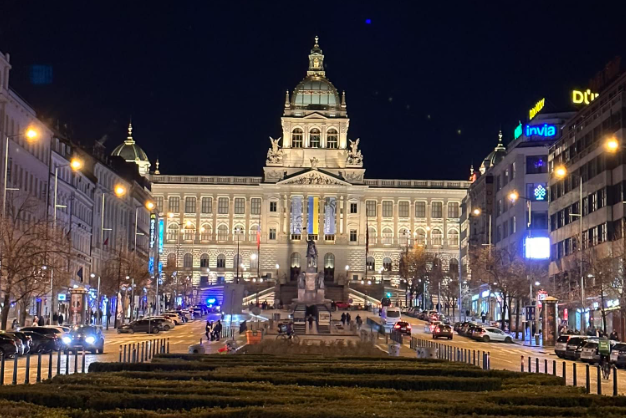
Prague’s Cold War story is one of occupation, surveillance, dissent, and the quiet pressure of ideology entering daily life.
VIENNA
Why Neutral Austria Became a Spy Crossroads

Vienna shows the Cold War as proximity, ambiguity, and access: a neutral city where diplomats, journalists, officials, émigrés, and intelligence officers could plausibly cross paths.
BERLIN
Berlin’s Bridge of Spies

Glienicke Bridge became one of the Cold War’s most visible intelligence landmarks: a crossing point where prisoners, spies, leverage, and state power met in public view.
FEATURED 2028 JOURNEY · INTEREST LIST OPEN
In Moscow’s Shadow: Finland, the Baltic Capitals, and Warsaw
Dead Drops & Double Agents begins with Berlin, Leipzig, Prague, and Vienna, but Continental Europe offers a much wider intelligence-history landscape. Future guides and journey concepts may expand into other cities shaped by occupation, resistance, Soviet control, NATO pressure, border politics, and the long shadow of the Cold War.
WARSAW
Resistance, Soviet influence, and Cold War pressure
Warsaw connects wartime destruction, underground resistance, Soviet domination, internal security, and Poland’s long struggle between empire, ideology, and national independence.
HELSINKI
Neutral ground and the Finnish-Soviet shadow
TALLINN & THE BALTIC CAPITALS
Occupation, resistance, and the modern eastern flank
Tallinn, Riga, and Vilnius connect Soviet occupation, national resistance, intelligence pressure, and the long memory of control to today’s security frontier between Russia, NATO, and Europe’s democratic borderlands.
In Moscow’s Shadow is now a featured Continental Europe journey in development, with a preferred May 2028 departure. The working route connects Helsinki, Tallinn, Riga, Vilnius, and Warsaw through signals intelligence, occupation, resistance, Soviet control, national memory, and the modern security frontier. The nonbinding interest list is open while pricing and subject-matter leadership are finalized. View the journey and join interest →
start the conversation
Ready to explore Continental Europe through intelligence history?
Whether you are interested in Dead Drops & Double Agents, a future regional departure, or a private intelligence-history itinerary through Berlin, Prague, Vienna, Warsaw, Helsinki, or the Baltic capitals, Tradecraft Travel can help connect serious history to real places and professionally planned travel.