
Dates matter.
The date of a message is not the date it was decrypted—or the date its subject was identified. The released VENONA collection should be read with that sequence in mind.
INTERACTIVE NETWORK ATLAS
Follow the network.
Watch it evolve.
Examine the evidence.
Explore the people, places, and networks behind the Cambridge Five, atomic espionage, and the secrets revealed by VENONA.
Illustrative artwork · places and routes are symbolic
A DIFFERENT KIND OF MAP
A college, an embassy, a laboratory and a codebreaking room can belong to the same history without belonging to the same operation. This atlas helps you follow those distinctions.
Begin with a story. Move through time, switch lenses and inspect the evidence behind a connection. The same people, places and records appear in every lens. Drag icons to make room; choose Full Network for independent exploration.
THREE WAYS IN
Each starting point opens a different part of the atlas.
THE INTERACTIVE ATLAS
WATCH THE NETWORK EVOLVE
Year view shows active connections. ≈ means an approximate historical window.
ASK A DIFFERENT QUESTION OF THE SAME NETWORK
Filters narrow this story and year. All dates retains undated records; Full Network restores the wider database.
DIRECT CONNECTIONS
Select a point to follow its connections. Lines show different kinds of relationship; read the dossier for each one.
Watch the whole network evolve. Follow the full atlas from 1930 to 1964. Pause or drag the year to explore.
Cambridge recruitment era · Active connections; ≈ approximate period.
A line may mean recruitment, employment, investigation or a transfer of information. It does not always mean collaboration.
The directory follows this story and year. Search the complete database to find any record, including those outside the timeline; every dossier retains its full history.
READ THE EVIDENCE
Explore the linked source for each relationship. Open the dossier to see what the connection actually describes.
Solid lines show operational relationships; arrows show recruitment or information flow. Social and family ties are dashed; institutional, professional and access links are dotted. Investigation uses a distinct dash pattern. Amber marks VENONA support. Every relationship retains its own evidence status and date.
The date of a message is not the date it was decrypted—or the date its subject was identified. The released VENONA collection should be read with that sequence in mind.
The history of Soviet intelligence organizations includes changing state-security structures and a separate military intelligence service. The atlas preserves that distinction.
A place can connect a scientist, an agent and an investigator for entirely different reasons. Read the relationship label before drawing a conclusion from the line.
READING THE GROUND
Move between the human connections and the streets, institutions and landscapes that make them tangible.
Explore the city’s intelligence landscape through the annotated London map.
Read the London map ↗UNITED STATESReturn to the city behind the contacts, couriers and transatlantic traffic.
Read the New York map ↗UNITED STATESPut diplomatic access and the counterintelligence story into their urban setting.
Read the Washington map ↗CONTINUE THE BRIEFING
Continue through The VENONA Files for the cryptanalytic story behind the amber connections. For a journey through Britain’s intelligence landscape, explore War Rooms & Walk-Ins.
This is a curated starting network, not an exhaustive roster. Dossiers link to government records, institutional histories and specialist research. Absence from the atlas says nothing about a person’s historical role. Geographic markers identify sites or regions, not covert meeting coordinates.
The National Archives’ 2025 MI5 file release, the National Park Service’s Fuchs profile, and the FBI’s account of the atomic espionage investigation provide different windows into the record. Each should be read in context.
Time shows you when. Evidence tells you what we actually know.
Year selections use calendar-year resolution. Approximate windows are marked; they are not exact recruitment or appointment dates. Undated records remain accessible in All dates. People remain available as historical context after entering the story; visible lines carry the period-specific claims. This is a retrospective reconstruction, not a simulation of everything investigators knew at the time.
The hero is AI-generated editorial artwork. Historical portraits, where shown, are real archival photographs with credits in the dossier. Edition: September 2026.
Behind the Network
Follow the people, decisions and places behind the atlas through our intelligence-history briefings.
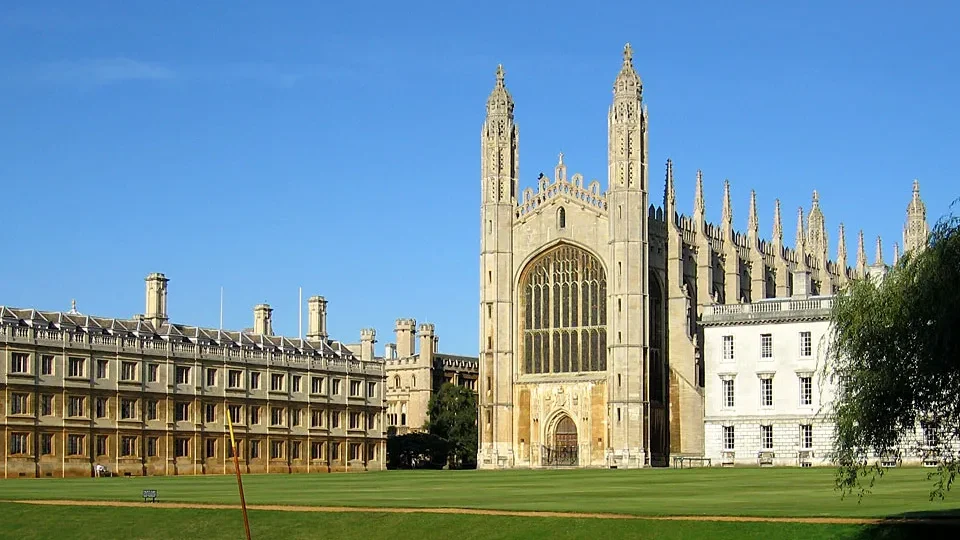
Featured Briefing
Reading the Ground | Cambridge
How university friendships, political conviction and institutional trust opened doors into Britain’s diplomatic and intelligence services.
Read the Featured BriefingFeatured photo: Andrew Dunn / Wikimedia Commons · CC BY-SA 2.0. Cropped.
More Espionage Briefings
Recent intelligence-history articles, updated automatically.
Intelligence History
Intelligence History
Intelligence History
Intelligence History
Intelligence History
Intelligence History
TRADECRAFT TRAVEL Insight That Moves You.