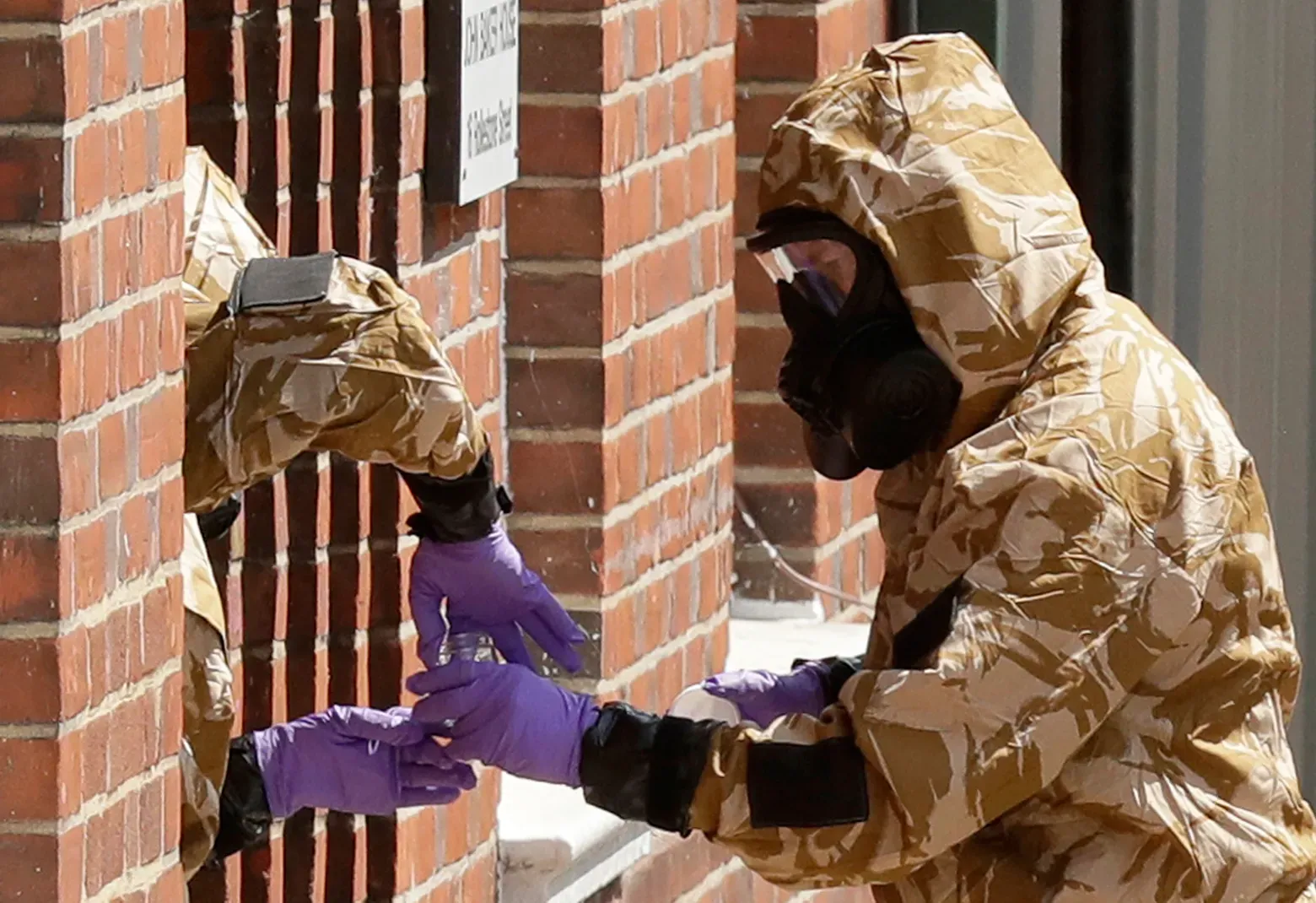

CNN is bringing the Sergei Skripal case back into public view with The Salisbury Poisonings: A Spy Next Door, a film about the 2018 Novichok attack that turned a quiet English cathedral city into the center of an international crisis.
That timing is useful.
I recently returned to the Skripal case while researching War Rooms & Walk Ins, Tradecraft Travel’s newly announced London-based intelligence history tour. The final day of that tour will visit sites connected not only to Skripal, but also to Alexander Litvinenko and Georgi Markov — three cases that show how espionage, exile, assassination, and public life have collided on British streets.
It is easy to treat these stories as spy-thriller material.
A former GRU officer. A nerve agent. False identities. CCTV. A hotel bar. An umbrella. A perfume bottle.
But that is not why these cases matter.
They matter because they reveal the human cost of intelligence conflict when state action crosses into civilian space.
A public bench.
A front door.
A hotel table.
A bridge near Waterloo.
A bottle mistaken for perfume.
A woman who had nothing to do with espionage and died anyway.
That is the part of the story that deserves the most careful attention.
The Skripal case did not stay inside the target folder
Sergei Skripal was the intended target.
He had served in Russian military intelligence, passed information to the British, been imprisoned in Russia, and eventually came to the United Kingdom as part of a spy exchange. In another era, that might have been the end of his operational story.
It was not.
In March 2018, Skripal and his daughter, Yulia, collapsed in Salisbury after exposure to Novichok, a nerve agent associated with the Soviet chemical weapons program. Both survived after intensive treatment. Detective Sergeant Nick Bailey, who responded during the investigation, was also poisoned.
The case quickly became one of the defining intelligence incidents of the post-Cold War period.
But its moral weight deepened months later.
Dawn Sturgess was not a former intelligence officer. She was not a defector. She was not part of a service, a state, or a covert channel. She was a British citizen living her life in Wiltshire.
In June 2018, she came into contact with what she believed was a perfume bottle. It was not perfume. According to the official Dawn Sturgess Inquiry report, the bottle contained Novichok connected to the earlier Skripal attack.
She died on 8 July 2018.
That is where the language of espionage begins to fail.
Terms like “operation,” “target,” “agent,” and “asset” can make events sound controlled and bounded. But operations take place in real places in the real world, and the real world is full of bystanders.
Salisbury reminds us that state action does not remain abstract once it touches a street, a home, a public place, or an object that someone might pick up without knowing what it is.
Attribution matters — and so does precision
These cases are often grouped together. They should be. But they should not be treated as identical.
Litvinenko and Skripal/Sturgess sit in the modern record as cases formally attributed by the UK to Russian state organs — the Federal Security Service (FSB) in Litvinenko’s case and the Main Intelligence Directorate (GRU) in Salisbury.
In Litvinenko’s case, the UK’s Litvinenko Inquiry found a strong probability that Andrey Lugovoy and Dmitri Kovtun acted under the direction of the FSB, Russia’s domestic security service, and that the operation was probably approved by Nikolai Patrushev and President Vladimir Putin.
In Salisbury, the UK government attributed the attack to the GRU, Russia’s military intelligence service. Following the Dawn Sturgess Inquiry, the UK announced sanctions against the GRU and stated that the inquiry found Putin had personally ordered the activity in Salisbury.
The United States also acted in relation to both cases. The U.S. Treasury designated Lugovoy and Kovtun under the Magnitsky Act as responsible for the extrajudicial killing of Alexander Litvinenko, and later sanctioned GRU personnel for malign activity that included an assassination attempt in the United Kingdom.
Markov’s murder belongs to an earlier Cold War pattern: a Bulgarian dissident killed in London in an operation widely associated with Bulgarian State Security, with alleged or reported Soviet KGB assistance.
That distinction matters.
Markov’s case is not in the same formal UK or U.S. attribution category as Litvinenko and Skripal. A useful U.S. government summary from the State Department’s Office of the Historian notes that speculation about Bulgarian Secret Police involvement was widespread at the time, and that former KGB General Oleg Kalugin later alleged Bulgarian Secret Police requested KGB help for the assassination. The U.S. Agency for Global Media preserves the essential facts of the case: Markov was a writer, broadcaster, husband, and father who died in London in 1978 after being stabbed in the leg with an umbrella containing ricin.
The evidentiary posture is different.
But the pattern is familiar: state services taking their conflicts into public space.
The method was extraordinary. The setting was ordinary.
That ordinariness is what makes these cases so unsettling.
Litvinenko was poisoned after drinking tea at the Pine Bar of the Millennium Hotel in London. The setting was not a remote border crossing or a dark alley. It was a public hotel bar in one of the world’s most watched cities.
Markov was attacked near Waterloo Bridge on his way to work at the BBC.
The Skripals collapsed in Salisbury, far from the architecture of state power. Dawn Sturgess later encountered the discarded poison as an object in ordinary life.
A hotel.
A bridge.
A bench.
A bottle.
These are not the places people associate with state-directed violence. That is exactly why they matter.
The cases are remembered as espionage stories. But they are also stories of families, colleagues, investigators, doctors, hotel staff, police officers, and ordinary citizens drawn into the blast radius of secret decisions.
Why this belongs on a travel itinerary
That may seem like an odd question.
Why include these sites on a travel program at all?
Because places remember what happened in them.
The final full day of War Rooms & Walk Ins will visit sites connected to Skripal, Litvinenko, and Markov. That is intentional.
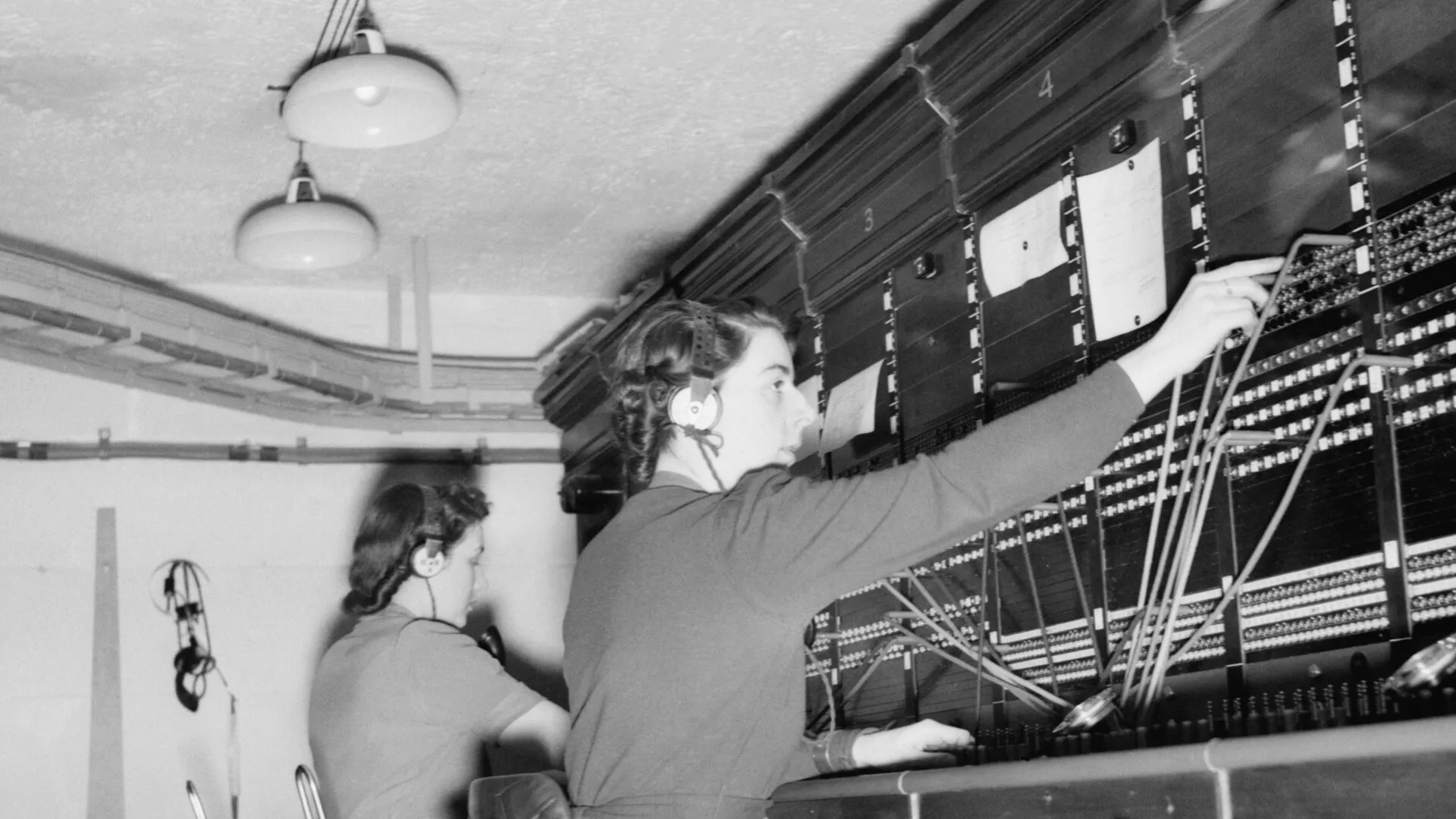
The tour begins with Britain’s wartime secrecy, institutional decision-making, codebreaking, and the physical geography of power: Whitehall, Westminster, the Churchill War Rooms, and the architecture of a state under pressure.
But the story cannot end in 1945.
Intelligence history did not end with the Second World War. It did not end with the Cold War. It changed form.
The tools changed.
The services changed.
The visibility changed.
The human questions did not.
Who takes the risk?
Who pays the price?
What does a state owe to those who serve it?
What does it owe to the public when covert conflict enters civilian space?
And what happens when a government decides that a person living abroad remains a target?
These are not abstract questions. They are written into London’s streets.
The danger of turning espionage into theater
There is a temptation in espionage tourism to lean into the props.
Umbrellas. Poison. Fake passports. Dead drops. Safe houses. Disguises.
Those details matter. They help people enter the story. They make the past tangible.
But if that is where the telling stops, the story becomes too small.
Markov’s case is not important because an umbrella may have been used. It is important because a dissident writer was killed for what he represented.
Litvinenko’s case is not important because polonium is unusual. It is important because a public inquiry found that a former Russian officer was murdered in London and that the Russian state was probably involved.
The Skripal case is not important only because Novichok is terrifying. It is important because an attempted assassination spread risk into a community and ultimately killed Dawn Sturgess, a woman who had no role in the intelligence conflict that brought the poison to England.
That is why these cases have to be approached with care.
A serious espionage tour should not make visitors feel as if they are playing spy for a day.
It should help them see the human terrain more clearly.
What Salisbury still asks us to see
When I revisited the Skripal case while building the London-based tour, I found myself less interested in the familiar mechanics of the story and more focused on the ordinary settings.
The ordinariness is the point.
Salisbury was not a battlefield.
The Millennium Hotel was not a war zone.
Waterloo Bridge was not a secret facility.
They were public places where hidden conflict became visible.
That is one of the reasons travel can be such a powerful way to engage history. A book can give you chronology. A documentary can give you narrative. But standing in the physical environment forces a different kind of attention.
You notice scale.
You notice proximity.
You notice how close the extraordinary often sits to the everyday.
And in intelligence history, that distinction matters.
Because the stories that last are rarely just about services, states, or secrets.
They are about people under pressure.
Sometimes they are officers and defectors. Sometimes they are dissidents and investigators. Sometimes they are doctors, police officers, family members, or citizens who never volunteered to be part of the story.
The Skripal case belongs in the history of espionage.
So do Litvinenko and Markov.
But they also belong in the history of human cost.
That is why we will walk those sites carefully.
In Development
War Rooms & Walk-Ins
A September 2027 London-based journey connecting wartime command, Bletchley Park, the Cambridge spy ring, and modern Russian intelligence operations in Britain.