Reading the Ground — London · Chapter 3
Leave Whitehall by way of King Charles Street and the city changes almost immediately.
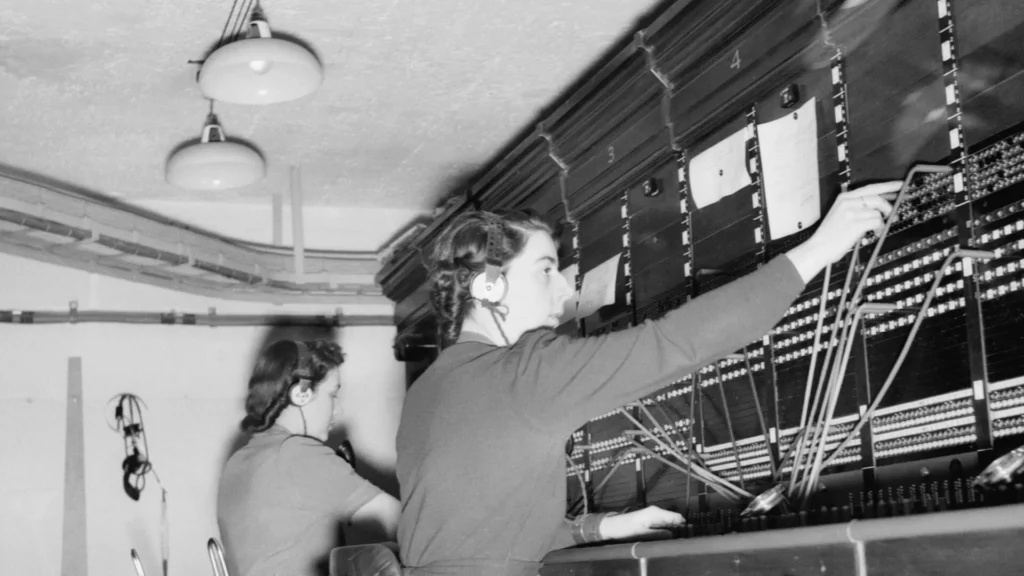
The open government quarter gives way to a staircase, a controlled entrance, narrow corridors, low ceilings, office doors, switchboards, maps, clocks, and rooms built for work rather than ceremony. The monuments of Westminster remain above. Below them sits the preserved machinery of wartime government.
The Churchill War Rooms are often presented as a stage for one man: Winston Churchill standing over a map, issuing instructions while bombs fell on London. Churchill matters, and the rooms are inseparable from his leadership. But that familiar image can make the institution around him disappear.
No prime minister directs a war from a map alone.
Information had to arrive. Reports had to be checked. Sources had to be protected. Conflicting accounts had to be reconciled. Military implications had to be separated from assumptions. Uncertainty had to be stated clearly enough for leaders to act without pretending that it had disappeared.
That is where Chapter 2 of Reading the Ground — London left us. Britain had created the Special Operations Executive because occupied Europe demanded action as well as intelligence collection. The next question is what happened when information returned to London.
How did a secret become a judgment—and how did a judgment become a decision?
A basement built for continuity, not legend
The Cabinet War Rooms became fully operational on 27 August 1939, one week before Britain declared war on Germany. The basement beneath government offices near Whitehall had been adapted to give the War Cabinet a place to meet during air raids and to support a military information center organized around the Map Room.
The setting now feels inevitable. It was not.
The rooms were a practical answer to an immediate vulnerability: Britain’s political and military leadership needed to continue functioning if bombing made ordinary offices unsafe. They were not an impregnable subterranean fortress. According to the Imperial War Museums’ history of the Cabinet War Rooms, a reinforced concrete slab up to three meters thick was installed above parts of the complex in December 1940, but even that protection had limits.
The value of the rooms therefore came less from absolute safety than from continuity and concentration. Communications, military reporting, staff work, senior officers, Cabinet secretaries, ministers, and meeting spaces could remain connected while the city above was under attack.
The War Cabinet eventually met there 115 times, principally during the Blitz and later German V-weapon attacks. The rooms remained in use around the clock until 16 August 1945, when the lights in the Map Room were finally turned off.
Those facts explain why the site survived. They do not yet explain how it worked.
The Map Room was a picture of the war—not the war itself
The Map Room was the complex’s military information center. Officers and staff maintained charts, tracked developments, handled reports, and gave senior leaders a shared picture of events across several theaters.
Today, the room’s wall maps and plotting surfaces are among its most arresting objects. They seem to offer the war at a glance: fronts, convoys, positions, movements, distances, losses, and pressure points reduced to marks that a human mind can absorb.
But every mark on a map is the end of an information chain.
A convoy pin may begin with a ship’s report. A change on a front may rest on messages from a command, aerial reconnaissance, captured documents, diplomatic reporting, resistance sources, prisoner interrogation, or intercepted communications. Before information appeared on a wall, someone had selected it, dated it, interpreted it, and decided that it was reliable enough to display.
The map made complexity visible. It could not make uncertainty disappear.
That distinction is central to reading the ground beneath Whitehall. The Map Room was not a chamber of omniscience. It was a continuously updated model of a war too large, fast, and contested for any one person—or any one source—to see whole.
Maps also create an illusion that intelligence professionals learn to resist. A clean symbol looks more certain than the reporting behind it may be. A blank area may represent calm, an information gap, a delayed report, or an adversary’s successful deception. The most recently updated display can still be wrong.
The room’s achievement was not perfect knowledge. It was the disciplined construction of a common operating picture from incomplete information.
Collection was only the beginning
Wartime Britain collected information through many systems: military commands, reconnaissance, diplomats, the Secret Intelligence Service, the Security Service, prisoners, resistance networks, SOE reporting, radio interception, and the service intelligence staffs.
Those streams did not arrive with equal speed, reliability, or meaning.
A decrypted message might be authentic but incomplete. A human source might be well placed but mistaken. A diplomatic report might describe political intent without revealing military capability. A reconnaissance photograph might show what was present at a particular moment while saying little about what would happen next.
Collection answers a version of What have we obtained?
Assessment asks harder questions. What does it mean? How reliable is it? What other information supports or contradicts it? What is missing? Which explanation best fits the evidence? What might the adversary do next? What difference should any of this make to the decision at hand?
That work is less cinematic than acquiring the secret. It is also where much of intelligence value is created.
Bletchley Park sent intelligence, not magic
Bletchley Park offers the clearest example.
Popular memory often compresses its work into one dramatic act: codebreakers broke Enigma, read German messages, and handed the answers to Churchill. The real process was more demanding.
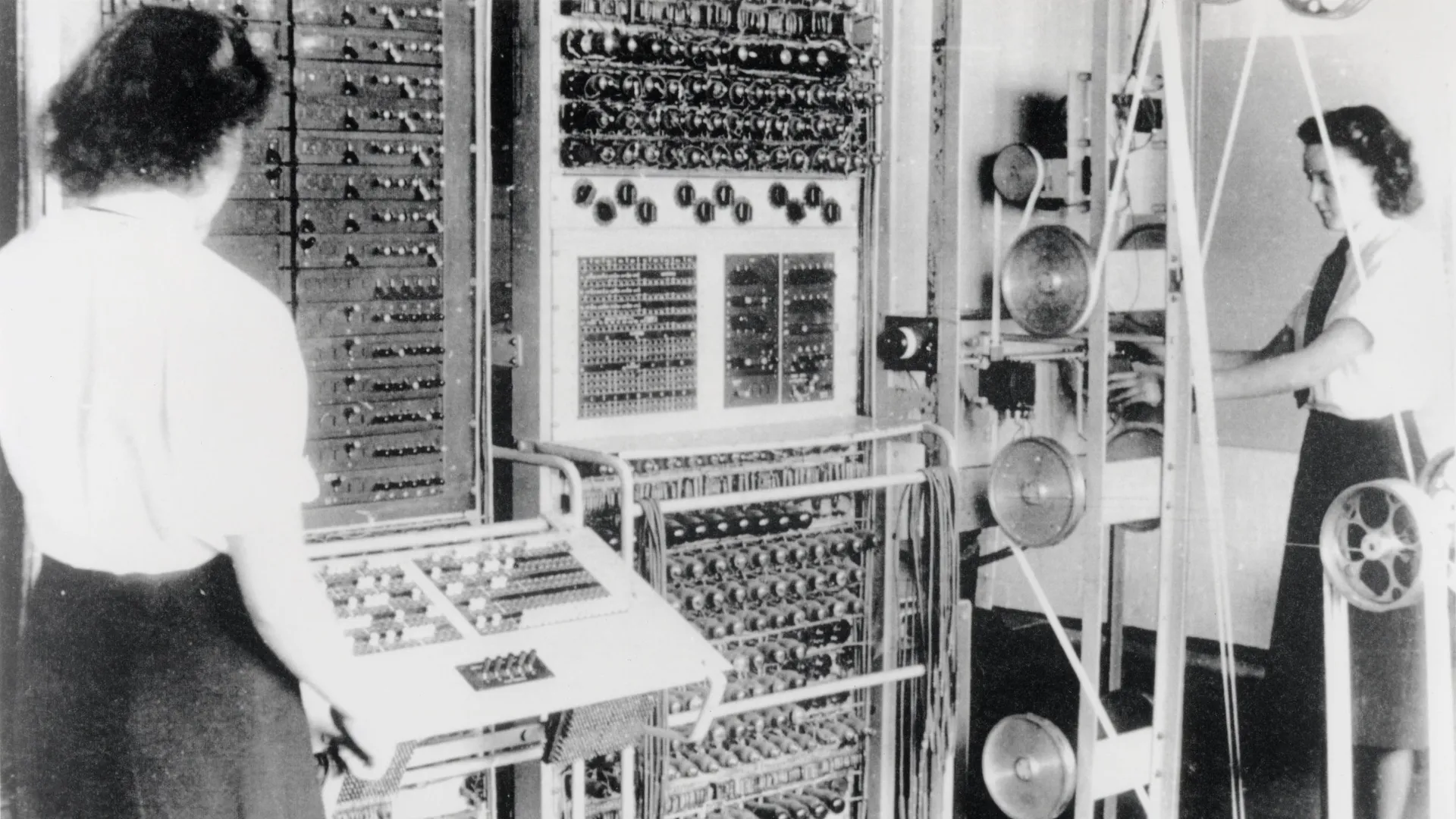
German Army and Air Force Enigma traffic decrypted by Hut 6 passed to Hut 3, where linguists, military specialists, and intelligence staff translated, compared, interpreted, and reported it. The resulting Ultra products were not simply piles of raw messages. Hut 3 produced intelligence reports designed to make the intercepted material useful, and daily reports went to Churchill and senior Allied commanders.
Dissemination required its own protected system. Special Liaison Units and Special Communication Units moved highly sensitive reporting to authorized commands while guarding the source. A commander needed the information. The enemy could not be allowed to learn that Britain was reading protected communications.
That tension shaped action. Intelligence could not always be used in the most obvious way. A response that was too precise, too fast, or too consistently successful might reveal the access that made it possible. Protecting a source could therefore become part of the operational decision.
Ultra was extraordinarily valuable. It was not complete knowledge, and it did not replace other forms of collection. The Imperial War Museums’ account of the destruction of Arctic convoy PQ-17 makes the limitation painfully clear: Bletchley Park reporting did not provide the minute-to-minute reconnaissance needed to remove uncertainty about the German battleship Tirpitz. Access to an exceptional source did not guarantee a sound decision.
Intelligence still had to arrive in time, answer the relevant question, and be interpreted alongside everything else that was known—or believed.
Whitehall needed a machinery for assessment
The British government had recognized before the war that separate services could not be left to evaluate every problem entirely through their own institutional lens.
In January 1936, the Committee of Imperial Defence approved an Inter-Service Intelligence Committee. By July it had evolved into the Joint Intelligence Sub-Committee, commonly identified by the initials JIC. Its membership brought together the intelligence arms of the three military services, with participation from the Industrial Intelligence Centre and, from late 1938, the Foreign Office.
The word joint mattered.
The Navy, Army, and Royal Air Force did not merely possess different information. They asked different questions, operated on different timelines, competed for resources, and viewed enemy capabilities through different professional experience. Diplomatic, industrial, economic, security, and secret intelligence reporting added still more perspectives.
The JIC’s task was not to erase those differences. It was to turn them into coordinated assessment.
The Cabinet Office’s history of Britain’s central intelligence machinery records that the wartime Joint Intelligence Sub-Committee became a principal subcommittee of the Chiefs of Staff Committee. Its secretariat and the Joint Intelligence Staff, established in 1941, formed part of the Offices of the War Cabinet. Immediate intelligence support to operations and longer-range assessment of enemy intentions were related tasks, but they were not identical.
That structure imposed an essential discipline: information from separate organizations had to be compared before it was presented as a joint judgment.
Agreement did not make an assessment true. Committees can compromise their way into ambiguity, suppress a minority view, or mistake institutional consensus for evidence. But a joint process can force assumptions into view. It can require one service to confront evidence held by another. It can distinguish a documented fact from an inference and an inference from a forecast.
The surviving Cabinet and War Cabinet records show the scale of the machinery behind senior decisions: minutes, memoranda, committee papers, Chiefs of Staff records, daily situation reports, and assessments. The famous rooms were the visible center of a much larger system of collection, analysis, coordination, and recordkeeping.
The analyst’s responsibility ends before the decision does
After a career spent mostly as an intelligence analyst, this is the part of the War Rooms that interests me most.
The analyst’s job is not to make uncertainty sound smaller so a briefing feels decisive. It is to tell a leader what the evidence supports, what it does not support, which assumptions carry the judgment, and what developments would change the assessment.
That requires precision without paralysis.
Wartime leaders could not wait for every gap to close. They had to allocate aircraft, protect convoys, choose military objectives, support resistance movements, manage alliances, prepare the public, and decide which risks were acceptable. A useful assessment therefore had to be honest about uncertainty while still helping the government act.
Once the reporting entered the Cabinet Room, however, intelligence became only one part of the decision.
Political authority, military feasibility, logistics, diplomacy, public morale, industrial capacity, time, and human cost all entered with it. Intelligence could describe an adversary’s likely capability or intention. It could warn that an operation faced exposure or that a target was less important than assumed. It could not decide how much risk Britain should accept or what objective was worth the price.
The Cabinet Room preserved by Imperial War Museums is associated with Churchill’s declaration that this was the room from which he would direct the war. The statement captures authority and resolve. The room itself reveals something more complicated.
Churchill did not sit there alone. Ministers, military chiefs, advisers, secretaries, and officials brought different responsibilities into the same confined space. The quality of the decision depended not only on the information available, but also on whether institutions could challenge assumptions, explain consequences, and convert a judgment into coordinated action.
Intelligence mattered. It did not govern.
What the underground setting changed
The War Rooms compressed the physical distance between information and authority.
A report could reach the Map Room. A military question could move to the Chiefs of Staff. A Cabinet discussion could draw on updated information without requiring leaders to cross a city under bombardment. Short corridors connected functions that, in ordinary government, might have been separated by buildings, schedules, and layers of correspondence.
That proximity improved continuity. It did not eliminate friction.
The underground setting also concentrated pressure. Information arrived continuously, while attention remained finite. Senior leaders could see maps and summaries but still depended on staff to decide what deserved notice. Every briefing was an act of selection. Every delay risked making information obsolete. Every distribution list balanced the need to share against the need to protect.
The rooms therefore embody a permanent intelligence problem: decision-makers need enough context to understand the issue, but not so much detail that the signal disappears inside the volume.
More information is not automatically more clarity.
The answer is not a perfect dashboard or a leader with unusual intuition. It is a system that can collect widely, assess rigorously, communicate clearly, preserve disagreement where it matters, and revisit a judgment when the evidence changes.
That was the real machinery beneath Whitehall.
What to look for inside the Churchill War Rooms
The strongest way to visit the War Rooms is not to move from one Churchill artifact to the next.
Begin with the relationships among the rooms.
In the Map Room, look at the distance between an event in the field and the mark that represents it. Ask what collection, transmission, interpretation, and delay sit behind a single pin.
In the communications spaces, consider the people and equipment required to keep information moving while protecting its source.
In the corridors and offices, notice how many staff functions surrounded the most famous decision-makers. The work of secretaries, plotters, watchkeepers, messengers, typists, analysts, and service officers is not background detail. It is the institution.
In the Cabinet Room, ask a final question: what can intelligence tell a government, and what must political leadership still decide for itself?
Our London espionage history map places the War Rooms inside the wider Westminster intelligence district. St. Ermin’s, Broadway, Whitehall, Parliament, military offices, and government departments were close enough to function as a connected landscape. Yet the information reaching that landscape came from far beyond London—from commands overseas, collection sites across Britain, agents in occupied Europe, and the codebreaking operation at Bletchley Park.
The bunker makes sense only when that larger geography remains visible.
What the War Rooms reveal
The Churchill War Rooms preserve one of the clearest physical records of intelligence entering government decision-making.
They show that information must move through people and institutions before it can influence events. Collection had to become reporting. Reporting had to become assessment. Assessment had to reach the right leader in time. The leader then had to choose among options constrained by resources, politics, alliances, and consequence.
The rooms also expose the limits of the process. A shared map was still incomplete. A protected source could still be misunderstood. A committee could still be wrong. A forceful leader could ask the right question or distort the answer. The physical proximity of experts could improve coordination without producing certainty.
That is why this site belongs at the center of War Rooms & Walk-Ins. The journey’s planned Behind the Glass experience is not valuable simply because it brings travelers closer to preserved furnishings, maps, and artifacts. It allows us to study the architecture of judgment: where information arrived, who handled it, how it moved, and where analysis surrendered control to decision.
The popular version of the story ends with Churchill in a chair.
Reading the ground begins by noticing everyone—and everything—required to put him there.
Continue the briefing
This is Chapter 3 of Reading the Ground — London, a historical series tracing the people, institutions, decisions, and places that shaped British intelligence.
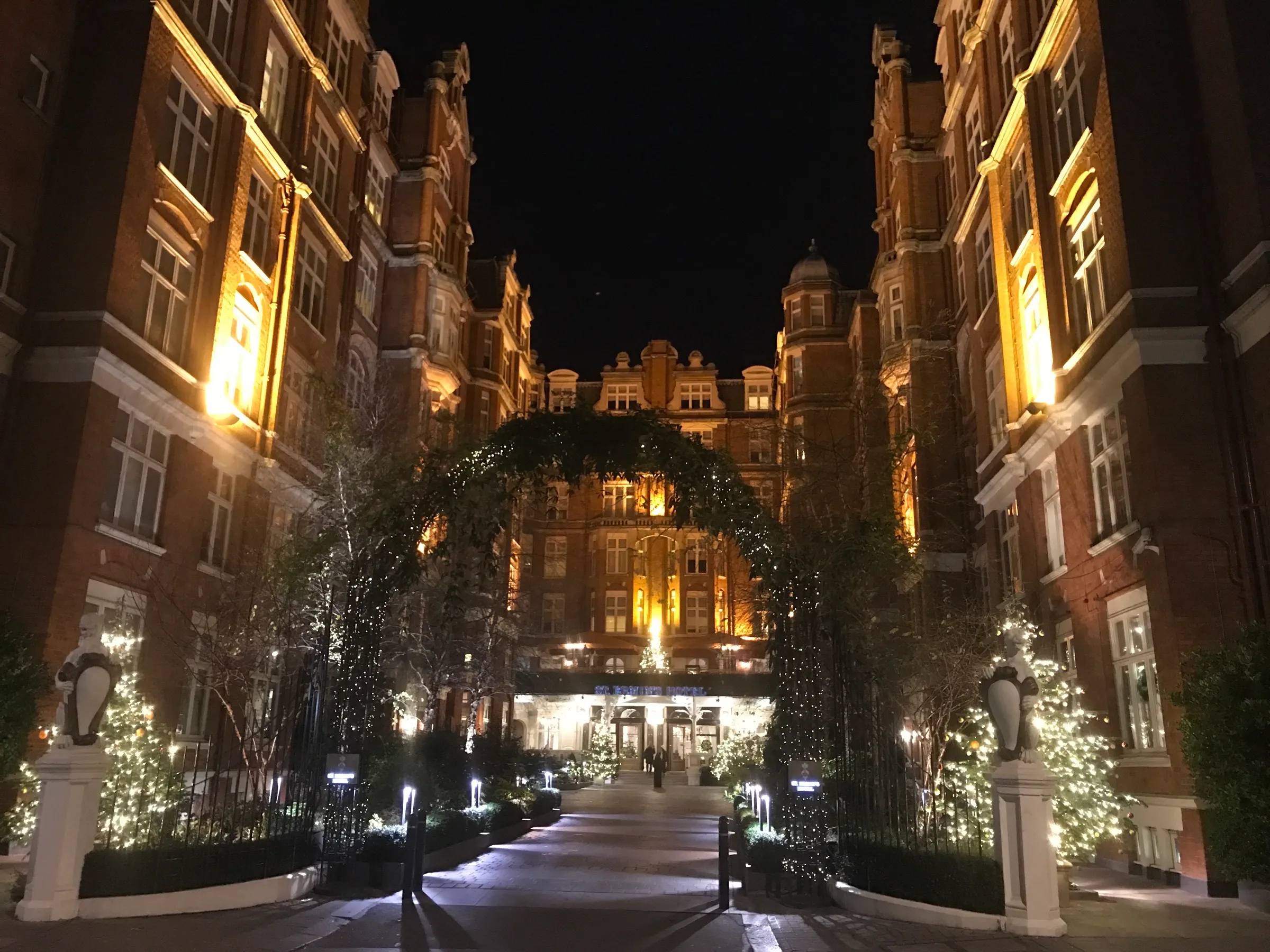
Read Chapter 1: St. Ermin’s—Where Britain’s Secret War Came Together.
Read Chapter 2: Churchill’s Secret Army—Why Britain Needed SOE.
Read Chapter 4: Bletchley Park Beyond Enigma—The Lives Behind the Secret. Follow the people, Allied partnership, and difficult responsibility of protecting lives while preserving intelligence access.
Go beyond the glass
War Rooms & Walk-Ins
The September 4–9, 2027 journey connects Churchill’s underground command rooms with Bletchley Park, Cambridge, Whitehall, and Salisbury. It is designed around serious history, informed conversation, and the real places where intelligence was collected, assessed, betrayed, and used.