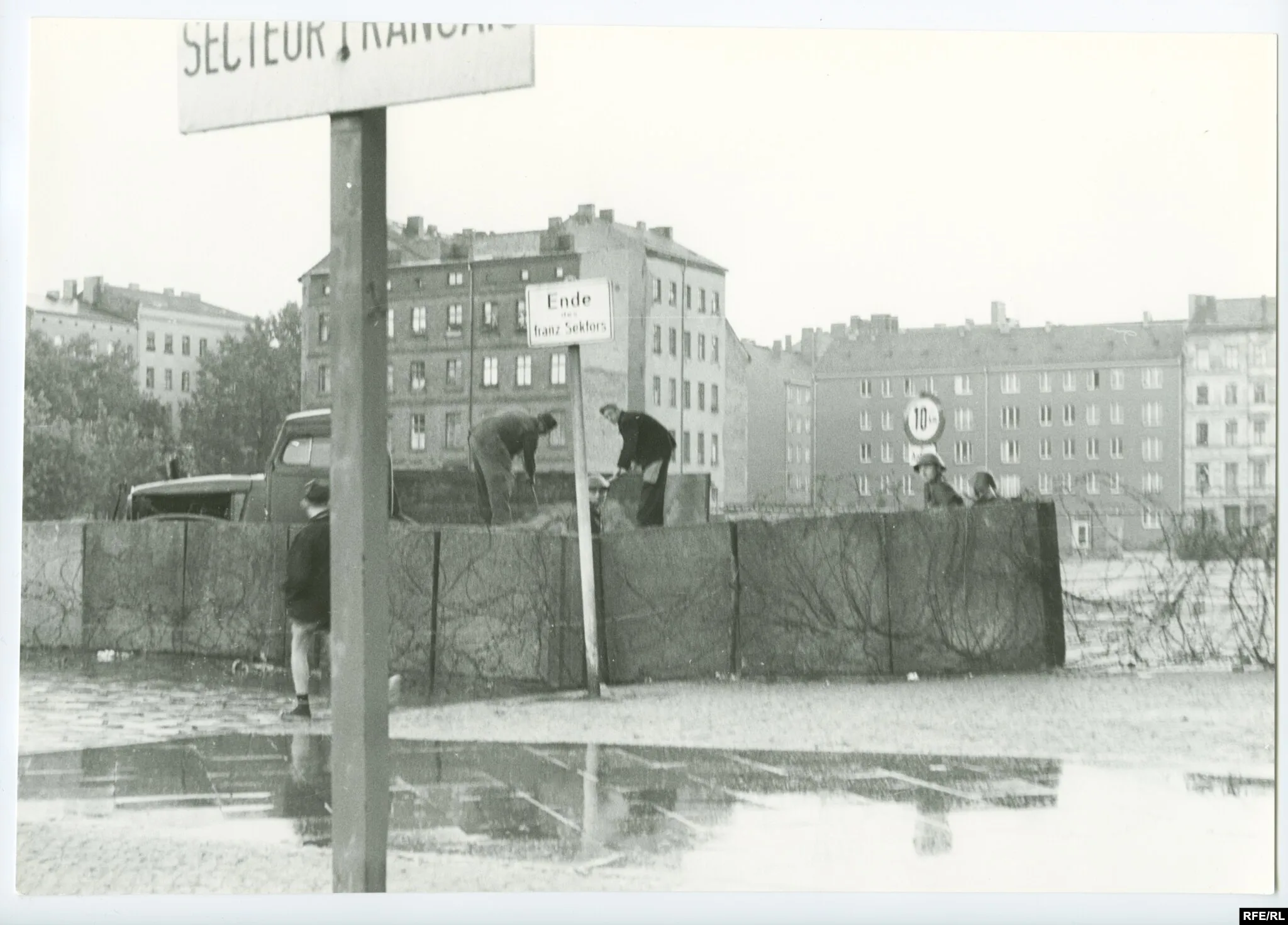
Forty years after Reagan and Gorbachev met in Reykjavík, a family winter trip offers a different kind of destination intelligence.
October 11–12, 2026 marks the fortieth anniversary of the Reykjavík Summit. One of my clients will be in Iceland around the anniversary, which has given me a good reason to revisit both the history and photographs from my own family's trip in December 2023.
Reagan and Gorbachev went to Iceland to explore how much the relationship between their countries could change. We went for a family holiday, winter scenery, and the possibility of seeing the northern lights. Our visit also produced a hotel phone call that deserves a permanent place in the family travel archive.
I think of Iceland as two countries sharing the same map. Visit in summer for extended daylight and the freedom to spend more of the day exploring its landscapes. Visit in winter for a different palette, long nights, and a chance to see the aurora. The right choice depends on what you want the trip to give you.
A small house with very large stakes
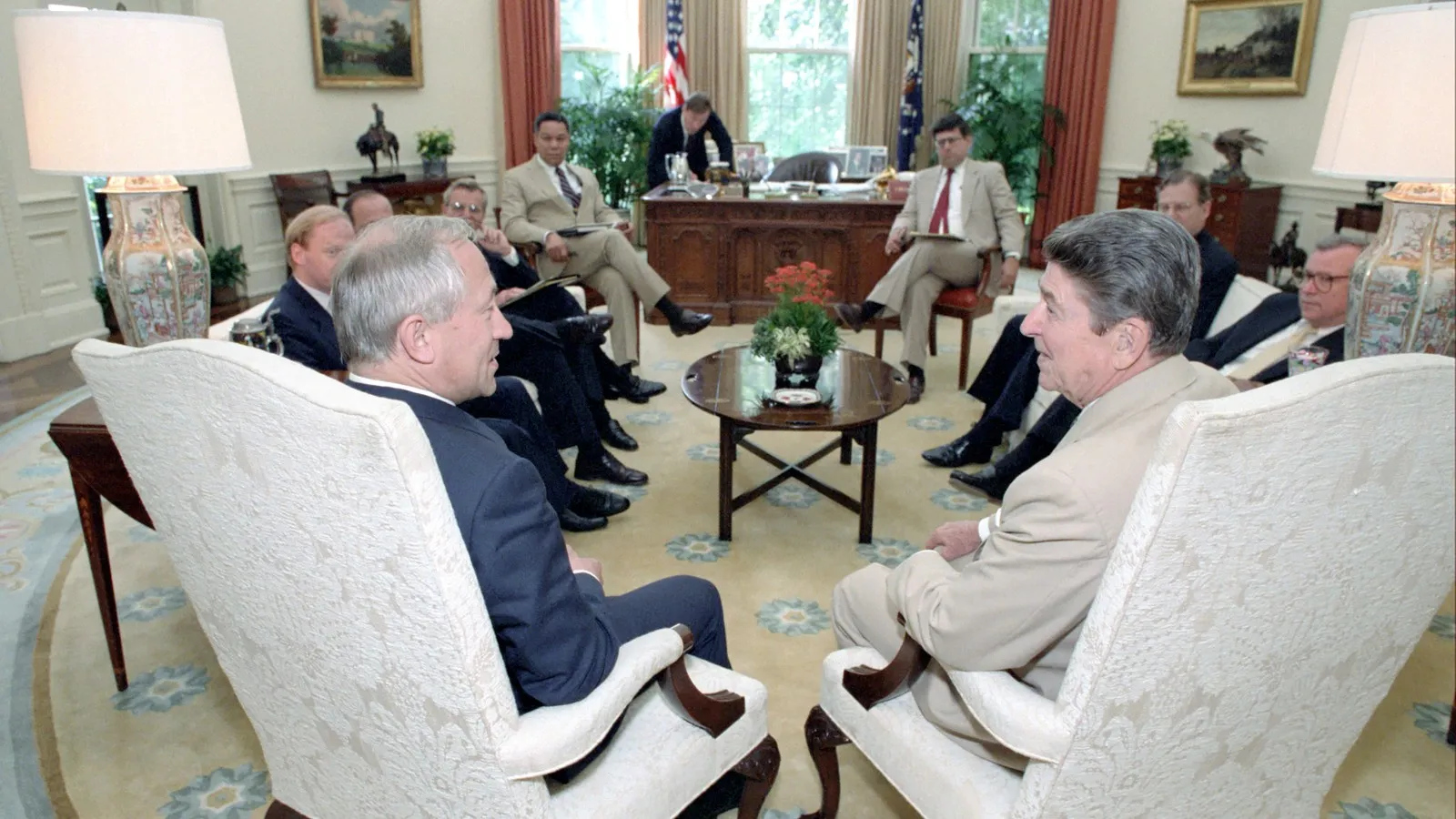
For a traveler interested in the Cold War, the natural starting point is Höfði, the white house near Reykjavík's waterfront where President Ronald Reagan and Soviet General Secretary Mikhail Gorbachev met on October 11–12, 1986.
The official chronology of the Reykjavík talks shows how far the conversation went. The leaders explored deep cuts to their nuclear arsenals and even discussed eliminating all nuclear weapons. They also exposed a fundamental disagreement over the Strategic Defense Initiative, Reagan's proposed missile defense program. Gorbachev wanted crucial work confined to laboratories; Reagan would not accept that restriction.
They left without an agreement. Yet the meeting helped establish common ground for the Intermediate-Range Nuclear Forces Treaty signed in December 1987, which required the elimination of an entire class of American and Soviet ground-launched missiles.
To me, Höfði's appeal is the opportunity to consider the uncertainty inside that room. We know what followed. The participants had to make consequential decisions without that advantage. That is the kind of question I like to bring to travel through intelligence history.
Plan Höfði as an exterior stop. The city's historic house is used for official functions and is not ordinarily open to the public. An anniversary is a reason to visit; it does not by itself promise an exhibition, ceremony, or access inside.
Choose your season before your itinerary
Summer gives you time. Around midsummer, the long daylight and lingering twilight make it easier to linger at a waterfall or take your time crossing a landscape. It is the season I would favor for a trip centered on broad vistas, longer drives, and more ambitious exploration. You still need a weather plan: Iceland's summer climate remains cool and changeable.
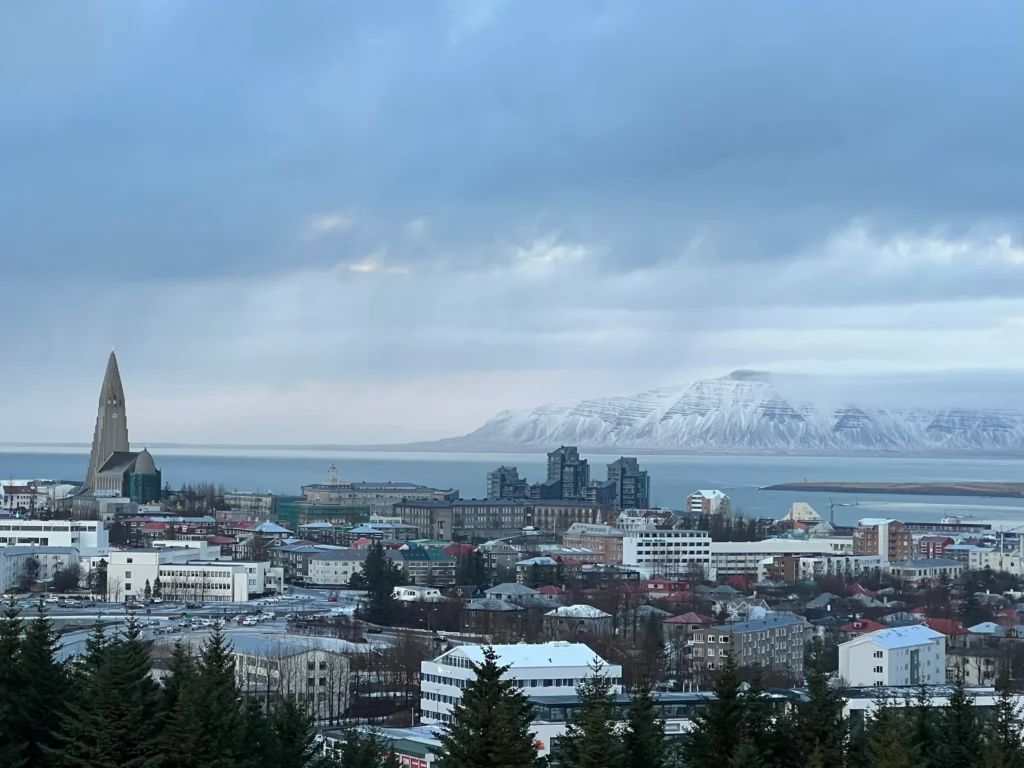
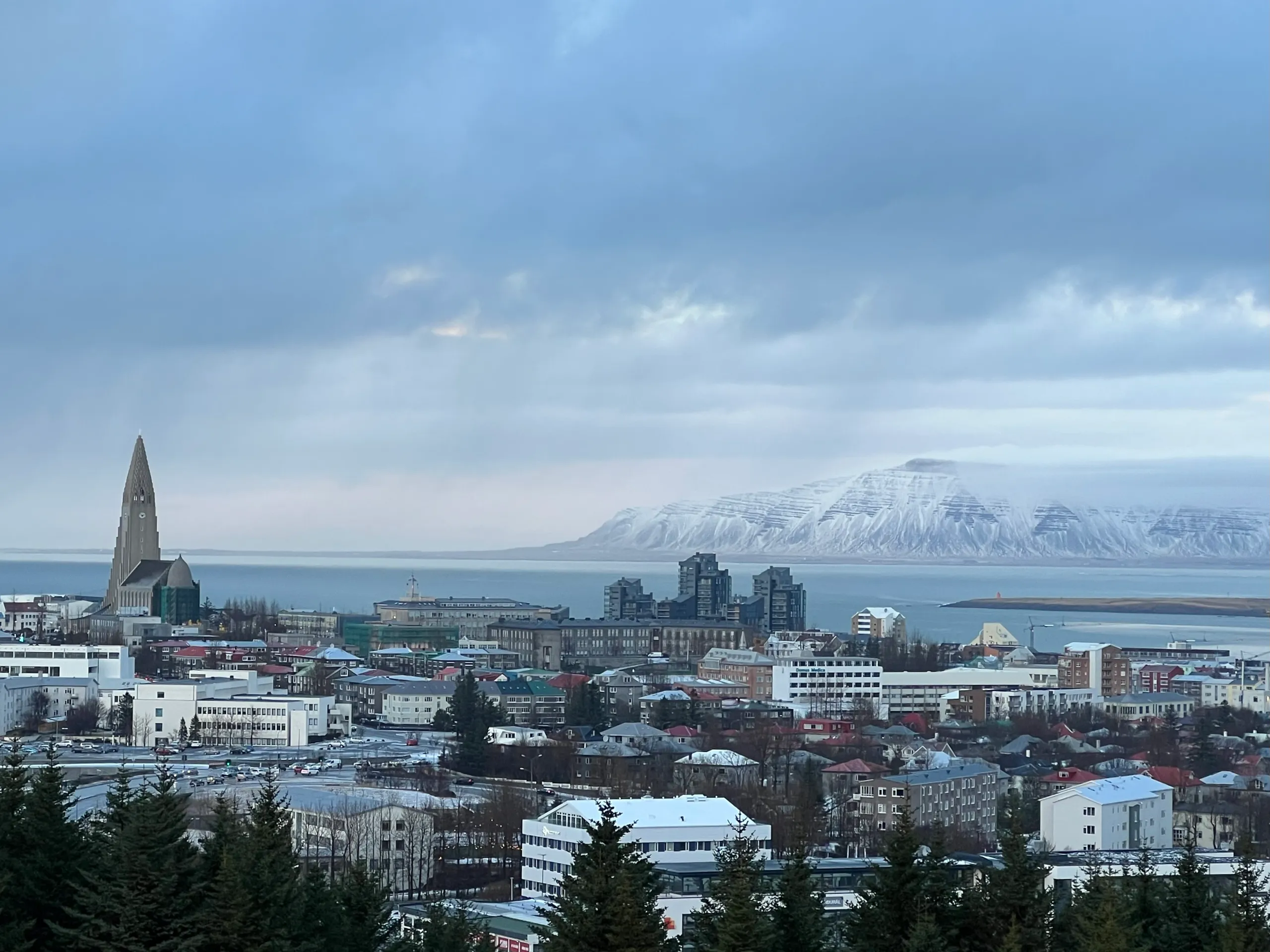
Winter asks you to be more selective. Daylight becomes a limited resource, and an itinerary that looks reasonable on a summer map can be exhausting in darkness, wind, or snow. In return, you get winter light on the mountains, snow outlining black volcanic rock, and evenings that suit Reykjavík's restaurants and thermal pools.
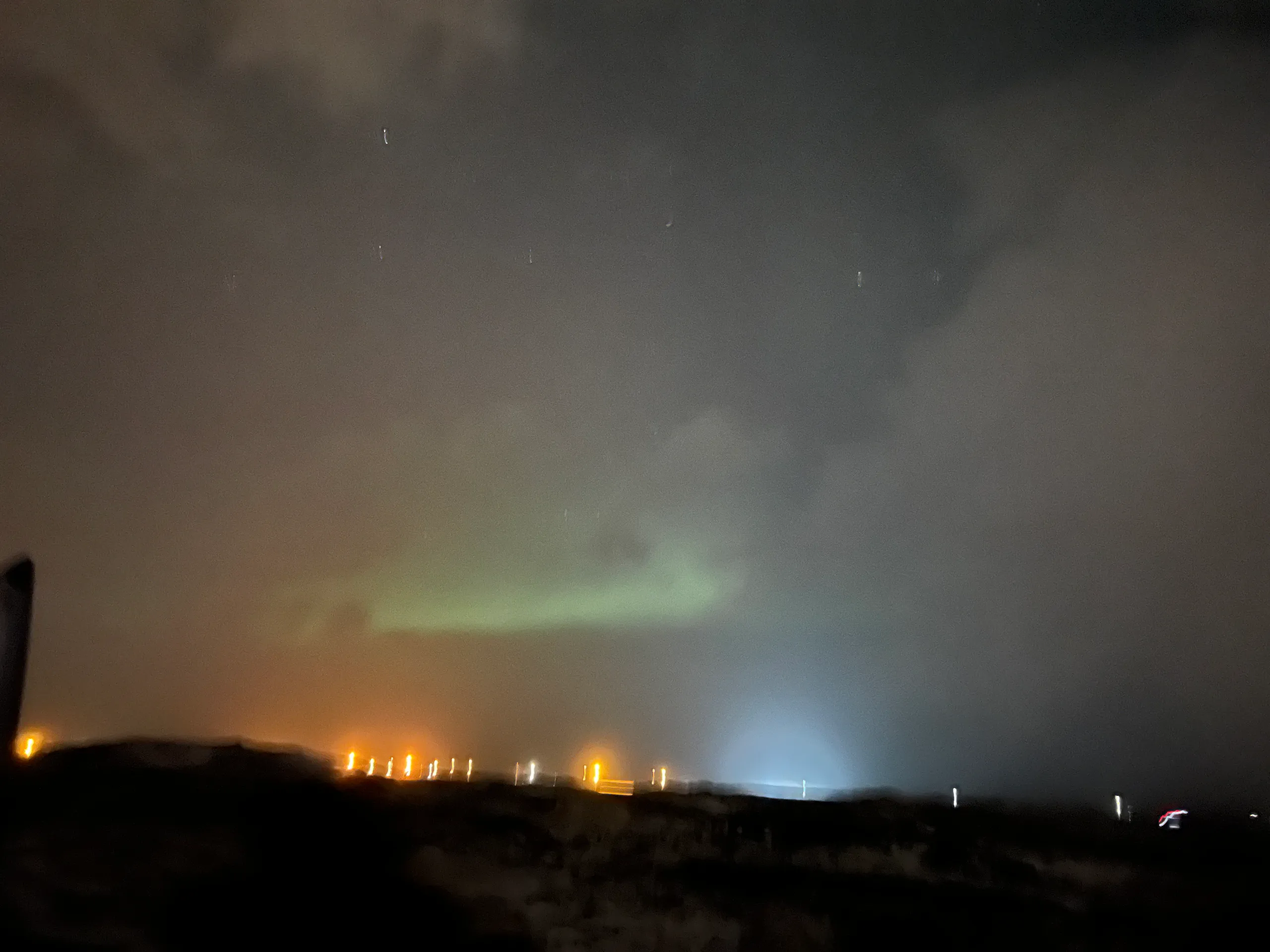
You also get darkness for the northern lights. We saw them during our trip, but I would build a holiday you will enjoy even if they never appear. The usual aurora viewing season runs from late August into April, so October visitors can have a chance without choosing the deepest winter. Longer nights create opportunities; clouds and solar activity still determine what you see.
Give yourself several opportunities if the aurora matters to you. Read the Icelandic Meteorological Office's aurora and cloud forecast together: a promising activity forecast cannot make the lights visible through solid cloud.
This is where custom travel planning starts for me: decide whether the priority is seeing more of Iceland or spending time with the particular version of Iceland that drew you there.
The temperature tells only part of the story
Reykjavík surprised me in December. It felt more temperate than its latitude and the country's name had led me to expect. Warm North Atlantic waters, carried through the current system connected to the Gulf Stream, help moderate the climate.
Milder, however, is a relative description. Our winter weather was predictably unpredictable. Sunshine could give way within ten minutes to a squall with sleet, and the combination of wind and ice could change a routine walk into a small expedition.
One squall was so strong that my twenty-something son had trouble getting back to the car across iced pavement. The wind and lack of traction made what should have been a short walk surprisingly difficult. It remains a fantastic family memory, although it was also a useful demonstration of why the forecast deserves more attention than the temperature alone.
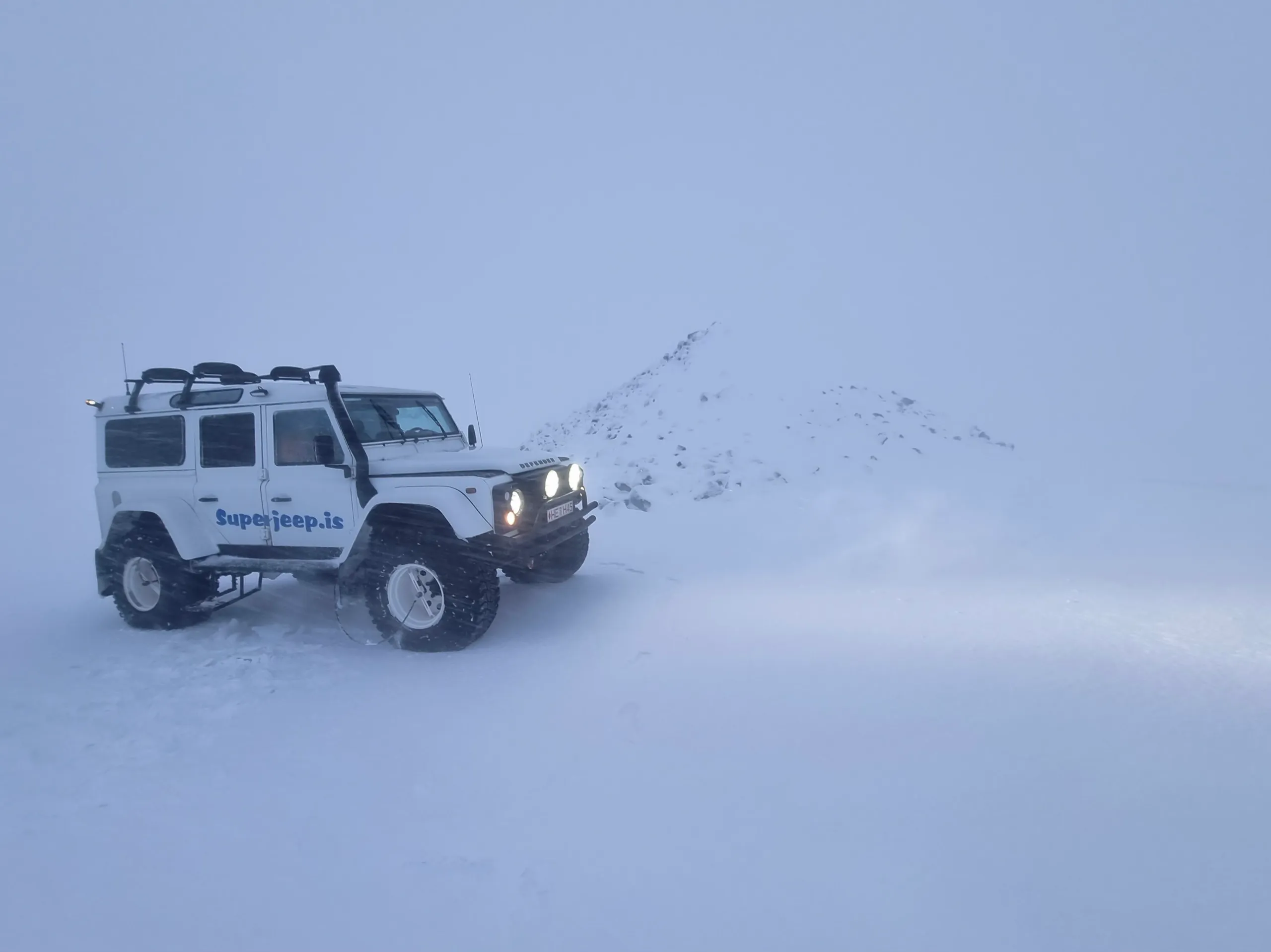
Pack a windproof, waterproof outer layer over warm clothing, plus gloves and footwear suited to ice. Removable traction aids can be useful for walking. Before driving, check Iceland's current travel alerts and road conditions, and give the day enough room to change. A local guide can take on the driving and route decisions; severe weather may still require postponing an excursion.
My advice for a first winter visit is to limit the territory you intend to cover and leave flexibility between the things you most want to do. Iceland can make a very convincing case for staying put for an afternoon.
Where the continents pull apart
At Þingvellir, the landscape supplies its own lesson in boundaries. Iceland straddles the Mid-Atlantic Ridge, and the North American and Eurasian tectonic plates move apart here. The rift valley makes that movement visible in ways a diagram cannot.
Walking among the rock walls in winter, with snow defining the fractures, was one of the experiences that made the country's geology feel immediate. This is a broad zone of separation, and the paths lead through part of a much larger rift system.
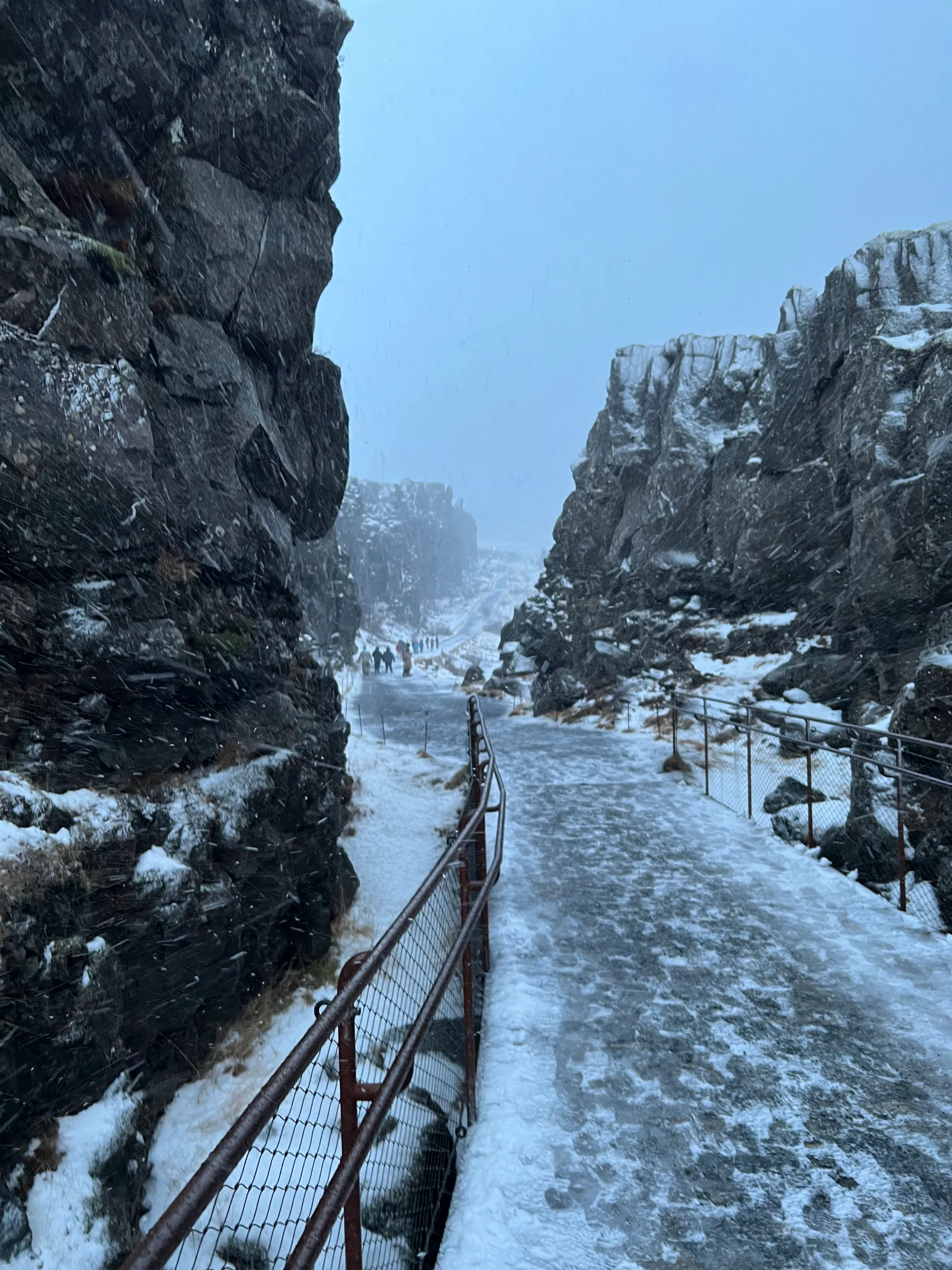
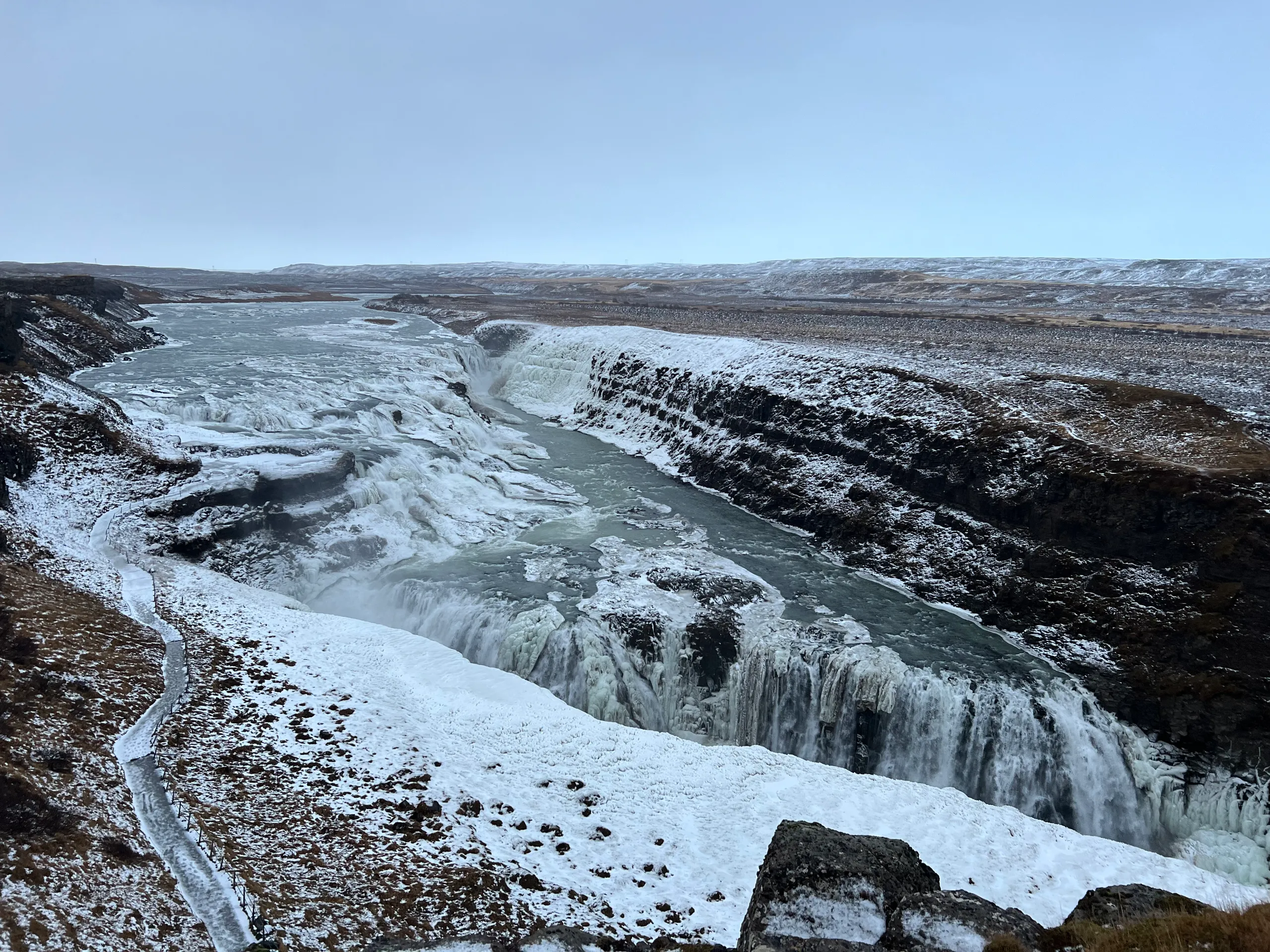
The Golden Circle gives a first visit a useful structure, combining Þingvellir with the Geysir geothermal area and Gullfoss waterfall. In winter I would treat that as a substantial outing, with time for conditions and stops, rather than trying to fit another long list of sights around it.
Leave time for Reykjavík and warm water
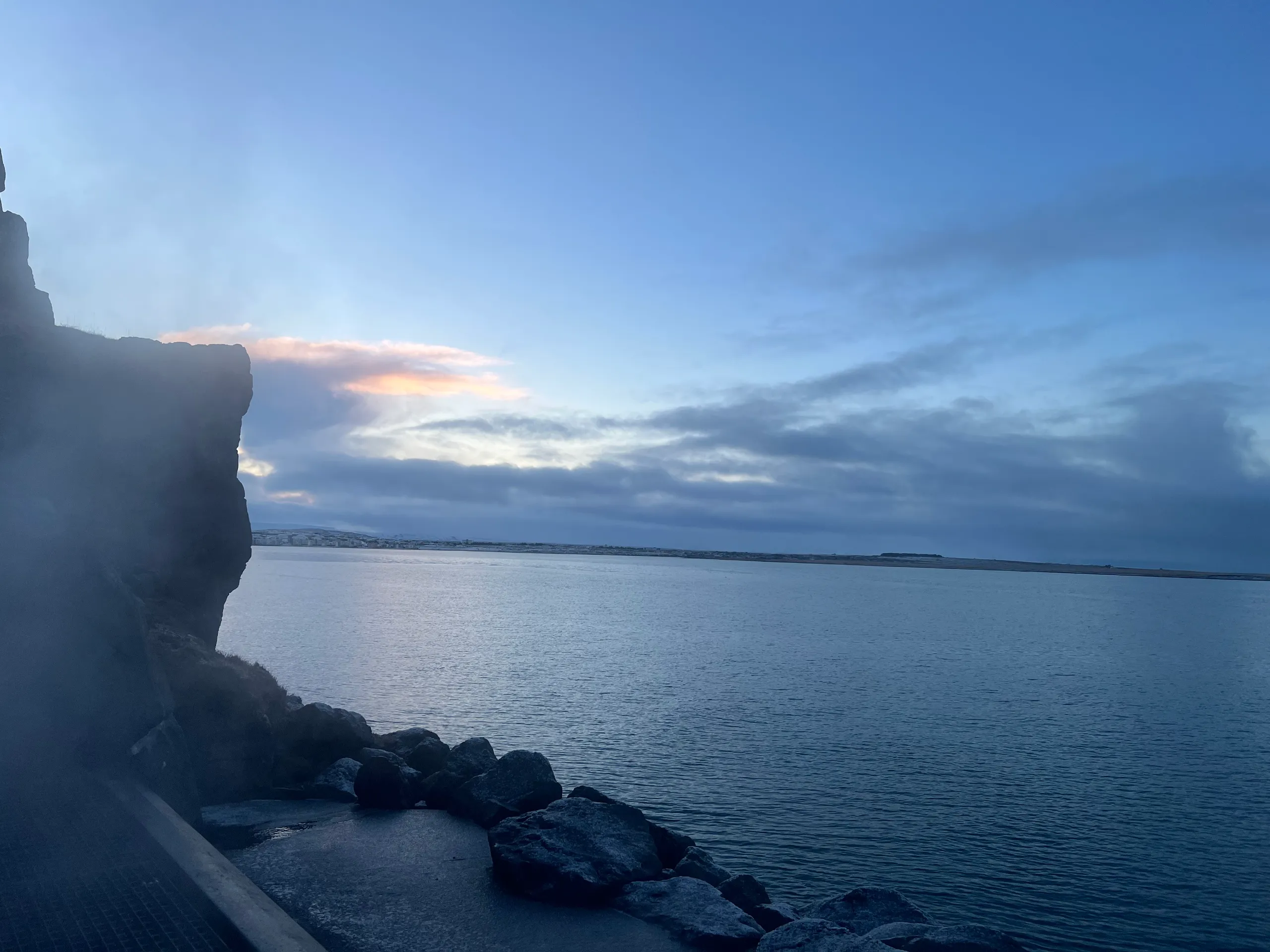
Reykjavík deserves time in its own right. We found friendly people and a city that was enjoyable to explore between outings. Our photographs move from Hallgrímskirkja and the waterfront to holiday lights and streets that looked quite different after dark.
I would leave room to walk, eat well, and spend an unhurried afternoon in the city. That also gives you options when the weather changes a day's plans. Höfði can add a Cold War thread to the visit without turning the entire holiday into a history seminar.
Then pack a swimsuit. Iceland's geothermal bathing experiences are part of the destination in every season. In winter, the contrast between warm water and cold air is especially appealing. Choose a spa or public pool to suit your route, budget, and preferred atmosphere.
If the Blue Lagoon is on your list, check its operating status and access before building the day around it. Conditions on the Reykjanes Peninsula can affect individual roads and attractions, so a thermal-spa plan should allow for an alternative.
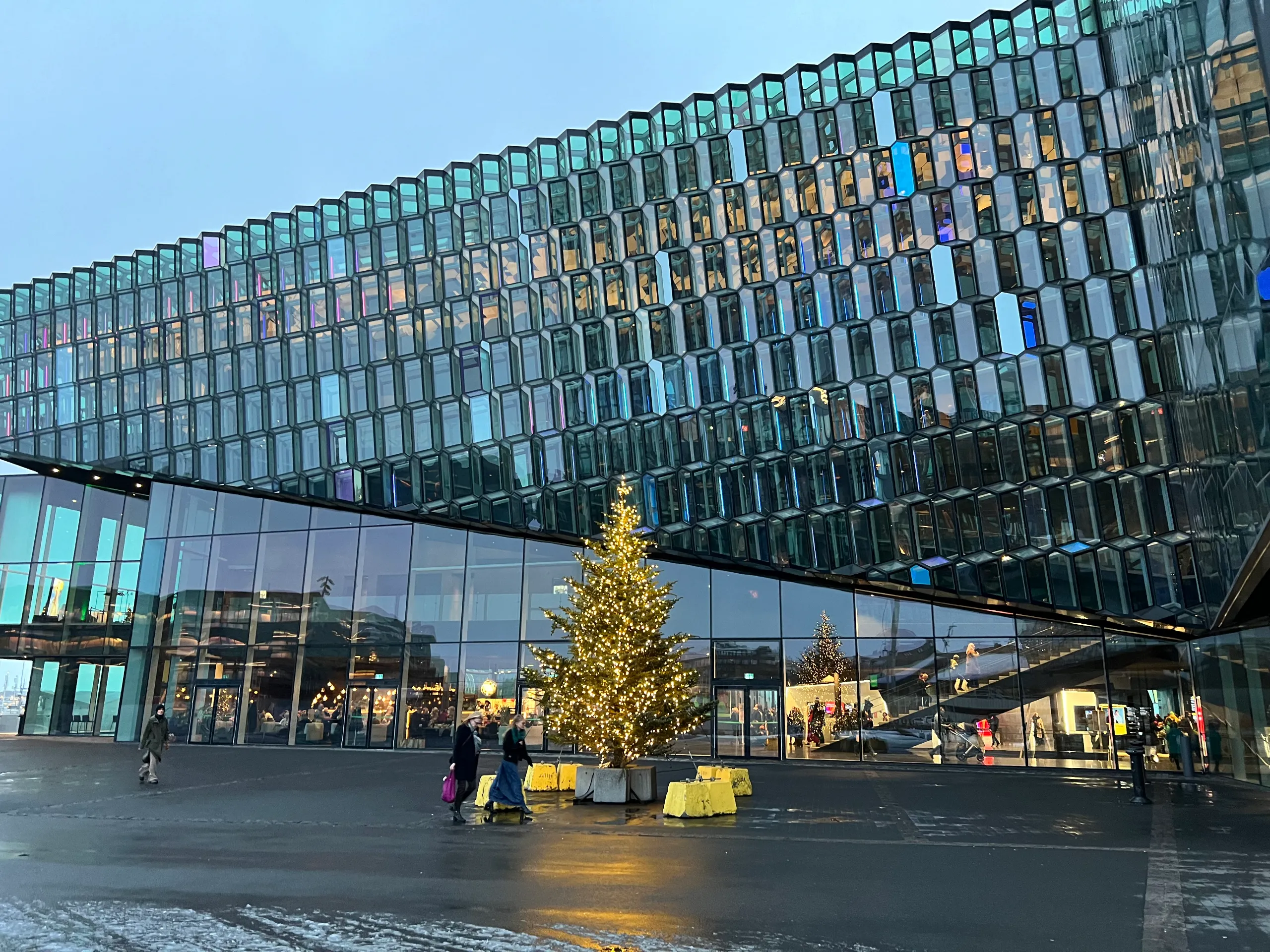
A practical last night in Keflavík
Iceland is relatively easy to reach from the United States. For those of us in the Washington area, Icelandair's Washington–Reykjavík route is a useful starting point. Check the schedule for your actual dates, especially when comparing seasons.
Pay attention to the airport code. Keflavík International Airport, KEF, serves the North American flights; Reykjavík also has a separate airport in the city. A hotel described as serving Reykjavík may therefore be well outside the capital.
My money-saving suggestion is to compare a final night in Keflavík with another night downtown. An airport-area hotel can cost less and shorten the trip to your flight the next day. Compare the complete cost, including transfers and any rental-car timing, because savings depend on your dates and arrangements.
We stayed at the Courtyard by Marriott Reykjavik Keflavik Airport before our flight home. For a winter trip, I particularly like doing the longer transfer while there is still some flexibility, then waking up close to the airport. Confirm transport arrangements directly with the hotel for your departure time.
In our case, the final night came with an additional briefing.
The volcano has erupted
The Courtyard staff called us that night and told us to keep our windows closed because “the volcano has erupted.”
It was in the 30s Fahrenheit outside. Opening the windows had hardly been the most pressing item on our agenda, but the explanation certainly got our attention.
The eruption began north of Grindavík at 10:17 p.m. on December 18, 2023, on the Reykjanes Peninsula, the night before we departed. Our photographs show the orange glow beyond the lights and buildings around Keflavík. The geology we had been exploring all week was suddenly very much in the present tense.
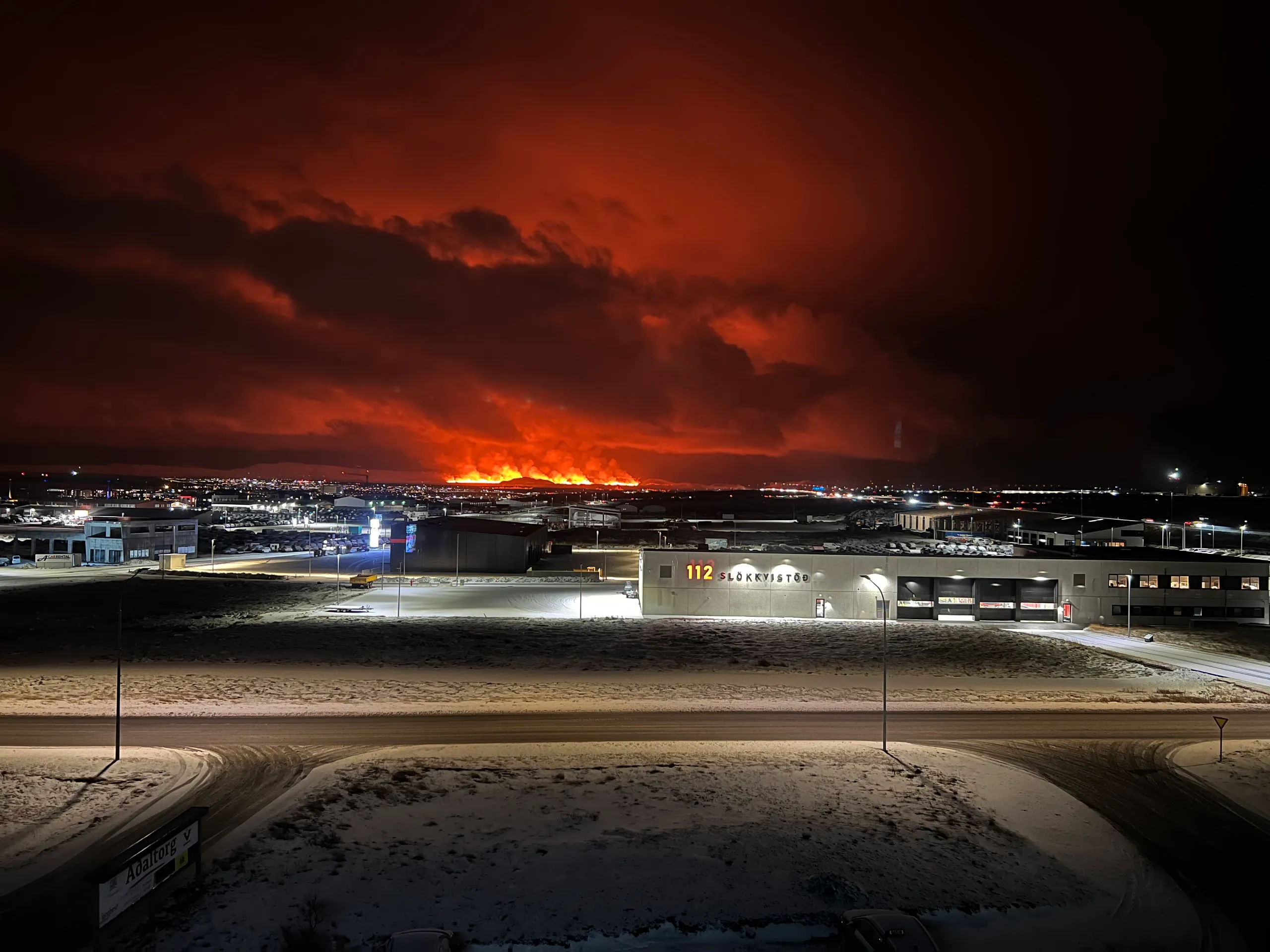
That was an extraordinary travel memory. It also involved a real hazard for the communities nearby. A visitor's photograph captures only one part of that story.
For a future trip, follow current guidance for the Reykjanes eruption area and the instructions of local authorities and your hotel. Gas, road closures, and access restrictions can matter even when an eruption is visible at a distance. Our experience in December 2023 is a story about that visit, rather than a forecast for yours.
Plan your own Iceland visit
The summit anniversary offers a particularly good reason to put Reykjavík on the map this October. But Iceland's appeal extends well beyond Höfði. You can spend part of a day thinking about Reagan and Gorbachev, then turn your attention to a landscape that is still changing around you.
Choose the season for the experience you want, leave room for the weather, and consider Keflavík for the final night. Those decisions will shape the trip as much as the list of sights.
If Iceland is on your mind, tell me when you would like to go and what you most want to experience. I can help you build a trip around those priorities. The volcano will have to manage its own schedule.