
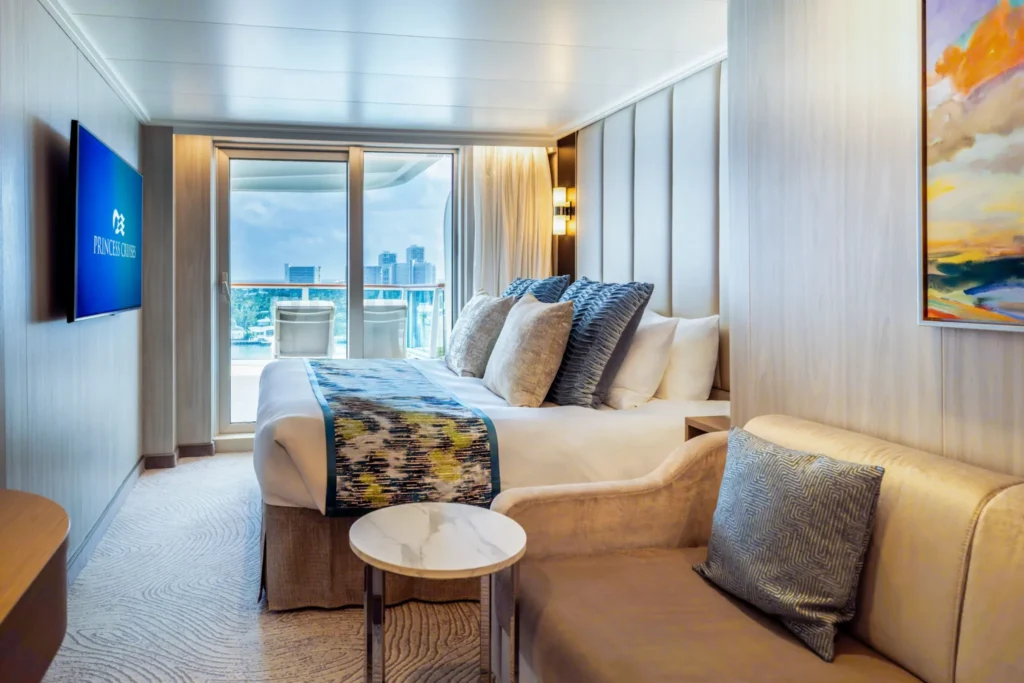
You have chosen the ship and the kind of room you want. Now the deck plan shows several available cabins in that category. One is forward, one is near the middle, and another is beneath the pool deck. Your cruise cabin location can change the experience even when the category and price are the same.
The best location is the one that fits how you will use the ship. A room convenient for a traveler who spends every afternoon by the pool may be a poor match for someone who sleeps late. A forward cabin with a striking view may be less comfortable for a guest sensitive to motion. Before taking the first available number, compare the actual cabins within the category you have selected.
Hold the cabin category and fare constant
Start by comparing like with like: the same sailing, occupancy, cabin category, and fare conditions. An oceanview room and a balcony room are different purchases; that is a separate decision. Here the question is where to place the type of room you already want.
Ask the cruise line or your advisor for the available cabin numbers. Open the deck plan for the specific ship, not just a sister ship or a generic category photo. Check its legend for connecting doors, accessible features, occupancy, and view restrictions. Royal Caribbean’s deck-plan guide shows why the symbols and surrounding spaces matter. A category label is a starting point, not a complete description of a room.
Then decide which part of the trip the location needs to support: steady sleep, a short walk, a particular view, easy elevator access, or quiet time in the cabin. A room that meets the most important need may be a better fit than one that looks more desirable on a deck diagram.
If motion matters, begin lower and near the middle
For a motion-sensitive guest, I generally start with available cabins on a lower passenger deck near the middle of the ship. Movement is often less noticeable there than high up or toward the bow or stern; Royal Caribbean offers similar guidance. No cabin makes rough seas feel still, and the route and weather also matter.
Compare two rooms in the same category. A midship balcony might suit a traveler who wants private outdoor space but is cautious about motion. A forward balcony may have an appealing position, yet the bow’s rise and fall may feel more pronounced. An aft balcony can offer a wake view, with a different walking pattern and possible exposure to noise or vibration depending on the ship. Neither end is automatically wrong. The traveler and sailing determine the tradeoff.
If seasickness is a concern, discuss prevention with a clinician or pharmacist before departure. A cabin choice can improve the odds of comfort; it is not treatment. My guide to cruising in bad weather explains why sea state and the ship’s heading still matter.
Look above, below, and beside the room
On the deck plan, locate a candidate cabin and inspect the decks immediately above and below it. A room under the pool deck, sports court, buffet, nightclub, or other active space may be convenient but can have footfall, moving furniture, music, or early setup noise. A cabin over a theater or other venue raises a different question about evening activity. Service doors and crew work areas can matter, too.
A cabin with passenger rooms above and below is often a sensible quiet-room candidate, although no location guarantees silence. Look along the corridor as well. Near an elevator can mean less walking without necessarily meaning a noisy room; the hallway layout and nearby gathering space make the difference. If you sleep lightly, prioritize the likely quiet pattern over a few minutes saved walking.
For families and friends, verify the actual arrangement. “Adjacent” cabins may be side by side without an internal connecting door. Connecting rooms, triple or quad occupancy, bed setup, and accessible layouts are attached to specific cabin numbers. Do not assume that every room in the same category has the same configuration.
Map your daily walks
Think through a normal day aboard. Where are breakfast, the main dining rooms, the pool, shows, children’s areas, or the quiet spaces you will use? A midship room can make distances more balanced on a large vessel. A room near the aft elevators might work well for someone whose preferred dining venue is aft, while leaving a longer walk to a forward theater.
For a guest with limited stamina, a long corridor can matter more than a small difference in fare. Check the route to elevators and public areas, not simply the straight-line position of the cabin. A location near stairs is useful only if those stairs suit the traveler. The ship’s scale, deck connections, and daily routine should guide the choice.
Location also affects how readily you will return to your room during the day. On a port-heavy trip, a slightly longer walk may be unimportant. On several sea days, convenience and quiet may have more weight. This is another reason I ask what the trip will feel like before recommending a cabin number.
Check the view and balcony for that exact number
Two cabins in the same category can have different sight lines. Lifeboats, structural supports, a deck overhang, or a railing can affect what you see while seated or standing. Princess describes obstructed-view categories, but the precise obstruction needs checking on the chosen ship and room.
For a balcony, inspect the shape, depth, privacy, furniture, overhang, and whether the view is limited. A forward or aft position may have an unusual layout compared with a more typical midship room. For an oceanview cabin, the window’s size or position and any obstruction can vary. If the view is a major reason for the trip, ask for evidence about the actual cabin, not the category’s marketing photograph.
Port or starboard rarely provides a guaranteed view at every stop. Docking assignments, routes, and the ship’s heading can change. If one scenic approach is central to your choice, research that sailing, then keep the prediction conditional.
Treat accessibility as a room-specific requirement
An accessible cabin is more than a favorable position near an elevator. Door clearance, turning space, shower layout, bed access, and balcony threshold may determine whether it works for a particular traveler. Princess’s accessibility guidance distinguishes different accessible features; the details vary by ship and room.
Share the traveler’s actual mobility needs and equipment, and confirm the measurements and features of the proposed cabin with the line before depositing. Check the route from that room to elevators and key venues. Also assess the itinerary separately: a suitable cabin does not establish that a tender port or shore excursion will be accessible.
Know when a guarantee fare removes the location choice
A guarantee fare can secure a minimum category while leaving the cabin number for the cruise line to assign. Norwegian, for example, says a Guarantee Balcony on Norwegian Getaway may be placed on any deck, with assignment as late as one day before embarkation. Other lines and fares have their own rules.
That flexibility may be good value if you are comfortable with a range of locations. It is a poor fit when a lower midship room, connecting door, specific view, accessible feature, or short walking route is essential. A later assignment to a higher category does not necessarily improve the location for you. Confirm the fare’s change and cancellation rules separately from its room-assignment rules; my Virgin Voyages VoyageFair guide illustrates why fare flexibility is its own decision.
Compare cruise cabin locations before you commit
Put the available room numbers side by side on the same ship and sailing. For each, check:
- Motion: Is it forward, midship, or aft, and on which deck?
- Noise: What is directly above, below, next door, and across the corridor?
- Walking: How far is it from the places you expect to use, by an accessible route if needed?
- View and layout: What is confirmed about the actual window, balcony, bed setup, occupancy, and connecting door?
- Control: Is this room number confirmed, or can the line assign or change it under the fare?
Suppose two balcony cabins cost the same. One sits high and forward beneath a busy public deck; the other is lower, near the middle, with cabins above and below. For a light sleeper who feels motion, I would examine the second first. A guest who prizes the first room’s particular view and is untroubled by motion may reasonably choose it instead. Fit is the recommendation, not a universal deck number.
If you have a shortlist, send me the ship, sailing, category, fare, and cabin numbers. I can compare the real locations against your priorities before you commit.
Considering Norwegian Cruise Line? Explore sailings on Norwegian’s website through Jack’s NCL link. Opens in a new tab.
Considering Virgin Voyages? Browse sailings and book directly with Virgin Voyages through Jack’s advisor link. Opens in a new tab.