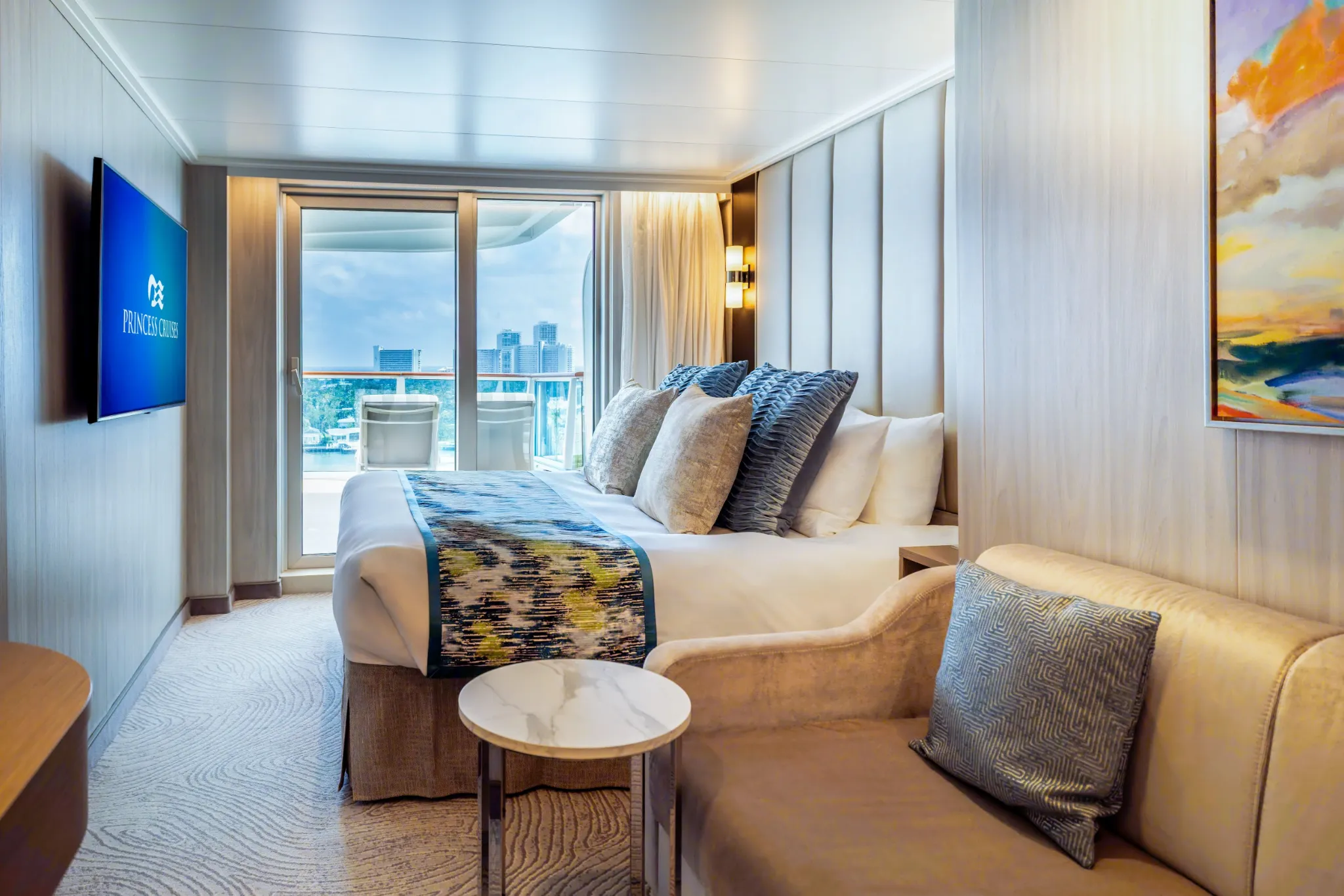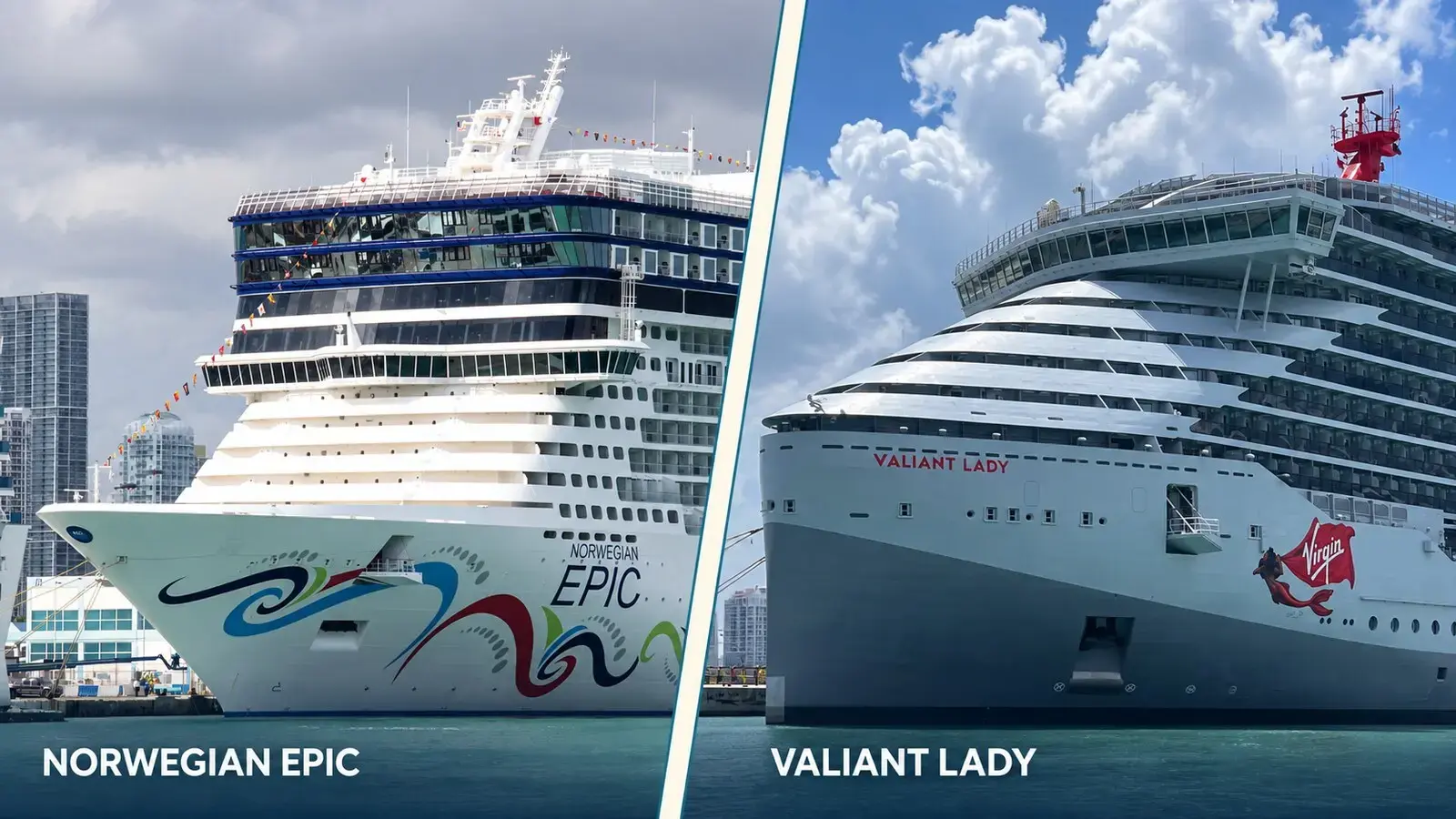
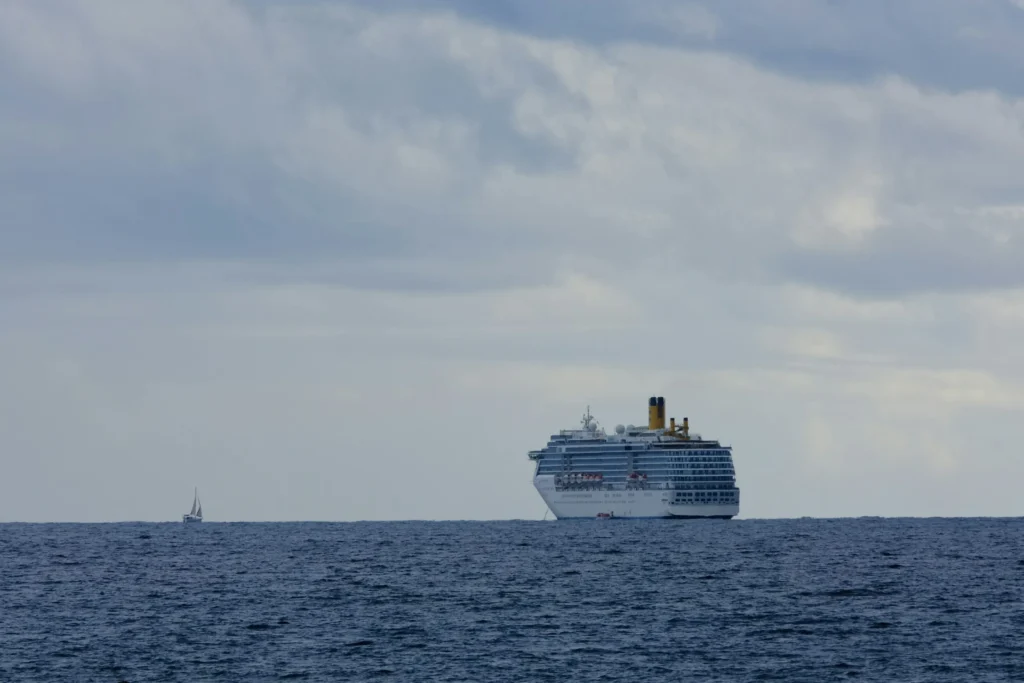
Photo by Roman Kravtsov / Unsplash. Illustrative photograph, not either sailing discussed below.
Prepared September 23, 2026. Cruise policies and insurance provisions vary by booking, policy, and country of residence.
This week, I have clients preparing to sail from Philadelphia to Canada and from Los Angeles to Mexico. On the Atlantic side, a coastal storm is drawing attention. In the eastern Pacific, Hurricane Polo is prompting understandable questions about the days ahead.
The questions are practical: Will the ship sail? Will we reach the ports we booked? How rough will it feel? And if something changes, who pays?
Bad weather can change a cruise without canceling it. The captain may change the route, timing, or ports. You may still experience motion and lose access to some outdoor activities. A changed itinerary does not automatically produce a fare refund, and insurance depends on the circumstances and the policy you purchased.
Here is how I suggest thinking through it.
The weather context, dated September 23: The National Hurricane Center’s September 23, 1500 UTC forecast discussion for Hurricane Polo described a major hurricane off southwestern Mexico. The Ocean Prediction Center’s Northeast U.S. waters outlook warned of a prolonged coastal weather event. Those are regional weather assessments. Your cruise line’s instructions establish what is happening to your particular departure; this article does not announce a change to either sailing.
What cruise lines do when the weather deteriorates
Cruise operators monitor weather and adjust their plans as conditions develop. Norwegian’s explanation of how it handles hurricane-season sailings describes weather monitoring, course changes, substituted ports, and possible delays.
Depending on the situation, the response can include:
- Changing course or speed to avoid worse conditions.
- Reordering port calls, substituting a port, or adding a sea day.
- Arriving later, leaving a port early, or delaying embarkation or the return home.
- Shortening, lengthening, or canceling a sailing when circumstances warrant.
- Closing pools, exposed decks, or outdoor attractions and changing onboard activities.
Some decisions arrive close to departure—or during the voyage—as forecasts and operating conditions become clearer. An early update may identify the problem before the line can confirm an alternative.
You should also allow for a distinction between avoiding the worst weather and having a comfortable ride. Swell can travel beyond the area where the storm is producing strong winds. A ship can change course and still encounter rough water.
Fin stabilizers help oppose a ship’s rolling motion. They do not make the ship motionless. Pitching—the bow and stern rising and falling—and other movements can remain noticeable.
Why a port can be missed even when the sky looks fine
The weather where you are standing tells only part of the story. Conditions at a harbor entrance, alongside a pier, or at the place where passengers transfer into tender boats can be different.
A tender is a smaller boat used to carry passengers between an anchored ship and shore. A ship may be able to remain offshore while conditions make those transfers unsuitable. Wind can also complicate docking and departure.
For travelers watching Polo, the hurricane symbol on a map is only the center of the system. The National Hurricane Center’s advisory separately addresses wind extent, rainfall, and hazardous surf. Distance from the center alone does not settle whether a port visit or beach excursion can proceed.
For a Canada-bound cruise, the same principle applies: local wind, swell, harbor conditions, and the timing of the ship’s passage matter more than whether a storm has a name.
There is no single wind speed or wave height that tells a passenger whether every cruise ship can sail or every port can open. Those judgments depend on the vessel, location, conditions, and operating authorities.
How to read a marine forecast without alarming yourself unnecessarily
Start with the date, location, and forecast period. An old screenshot or a forecast for waters far offshore can be accurate and still be the wrong information for your ship.
A Philadelphia weather forecast describes conditions ashore. It does not describe the entire route through the Delaware River and Bay and into the Atlantic. Similarly, a forecast for Los Angeles does not describe the whole passage toward Mexico.
The National Weather Service’s marine point forecasts let you examine conditions over water. The Ocean Prediction Center’s Atlantic products provide the broader offshore picture. Check the issue time, the valid time, the geographic boundaries, and the units before comparing numbers.
Consider this invented example, included only to explain the terminology:
Northeast winds 25–30 knots, gusting to 40 knots. Seas 8–12 feet. Dominant wave period 7 seconds.
| Forecast item | What it means for the reader |
|---|---|
| Northeast wind | The wind comes from the northeast. It is not a statement about the ship’s direction. |
| 25–30 knots | About 29–35 miles per hour. A knot is one nautical mile per hour, approximately 1.15 mph. |
| Gusts to 40 knots | Brief increases to about 46 mph, above the sustained wind. |
| Seas 8–12 feet | A forecast range of significant wave height. It is not a promise that every wave will fall within that range. |
| Dominant period 7 seconds | The principal, most energetic wave system has roughly seven seconds between successive crests at a fixed point. Other wave systems may also be present. |
The National Weather Service explains significant wave height as the average height of the highest one-third of waves. Height is measured from trough to crest. Individual waves can be substantially taller; offshore forecasts caution that some may exceed twice the significant height.
That does not mean every forecast of 10-foot seas translates into repeated 20-foot waves. It means the headline number is a description of the sea state, not a ceiling. Nor does a 10-foot wave mean your cabin moves vertically by exactly 10 feet.
Warning terminology deserves attention, too. In the Ocean Prediction Center’s marine warning definitions, gale-force winds are 34–47 knots, storm-force winds are 48–63 knots, and hurricane-force winds are 64 knots or more. A non-tropical coastal storm can produce hurricane-force winds. The wording describes wind strength; it does not necessarily classify the system as a hurricane.
Wave period: why the seconds matter
Travelers often focus on wave height and overlook the number beside it. Wave period—sometimes called periodicity in everyday discussion—is the time between successive wave crests passing a fixed point.
The National Weather Service’s guide to wave detail explains why forecasts pair wave height with period and direction. Shorter-period waves are more closely spaced. At the same height, they are generally steeper than longer-period waves.
Two illustrative sea states show the distinction:
| Same significant height | What changes |
|---|---|
| 6 feet at 5 seconds | More closely spaced, steeper waves—a choppier sea state. |
| 6 feet at 12 seconds | More widely spaced swell, with a longer rise and fall. |
These are teaching examples, not comfort ratings for a particular ship. Longer-period swell can still produce substantial rolling or pitching. The ship’s size, design, speed, and angle to the waves affect how it responds.
Look for direction and multiple wave systems, too. Locally generated wind waves can overlap with swell arriving from a distant storm. The National Data Buoy Center’s wave measurement guide distinguishes significant height, dominant period, and average period; they describe different parts of the picture. Do not simply add the listed wind-wave and swell heights to estimate the combined sea.
My practical advice: read height, period, direction, and timing together. Avoid online rules that turn one combination of feet and seconds into a universal verdict about safety or seasickness.
How the ship’s heading changes the ride
The National Weather Service reports wave direction as the direction the waves come from. An easterly swell comes from the east and travels west. Check the legend on other forecast apps; arrows can depict the direction of travel instead.
Now put the ship into that picture:
| Where waves meet the ship | Term | Motion you may notice |
|---|---|---|
| From directly ahead, toward the bow | Head seas | More pitching and vertical movement; sharper impacts can occur in steep seas. |
| Broadly from the side | Beam seas | More side-to-side rolling. |
| From behind, toward the stern | Following seas | A slower encounter rhythm in many situations, but potentially complex motion. This does not guarantee a gentler ride. |
| At an angle to the bow or stern | Bow or stern-quartering seas | A combination of pitching and rolling, depending on the angle and conditions. |
With that same easterly swell, an eastbound ship meets head seas; a westbound ship has following seas; and a northbound or southbound ship has beam seas. This example assumes one consistent swell direction.
A ship moving into waves generally encounters crests more frequently than a stationary buoy. Moving with them generally lengthens that interval; speed matters too. The International Maritime Organization’s guidance on ship handling in adverse seas addresses this encounter period and how it can interact with the ship’s natural roll.
That helps explain why a captain may change course or speed even when wave height has not changed. No single heading produces the best result in every sea state; the bridge must assess the whole situation.
Which cabins tend to feel less movement?
For someone sensitive to motion, I generally start with a cabin near the middle of the ship on a lower passenger deck. Norwegian gives similar advice in its seasickness guidance.
The bow and stern tend to experience more of the ship’s pitching motion. Higher decks can make rolling feel more pronounced. No cabin eliminates movement, and neither the port nor starboard side is inherently calmer for every itinerary.
This is where the deck plan matters more than the category name. A large suite high and forward may be a poorer fit for a motion-sensitive traveler than a modest cabin lower and amidships. A balcony can provide a horizon view when conditions permit, but the balcony itself does not reduce the ship’s motion.
When I help clients compare ships, cabins, and cruise arrangements, I weigh motion alongside noise, accessibility, location, and the kind of room they want. If location is essential, a guarantee fare that leaves cabin assignment to the line may be the wrong tradeoff.
For anyone prone to seasickness, speak with a pharmacist or clinician before departure about a suitable prevention plan. The Centers for Disease Control and Prevention’s motion-sickness guidance notes that medicines generally work better before exposure, and that looking toward the horizon and avoiding reading can help. Medicines have side effects and are not suitable for everyone. Follow the instructions for the product prescribed or recommended to you.
Once aboard, follow crew instructions, respect closed areas, and seek help from the medical center if symptoms become persistent or severe. A horizon view from an indoor lounge may be a better choice than an exposed deck.
If the itinerary changes, what compensation might exist?
Start by identifying what changed and who canceled.
Both Norwegian’s U.S. guest ticket contract and Virgin Voyages’ ticket contract for guests outside the UK and European Economic Area give the line broad discretion to change itineraries and address weather-related disruptions. A missed port does not automatically entitle you to a share of the cruise fare.
| Situation | What to expect or ask about |
|---|---|
| A port is skipped or replaced | Do not assume a fare refund. Ask for an itemized explanation of any refundable taxes or fees, canceled excursions, and any goodwill offer. |
| A cruise-line excursion is canceled | Check the excursion terms and confirm the refund or onboard credit, its amount, and how any remaining refundable balance will be returned. |
| You booked an excursion independently | The independent operator’s terms apply. Ask specifically about the ship missing port; ordinary customer-cancellation terms may differ. |
| The cruise is shortened, delayed, or returns elsewhere | Get the line’s written arrangements for the fare and any additional hotel, flight, or transfer costs. A goodwill credit and reimbursement of expenses are different things. |
| The line cancels the sailing | Request the written refund and rebooking options. Applicable passenger protections matter alongside the ticket contract. |
| You choose to cancel a sailing that still operates | Your fare’s cancellation penalties can apply. Check for a written waiver and speak with the insurer before canceling. |
There is an important U.S. protection here. For covered cruises embarking at U.S. ports, the Federal Maritime Commission’s refund rules address cancellation and departure delays of three or more calendar days, when the passenger elects not to take the delayed or substitute voyage. This is different from a sailing that operates but misses a port. The rules provide a refund route, including recourse to the operator’s financial security if a refund cannot be obtained directly.
For an affected departure, ask about money returned to your original payment method, rebooking, and any offered future cruise credit. A credit has conditions and an expiration date; it is not cash. Additional compensation may be offered, but an offer on someone else’s sailing does not establish yours.
Also be careful with the cruise passenger bill of rights: some widely quoted refund, lodging, and transportation provisions specifically address mechanical failures. They should not be presented as universal weather benefits.
The insurance angle: look for the covered event
Travel insurance is optional unless your booking terms require it. Its usefulness depends on the benefits you purchased, the timing of the purchase, and the event that actually occurs.
Concern about a storm generally is not, by itself, a covered reason to cancel. Allianz’s guidance on hurricane-related claims also distinguishes a covered financial loss from dissatisfaction with a substituted cruise itinerary.
Several different benefits may be relevant:
- Trip cancellation or interruption: May reimburse eligible prepaid, nonrefundable losses when a stated covered event prevents departure or disrupts a trip already underway. A qualifying carrier disruption, evacuation, or uninhabitable accommodation may matter; the definitions and conditions vary.
- Travel delay or missed connection: May help with qualifying extra expenses, such as lodging, meals, or transportation. Minimum delays, expense limits, and documentation requirements apply. Allianz’s explanation of weather-related delays illustrates why the circumstances and plan wording matter.
- Emergency medical care and transportation: Separate benefits that deserve attention for any cruise. A cancellation benefit alone does not establish what medical expenses would be payable.
- Cruise diversion or inconvenience benefits: Some policies offer a defined payment for specified disruptions. For example, Travel Guard describes cruise-diversion benefits on certain plans. This is not a feature to assume every policy includes.
Buying a policy after a storm becomes known usually will not protect you against losses from that storm. Allianz explains that a named or otherwise identified storm can become a foreseeable event. Naming is an important marker, but a storm does not have to carry a hurricane name for a known-event exclusion to matter. A new policy may still provide protection for unrelated covered events.
If you already purchased an optional cancel-for-any-reason benefit or a similar upgrade, examine it separately. These benefits commonly reimburse only part of eligible costs and impose purchase and cancellation deadlines. Allianz’s Cancel Anytime explanation provides one example; its rules should not be applied to every insurer or plan. A cruise line’s cancellation-credit program is also different from insurance that reimburses a covered loss.
Before canceling or making expensive replacement arrangements, contact the insurer’s assistance team. Ask which benefit might apply, what steps you must take, whether authorization is needed, and what evidence to preserve. If you miss embarkation, confirm with the cruise line that joining at another port is permitted before buying transportation there.
Keep the original itinerary, written change notices, invoices, receipts, and records of refunds or credits. You cannot assume insurance will reimburse an expense already refunded elsewhere; tell the insurer what each supplier returned or offered.
My broader guide to choosing travel insurance deliberately explains how to compare the risks. The policy and insurer determine coverage and claim decisions.
What I would do before a potentially rough sailing
- Check the cruise line’s messages and your booking contact details. Watch for revised arrival times, terminal instructions, and itinerary notices. Keep the app available, along with essential documents offline.
- Review the whole trip. Flights, roads, hotels, transfers, and the journey home can be affected even when the ship sails. When planning a cruise, I favor arriving at the departure city ahead of sailing day where practical.
- Prepare for motion and possible delays. Keep necessary medicines in your carry-on, discuss seasickness prevention in advance, and bring appropriate footwear and layers.
- Read your cancellation and insurance terms before acting. An independently canceled booking can have a different financial result from a cancellation by the line.
- Keep a written record. Save notices and receipts, and ask which expenses the line has authorized before assuming it will pay them.
- Stay flexible about ports and activities. Follow onboard guidance as conditions change. Check local beach and surf warnings even if the ship reaches the destination.
Weather can be disappointing, especially when a particular port was a major reason for booking. Good preparation gives you a clearer understanding of the options and fewer decisions to make under pressure.
My role includes helping clients interpret updates, review arrangements, communicate with suppliers, and document what happened. That continuing support is part of what happens when you book a cruise through a travel advisor.
If you are weighing a cruise and want to discuss the route, cabin location, or disruption planning, talk with me about your sailing.
Considering Norwegian Cruise Line? Explore sailings on Norwegian’s website through Jack’s NCL link. Opens in a new tab.
Considering Virgin Voyages? Browse sailings and book directly with Virgin Voyages through Jack’s advisor link. Opens in a new tab.