
On a recent Virgin Voyages cruise, I met a solo traveler who told me something I hear often from people who finally try cruising: he wished he had discovered it sooner.
That does not mean cruising is right for everyone. It is not. But many people who think they are “not cruise people” are reacting to an outdated picture of cruising: rigid schedules, crowded buffets, forced fun, tiny cabins, and a sense of being trapped at sea.
Modern cruising is much more varied than that. There are large resort-style ships, small luxury ships, expedition vessels, river cruises, adults-only ships, family-focused ships, yacht-style sailings, food-forward ships, quiet ships, loud ships, and everything in between.
The real question is not, “Am I a cruise person?”
The better question is, “Is there a cruise that fits the way I actually like to travel?”
For many first-time cruisers, the answer is yes — but only if the ship, itinerary, cabin, pace, and fare structure are chosen carefully.
If you are just beginning to compare options, start with my broader cruise planning page, then compare the Ocean Cruises and River Cruises pathways.
Myth #1: You Lose Control on a Cruise
One of the most common fears about cruising is that you give up independence. First-time cruisers sometimes picture rigid schedules, assigned activities, group movement, and being herded from one place to another.
That is not how most modern cruises work.
You decide when to wake up. You decide where to eat. You decide whether to attend a show, book an excursion, sit by the pool, read on your balcony, explore a port independently, or do absolutely nothing. On many ships, especially newer ones, dining is increasingly flexible, entertainment is optional, and the day can be as structured or unstructured as you want.
That is one reason cruising can work well for travelers who want help with logistics but do not want a traditional escorted tour. The ship handles the movement, lodging, and many meals. You still control the rhythm of your day.
That balance is often what surprises first-time cruisers most.
Myth #2: Cruise Ships Are Always Crowded
Some cruise ships carry thousands of passengers. That is true. But passenger count alone does not tell you how crowded a ship will feel.
Ship design matters. Dining layout matters. Outdoor space matters. Passenger flow matters. So does the type of traveler a cruise line attracts.
A large ship with multiple restaurants, lounges, entertainment venues, pool areas, and quiet corners may feel less crowded than a smaller ship with fewer public spaces. At the same time, travelers who want a calmer, more intimate experience may be better served by small-ship cruising, river cruising, expedition cruising, or yacht-style lines such as Windstar.
This is where matching matters. A family looking for water slides, kids’ programming, and big entertainment needs a different ship than a couple looking for quiet dinners and port-intensive days in Europe. A solo traveler who wants optional social structure needs something different from a traveler who wants privacy and silence.
Crowds are not just about size. They are about fit.
For a deeper look at this problem, see How to Choose the Right Cruise Line for Your Travel Style Without Drowning in Marketing.
Myth #3: Cruise Food Is Basic or Low Quality
The buffet stereotype has lasted far longer than it deserves.
Many cruise lines now treat dining as a major part of the experience. Depending on the line and ship, you may find traditional dining rooms, casual venues, specialty restaurants, chef-driven concepts, room service, flexible dining times, dietary accommodations, and cuisine that reflects the itinerary.
That does not mean every cruise line handles food the same way. They do not. Some lines are better for casual variety. Some are better for specialty dining. Some emphasize formal service. Some are more relaxed. Some include more in the fare, while others charge extra for the best dining experiences.
For a first-time cruiser, the key is not simply asking whether the food is “good.” The better question is whether the dining style fits how you like to travel.
Do you want fixed dinner times or total flexibility? Do you want formal nights or no dress code pressure? Do you want specialty dining included, or are you comfortable paying extra? Do you care more about variety, quality, service, or convenience?
Those answers matter.
Myth #4: Cruising Is Less Safe or Less Healthy
Cruise ships are highly structured travel environments. They have controlled boarding processes, onboard medical facilities, safety procedures, crew training, sanitation protocols, and emergency systems.
In the United States market, travelers can also review public cruise ship sanitation information through the CDC’s Vessel Sanitation Program, including inspection scores, reports, and outbreak information.
That said, no form of travel is risk-free. Ships are shared environments. Illness can spread. Weather can disrupt itineraries. Ports can change. Flights can be delayed. Medical issues can happen at sea just as they can happen on land.
The right conclusion is not that cruising is unsafe. It is that first-time cruisers should travel with realistic expectations and good preparation.
Wash your hands. Pack basic medications. Review your travel documents. Think about insurance early. Understand what happens if you miss the ship, need medical care, or have to fly home unexpectedly from a foreign port.
Good preparation does not make travel fearful. It makes travel calmer.
What Is Usually Included in a Cruise Fare?
Cruising can offer strong value because many major trip components are bundled together. A typical cruise fare often includes your cabin, transportation between ports, many meals, onboard entertainment, use of many ship amenities, and the basic structure of the trip.
That is why cruising can compare favorably with land-based travel, especially in regions where hotels, intercity transportation, meals, and activities add up quickly.
But first-time cruisers should be careful with the word “included.”
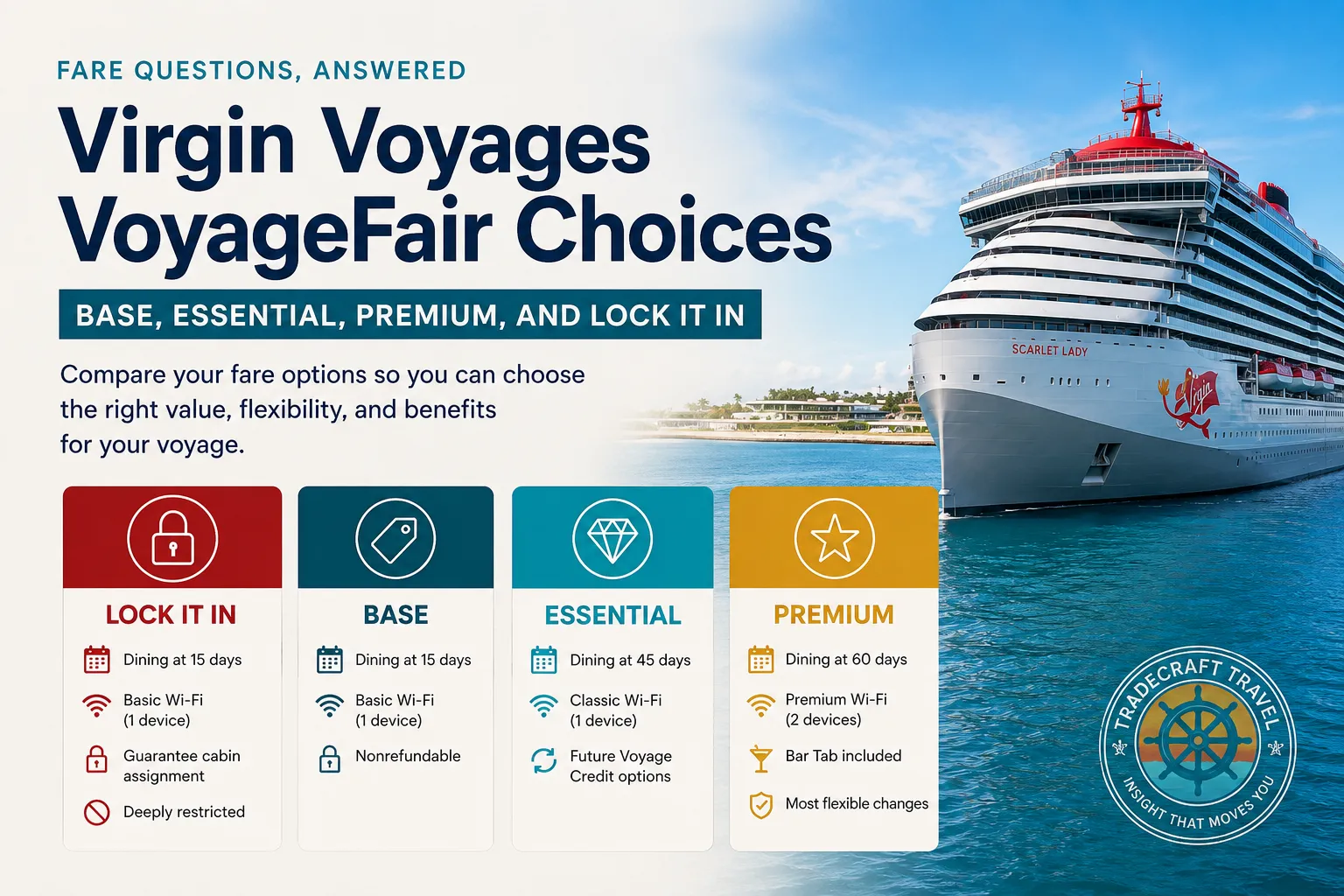
Cruise fares vary widely. Depending on the cruise line and fare type, you may still need to account for taxes and port fees, gratuities or service charges, alcoholic drinks, specialty dining, Wi-Fi, shore excursions, spa treatments, travel insurance, airfare, pre-cruise hotels, airport transfers, and onboard purchases.
Some cruise lines include more. Some advertise a low entry fare and make up the difference onboard. Some promotions look attractive until you compare the full cost.
That does not mean the promotion is bad. It means you need to compare the complete trip, not just the headline fare.
Cruise Value Is Not Just About Price
A cruise is not always the cheapest vacation. It can be, but that is not the main point.
The real value is often convenience.
You unpack once. Your room travels with you. You wake up in a new place without changing hotels. You do not have to coordinate trains, rental cars, ferry schedules, daily restaurant reservations, luggage movement, or repeated check-ins and checkouts.
That convenience can matter in the Caribbean, where a cruise lets you sample multiple islands without arranging separate flights or ferries. It can matter in Alaska, where the ship becomes part of the scenery. It can matter in the Mediterranean, where a cruise can connect several coastal destinations without the friction of constant overland travel.
For travelers who want to see multiple places with less logistical strain, cruising can be a very efficient way to travel.
The First-Time Cruiser’s Biggest Decision: Ship, Line, or Itinerary?
Most new cruisers start with the wrong question.
They ask, “Which cruise line is best?”
There is no universal answer.
The better question is, “Which ship and itinerary fit this traveler, this budget, and this trip?”
A cruise line may have some ships that are a strong fit for you and others that are not. The same line can feel very different depending on the ship, departure port, sailing length, itinerary, season, and passenger mix.
Before booking, think through a few practical questions:
Do you want the ship to be the destination, or do you care more about the ports?
Do you want sea days, or do you prefer a port-intensive itinerary?
Are you looking for quiet, nightlife, family activities, food, luxury, entertainment, enrichment, active excursions, or easy relaxation?
Would you be comfortable in an inside cabin, or would a balcony make the trip meaningfully better?
Are you prone to motion sickness?
Do you want a short first sailing to test the waters, or would you rather choose the itinerary you actually want and commit to a full week?
These questions are not minor. They shape the entire experience.
Do You Need a Passport for a Cruise?
Sometimes travelers are told they can cruise with a birth certificate and government-issued ID on certain closed-loop sailings from the United States. In some cases, that may be legally allowed.
But allowed and wise are not always the same thing.
For most international cruises, I strongly prefer travelers have a valid passport book. The U.S. State Department also strongly recommends that cruise passengers travel with a passport book, even when it is not required, in case they need to fly home because of an emergency.
That matters. If you have to fly home unexpectedly from a foreign country because of a medical issue, family emergency, missed ship, or itinerary disruption, a passport card or birth certificate may not be enough.
This is one of those areas where first-time cruisers can get overly focused on minimum requirements. Minimum requirements are not the same as best practice.
Think About Travel Insurance Early
Travel insurance is often treated as an afterthought. For cruising, that is usually a mistake.
Cruises involve deposits, final payment deadlines, cancellation penalties, flights, hotels, international ports, medical considerations, and sometimes expensive shore excursions. The more pieces involved, the more important it becomes to understand your protection options before the trip becomes largely non-refundable.
Insurance is not about expecting something to go wrong. It is about protecting the decisions you have already made if circumstances change.
I wrote more about this in Travel Insurance, Chosen Intentionally: Understanding Allianz Plans and When Each Makes Sense.
Who Cruising Works Well For
Cruising can be especially useful for first-time international travelers who want structure without constant hand-holding. It can work well for solo travelers who want optional social interaction, couples who want an easy escape, families who need different activities for different ages, retirees who value comfort, and travelers who want to sample several destinations before returning later for a deeper land trip.
It can also work well for group travel. A cruise gives people a shared base, predictable meals, entertainment, and the ability to spend time together without requiring everyone to do the same thing all day.
For solo travelers in particular, cruising can be stronger than many people expect. Some cruise lines offer solo cabins, reduced single supplements, social spaces, hosted meetups, or an onboard rhythm that makes it easy to be independent without feeling isolated. I explored that more fully in Solo Travel Is Not a Consolation Prize.
But cruising is not perfect for everyone.
If you dislike any form of shared environment, want total control over every hour ashore, need to spend several days deeply embedded in one destination, or prefer small boutique hotels and independent overland exploration, a cruise may not be the right fit — or at least not the right fit for that particular trip.
That is fine. The goal is not to sell everyone on cruising. The goal is to choose intelligently.
Why Many First-Time Cruisers Become Regulars
Many first-time cruisers discover that their resistance was based on an old version of cruising or on a poor match they heard about from someone else.
A badly matched cruise can disappoint. A well-matched cruise can be surprisingly easy.
The right sailing can give you good food, comfortable lodging, multiple destinations, flexible days, entertainment, quiet corners, and a sense of momentum without the daily friction of moving from hotel to hotel.
For many travelers, that combination is hard to beat.
Before You Book Your First Cruise
Before putting down a deposit, make sure you understand the cruise line, ship, cabin category, fare type, itinerary, port schedule, cancellation terms, insurance timing, and what is actually included.
Also compare the cruise to the full cost of a land trip, not just the hotel rate. Once you add transportation, meals, entertainment, tours, resort fees, and time spent managing logistics, the cruise may look different.
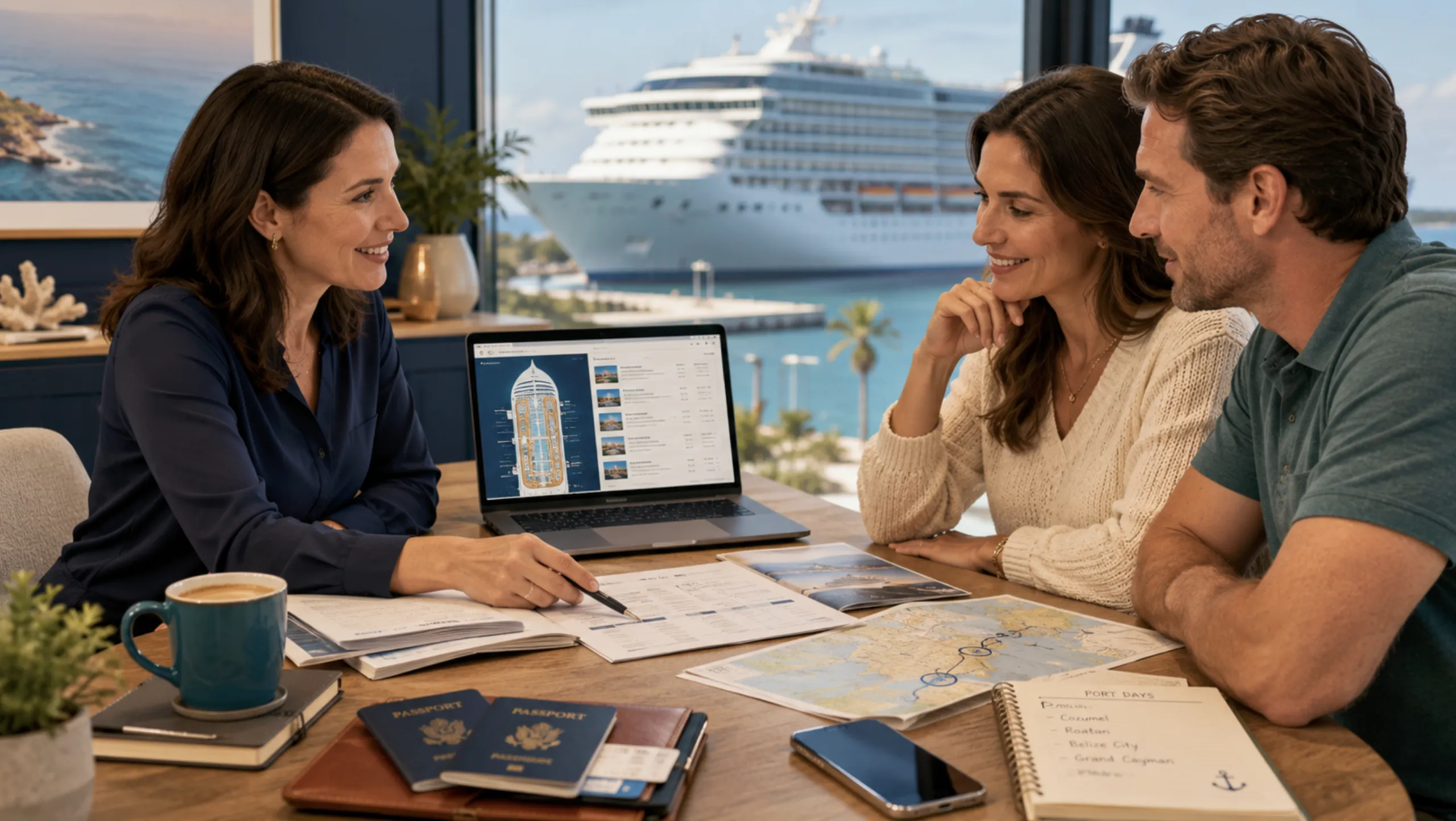
This is where a travel advisor can help.
A good advisor is not just there to book a cabin. The value is in helping you compare the tradeoffs before money changes hands: ship fit, cabin location, fare rules, promotions, insurance, flights, pre-cruise hotels, transfers, and whether a different sailing would better match the trip you actually want.
That is also why booking direct is not always the same as booking smart. I wrote more about the distinction in Booking Direct vs. Working With a Travel Advisor: The Difference Is Judgment.
Cruising is not about giving something up.
For many first-time cruisers, it is about gaining ease, value, confidence, and a better way to see more of the world with less friction.
If you are considering your first cruise and want help sorting through the noise, start with my cruise planning page or reach out through Tradecraft Travel.
Considering Virgin Voyages? Browse sailings and book directly with Virgin Voyages through Jack’s advisor link. Opens in a new tab.