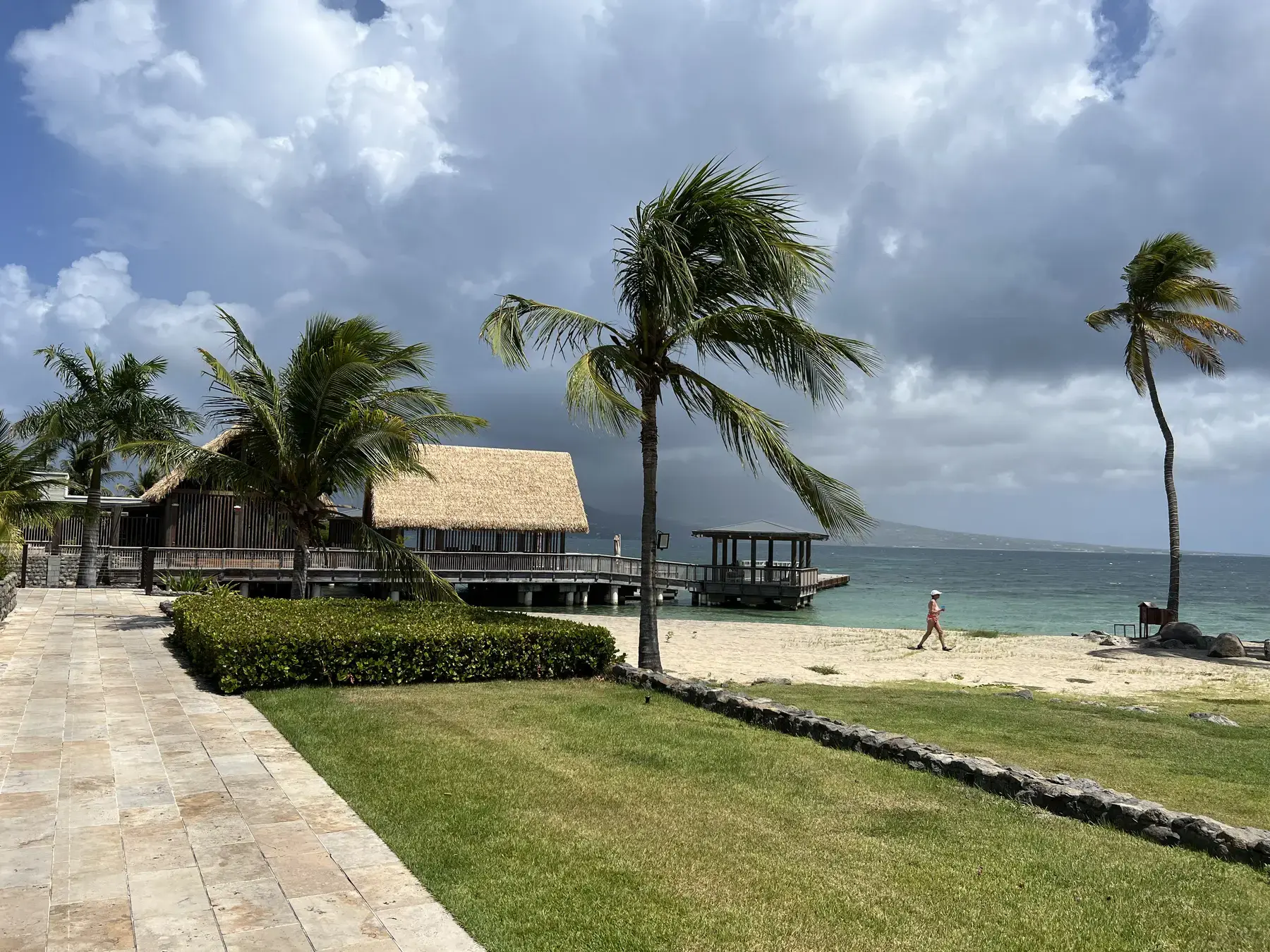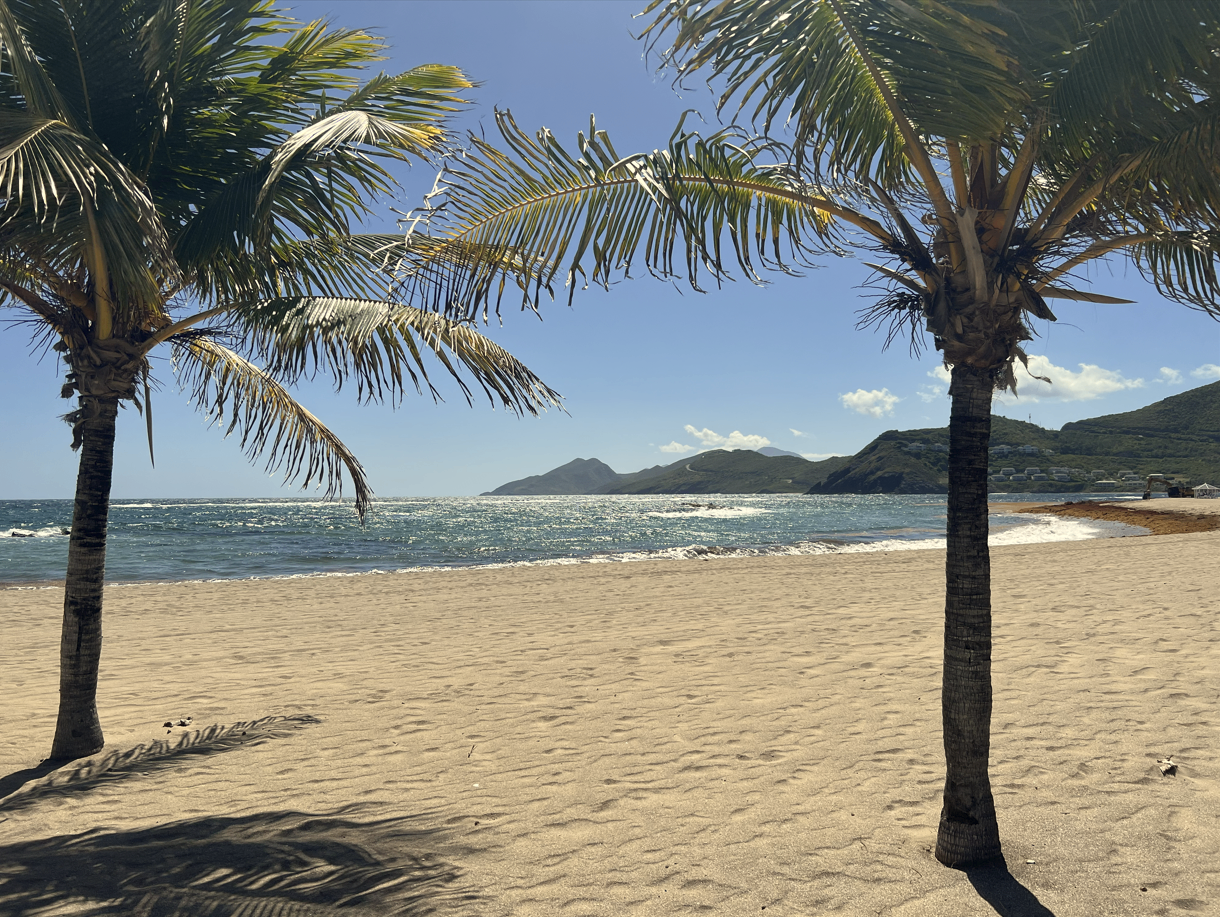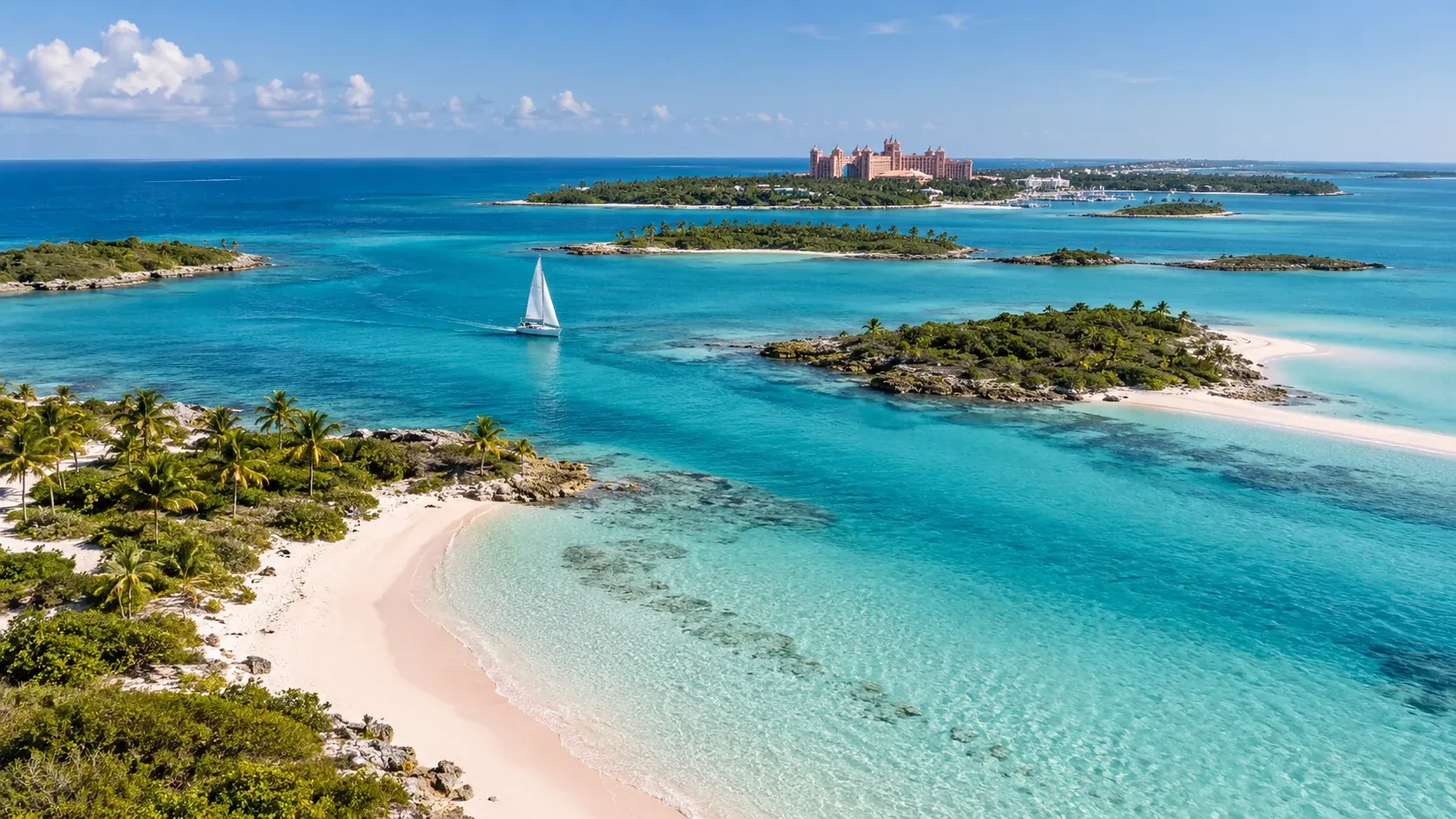

St. Kitts is familiar to Caribbean cruisers. Spend several days there, though, and a different destination emerges—one that works remarkably well when you combine the island itself, a genuinely good beach, and a day on the water.
Affiliate disclosure: This article contains Viator affiliate links. Tradecraft Travel may earn a commission if you book through them, at no additional cost to you.
I went to St. Kitts for the ASTA Caribbean Showcase expecting to deepen my knowledge of a destination I already knew reasonably well.
I came home more enthusiastic about it than I expected.
Not because St. Kitts has suddenly acquired some must-see attraction. And not because I discovered a resort that everyone should immediately book.
The case for St. Kitts is more interesting than that.
This is an island where a relatively compact geography can produce several distinctly different Caribbean experiences. You can spend one day understanding the island, another doing very little on a good Caribbean beach, and another sailing and snorkeling your way to Nevis.
None of those days feels much like the others.
That versatility is what moved St. Kitts considerably higher on my Caribbean list.
It also makes St. Kitts a useful point of comparison within Tradecraft Travel’s broader Caribbean travel guide, where the question is not which island is “best,” but which one best matches the traveler.
The Problem With Seeing St. Kitts Only From a Cruise Ship
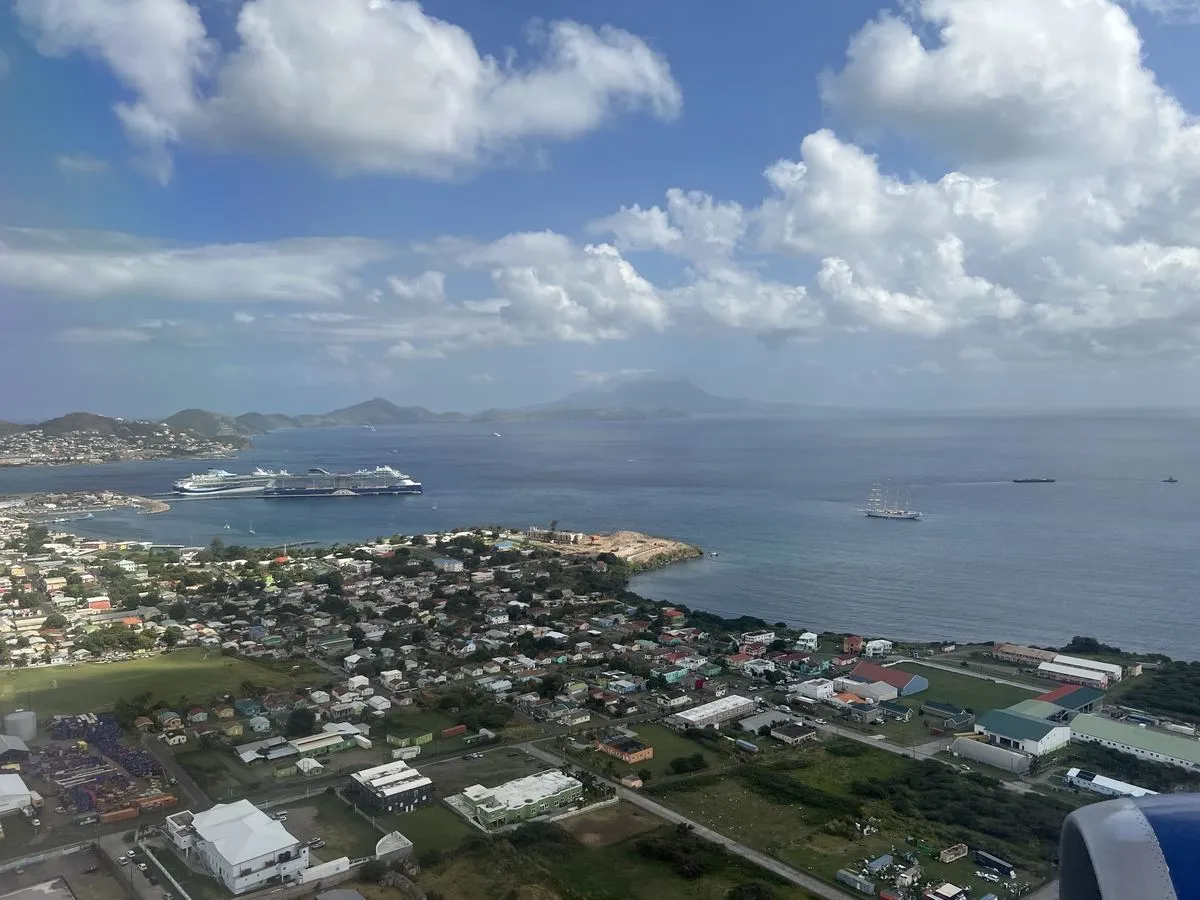
A lot of Americans first encounter St. Kitts at Port Zante in Basseterre.
That is not a bad introduction. St. Kitts is a good cruise port.
But cruise ports have a way of distorting destinations.
You arrive with perhaps six or eight useful hours. You choose an excursion. You see several highlights. You return to the ship. By dinner, you are sailing toward another island.
The question becomes: What should I do during my day in St. Kitts?
Spend several days there and the question changes:
What kind of Caribbean vacation can I build here?
I think that is where St. Kitts becomes much more compelling. It does not require you to choose between doing things and doing nothing. You can do both.
In fact, I think you should.
If you are evaluating the island as part of a sailing, my cruise-planning approach looks at the complete fit: ship, itinerary, port time, shore experience, cabin, fare and the trip around the cruise.
First, Understand the Island
If you are new to St. Kitts, I would not begin with a beach chair.
I would begin by seeing the island.
One excursion I particularly recommend is St. Kitts See It All: The Local Behind the Scenes Tour.
The name is a little unwieldy. The concept is not.
Rather than simply driving visitors between standard photo stops, the tour uses local guides and a fast-moving circuit of St. Kitts to provide context for what you are seeing. The itinerary mixes Basseterre, historic and cultural stops, the old sugar landscape, Black Rocks, Timothy Hill and beach time. It runs roughly four to five hours, so the tradeoff is obvious: you cover considerable ground, but you are not going to linger everywhere.
That is precisely why I like it as an introduction.
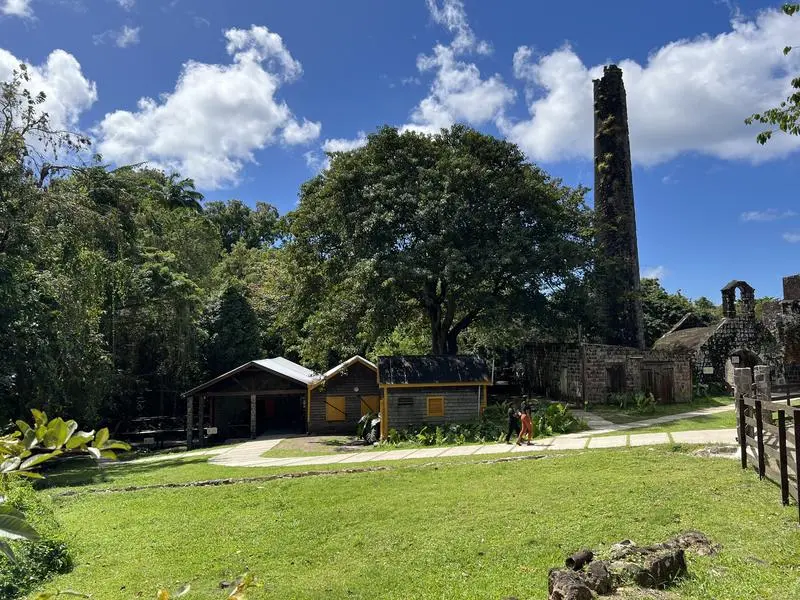
St. Kitts makes considerably more sense once you have driven around it.
You begin to understand the relationship between Basseterre and Frigate Bay, the narrow Southeast Peninsula, the Caribbean and Atlantic sides of the island, and the greener, more mountainous landscape to the north.
You also begin to see the history beneath the resort destination.
Sugar shaped this island. So did slavery, colonial competition and the enormous strategic and economic value European powers once attached to relatively small pieces of Caribbean territory. My earlier St. Kitts briefing examines the island’s transition from sugar to tourism and citizenship-by-investment in greater depth.
Brimstone Hill Fortress is the most imposing physical expression of that history, but traces of the sugar economy remain across the landscape.
You do not need to turn a Caribbean vacation into a history seminar.
But knowing what you are looking at makes the island more interesting.
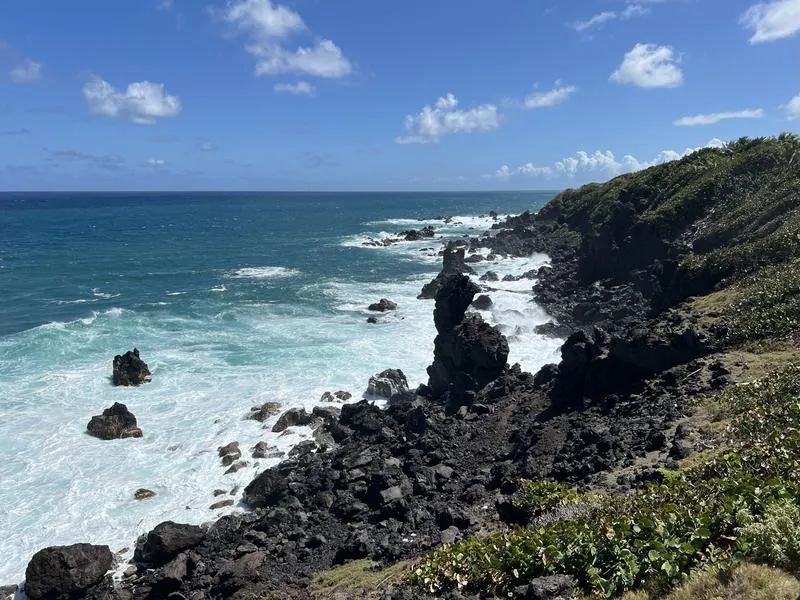
That is why I would rather have a first-time visitor spend part of a day getting oriented than simply travel from the airport to a resort and back again a week later.
Then Do Almost Nothing at South Friars Bay
My second recommendation is considerably less ambitious.
Go to the beach.
More specifically, go to South Friars Bay.
There are more famous Caribbean beaches. There are certainly more manicured ones.
I would not change a thing about that.
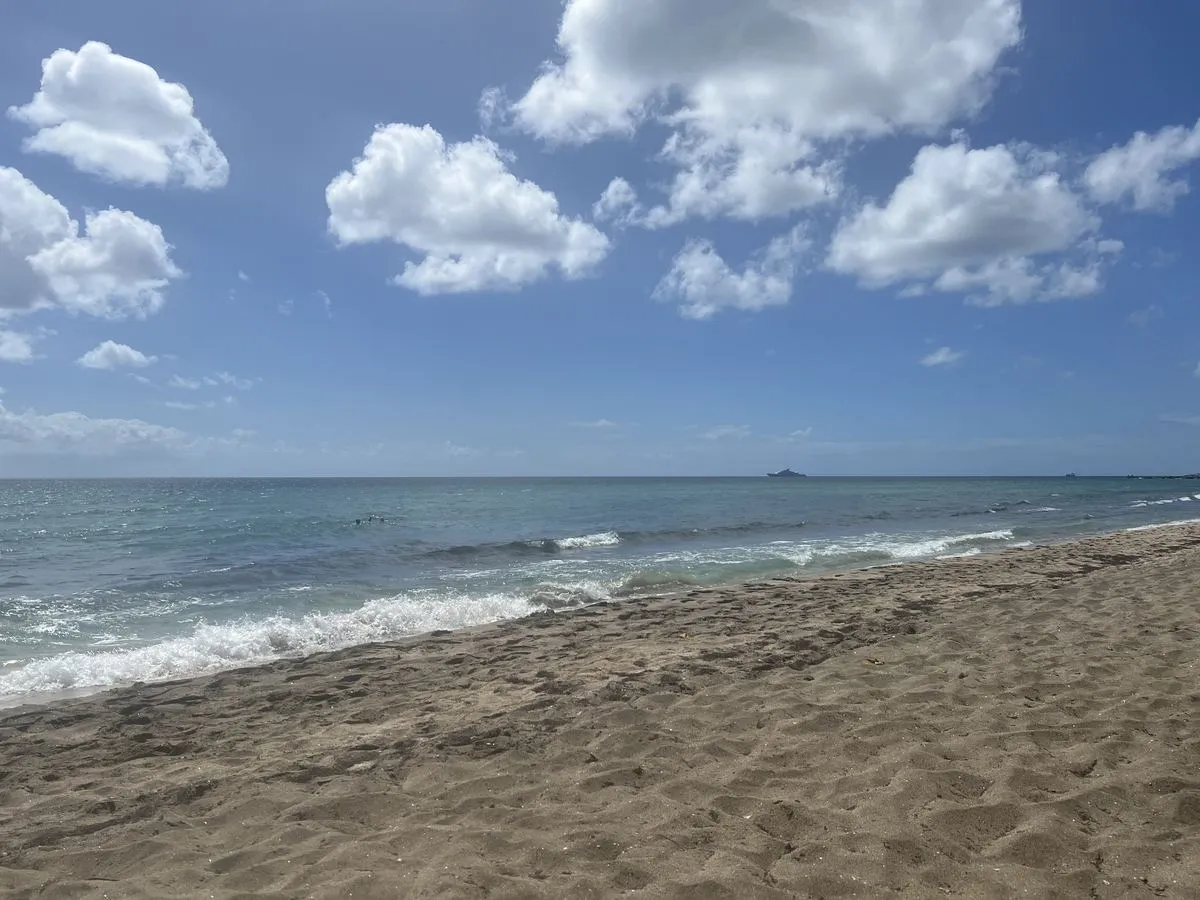
South Friars sits on the Caribbean side of the Southeast Peninsula, just beyond Timothy Hill. Its relatively sheltered position generally means calmer water than you will encounter on the Atlantic side, and snorkeling can be worthwhile close to shore.
But specifications are not really the reason I like it.
South Friars feels like a Caribbean beach rather than a resort’s interpretation of one.
There are places to eat and drink. There are chairs and amenities. But you can still settle into the sand, get into the water, have something cold at a beach bar and allow the afternoon to become pleasantly unproductive.
That matters.
Travel planning sometimes suffers from the assumption that every good day needs an itinerary.
It does not.
South Friars is exactly the sort of place where I would deliberately leave several hours blank.
Swim.
Snorkel.
Eat something.
Have a drink.
Look across the water.
Repeat as necessary.
One important update: Shipwreck Beach Bar & Grill has been torn down, so older recommendations and maps may be out of date.
For a more fully serviced day, I recommend Carambola Beach Club. It remains open on South Friars Bay and offers beach-chair rentals, food and drinks, restrooms and showers. I also found the staff genuinely friendly.
The tradeoff is atmosphere. Carambola is a polished beach-club experience rather than the deliberately informal, slightly weather-beaten version of South Friars that Shipwreck once represented. For many travelers—especially those who value comfort and dependable facilities—that will be the better fit.
If you prefer a livelier beach, head to Frigate Bay. My preferred stop there is Monkey Bar, which has a more social, energetic atmosphere than South Friars.
Another good option is to take a taxi to Reggae Beach Bar & Grill at Cockleshell Bay. It takes a little more effort to reach, but the calm water, beach services and view toward Nevis make it a strong choice for a longer beach day.
So the beach decision is partly about mood: Carambola for comfort and service, Monkey Bar for livelier social energy, or Reggae Beach for a destination beach day worth the taxi ride.
The Best Day May Be the One You Spend Leaving St. Kitts
That sounds like an odd argument in an article making the case for St. Kitts.
It is not.
One of St. Kitts’ greatest assets is Nevis.
And one of the best ways to understand the relationship between the two islands is from the water.
If I were choosing one full-day excursion for someone who enjoys being on a boat, I would give serious consideration to a full-day catamaran sail to Nevis, particularly with Blue Water Safaris.
The basic rhythm is exactly what a Caribbean excursion should be.
Leave St. Kitts by catamaran.
Sail down the coast.
Stop to snorkel in a secluded cove—commonly Shitten Bay.
Have lunch aboard.
Then continue across to Nevis and spend time at Pinney’s Beach before sailing back to St. Kitts.
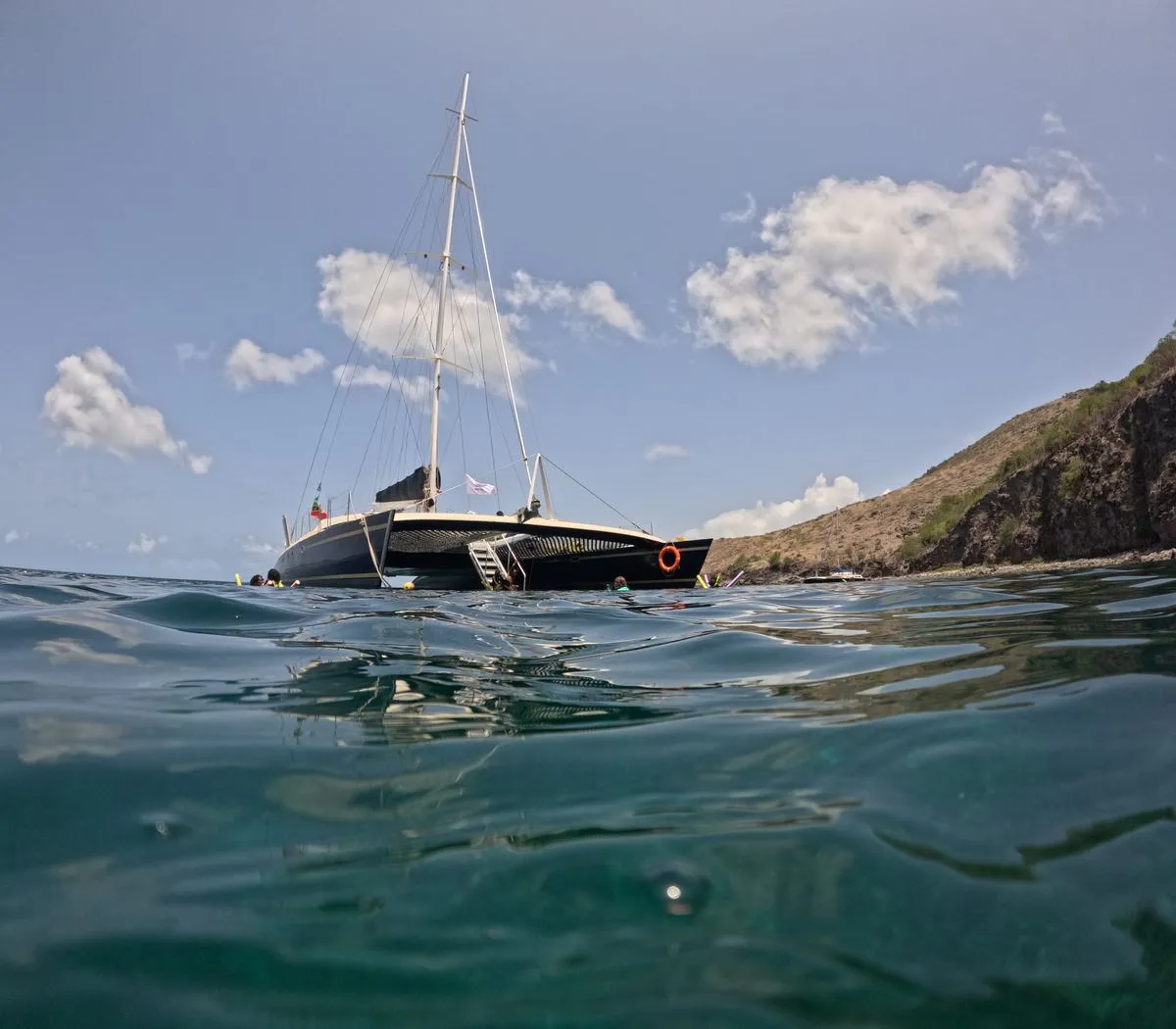
It is a very good day.
But there is another reason I recommend it.
From the water, the geography finally clicks.
St. Kitts stops being a collection of roads, resorts and viewpoints. You see the peninsula from offshore. Nevis rises across the channel. The two islands begin to make sense as a pair.
And then you arrive at Pinney’s Beach and the tempo changes again.
Nevis Is Not Just More St. Kitts
This was one of the most useful things reinforced by the trip.
St. Kitts and Nevis belong together.
They should not be mistaken for the same experience.
Nevis feels quieter.
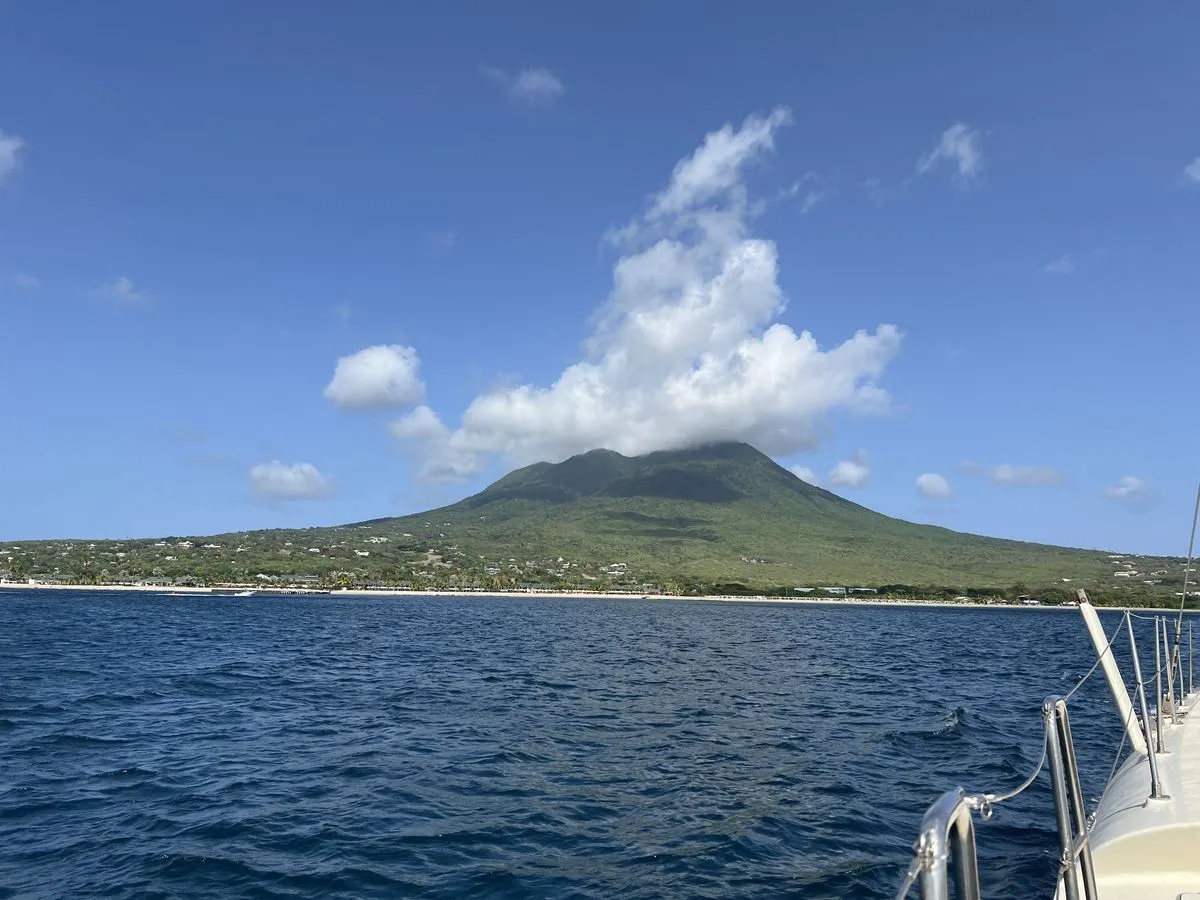
That difference opens up several ways to design a vacation.
For someone staying on St. Kitts, a catamaran day gives you a taste of Nevis without requiring another hotel.
For someone with more time, I would consider whether a split stay makes sense: several days exploring and relaxing on St. Kitts followed by a quieter finish on Nevis.
And for some travelers, the experience of Nevis may lead to a simple conclusion:
Next time, stay there.
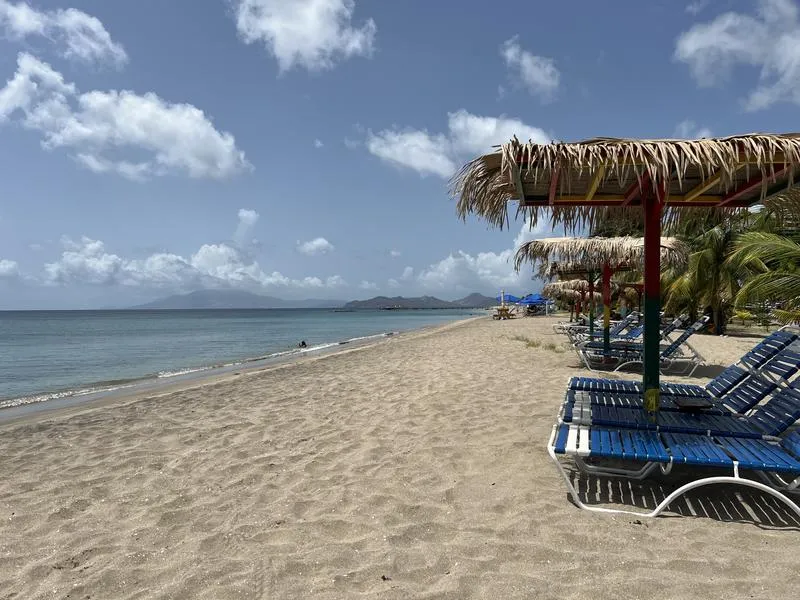
That is one of the reasons I like the catamaran excursion so much. It is not merely recreation. It gives you another perspective on the destination.
Three Days Explain the Case for St. Kitts
If I wanted to demonstrate St. Kitts to someone who had never been there, I could make the case in three days.
Day one: see the island.
Get out with people who know it. Drive beyond the resort areas. Understand Basseterre, the coastline, the old sugar landscape, the volcanic geography and the relationship between the Caribbean and Atlantic sides.
Day two: stop trying so hard.
Go to South Friars Bay. Swim. Snorkel if conditions cooperate. Find a beach bar. Eat lunch. Do not schedule the afternoon.
Day three: get on the water.
Sail toward Nevis. Snorkel at Shitten Bay. Have lunch aboard. Spend some time on Pinney’s Beach. Watch the islands from the catamaran on the way home.
Now you have had three entirely different days without changing your hotel.
Add resort time around them and you begin to have a very good Caribbean vacation.
And That Raises the Hotel Question
Where you stay matters enormously on St. Kitts.
I inspected several properties during this trip, and they reinforced how misleading it can be to ask simply for the “best hotel.”
There is not one.
There are hotels that are better for particular travelers.
The St. Kitts Marriott Resort offers a very different experience from the Park Hyatt St. Kitts. Cross the water and the Four Seasons Resort Nevis changes the equation again.
I will be writing separately about all three because the differences are useful.
The important point is that hotel selection should follow the trip design—not the other way around.
Do you want to leave the property frequently?
How much isolation sounds appealing?
What do you want to do at night?
How important is the beach?
Are you comfortable relying on taxis?
Would you rather stay in one place or divide the vacation between St. Kitts and Nevis?
Those questions tell me much more than whether someone says they want a “nice resort.”
Who Should Consider St. Kitts?
I would now put St. Kitts fairly high on the shortlist for travelers who want a Caribbean vacation with variety but not intensity.
There is enough to explore without feeling that you need to sightsee every day.
There is enough history to give the destination depth without requiring a history-focused trip.
There are good beaches where you can happily accomplish nothing.
There are resort choices offering quite different experiences.
And Nevis gives you another island without another flight.
I would look elsewhere for someone seeking enormous nightlife, extensive shopping, or a vacation built entirely around a vast all-inclusive resort complex.
That is not a criticism.
It is a matter of fit.
Tradecraft Travel’s custom travel planning is built around exactly that distinction: comparing the options, understanding the tradeoffs and matching the trip to the traveler rather than declaring one destination universally “best.”
Why I Came Home More Enthusiastic About St. Kitts
The ASTA Caribbean Showcase was useful because I met tourism organizations, hoteliers, tour operators and other people who work across the region.
But conferences do not make destinations compelling.
Being there does.
St. Kitts won me over in the spaces between the formal appointments.
Driving around the island.
Standing at South Friars Bay.
Seeing Nevis across the water.
Getting on a boat.
Comparing very different hotels.
Watching how quickly the landscape changes as you move from one side of a relatively small island to another.
Before going, I thought of St. Kitts primarily as a good Caribbean cruise port with several resort options.
I came home thinking that undersells it.
The better case for St. Kitts is a week in which you do not do the same kind of thing every day.
See the island.
Spend a day on the beach.
Sail to Nevis.
Stay somewhere that fits the way you actually travel.
And leave enough empty space in the itinerary to remember that you are in the Caribbean.
Sometimes good travel planning is about finding more things to do.
St. Kitts reminded me that it can also be about knowing when you have planned enough.
Planning St. Kitts, Nevis, or a Caribbean Cruise?
I help travelers compare Caribbean islands, resorts, cruises and experiences based on fit rather than simply choosing whatever appears first in a search.
If St. Kitts or Nevis is on your shortlist, we can look at the complete trip: which island fits you, where to stay, whether to combine the two, and which experiences are actually worth reserving.
Still deciding whether St. Kitts is the right fit? Use the Find Your Ideal Island tool to compare Caribbean destinations by the kind of experience you want.
Start with the trip you want to have. Then choose the island, hotel and itinerary that make it work.