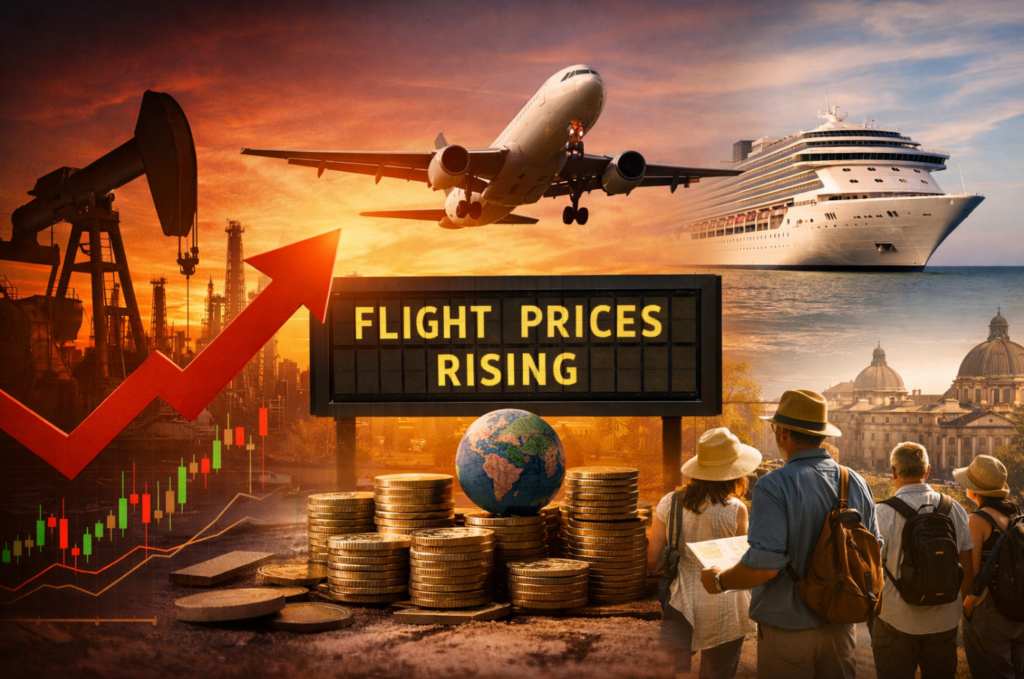
When oil prices spike, travel follows. Not always immediately, and not always evenly—but predictably enough that experienced travelers (and advisors) start paying attention early.
With conflict in the Middle East disrupting flows through the Strait of Hormuz, we’re entering a familiar pattern. Roughly 20% of the world’s oil supply normally passes through that corridor. When it’s constrained, energy markets react fast—and travel pricing tends to lag just behind.
The question isn’t whether this will affect travel. It’s how, when, and where.
There are three useful case studies: the 1970s oil shocks, the Gulf War in 1990–91, and more recent price spikes in 2008 and 2022.
Across all of them, a few patterns repeat:
- Airfare rises first, often within weeks
- Cruise pricing reacts more slowly, but adds surcharges or trims inclusions
- Tour operators adjust quietly, usually by raising future departures rather than current ones
- Demand softens at the margins, but doesn’t collapse unless the conflict expands dramatically
In short: travel doesn’t stop—but it gets more expensive, and less forgiving.
Air Travel: The First Domino
Airlines are the most exposed to fuel costs. Jet fuel is typically one of their largest operating expenses, and they hedge only part of it.
When oil spikes:
- Airlines raise fares, especially on long-haul routes
- They may cut marginal routes or frequencies
- “Cheap” inventory disappears quickly
The key point is timing. Airlines don’t always increase prices overnight—but once they do, they rarely come back down quickly.
For a traveler, that means hesitation has a cost. The longer you wait, the more likely you are to be buying into a higher fare environment.
Cruises: Slower Reaction, Different Levers
Cruise lines are more insulated in the short term. They hedge fuel more aggressively and price voyages further in advance.
But they have other tools:
- Fuel surcharges can be added (sometimes with notice provisions)
- New sailings are priced higher
- Promotions become less generous
You won’t always see a headline price jump—but the overall value quietly erodes.
If oil stays elevated, future itineraries—especially longer or repositioning cruises—will reflect it.
Guided Tours & Land Travel: The Quiet Adjustment
Tour operators don’t react as visibly, but they’re affected across the board:
- Transportation costs (coaches, internal flights) increase
- Hotels adjust pricing as their own energy costs rise
- Currency movements often follow energy shocks
The result is subtle but real: next year’s tour costs more than this year’s, even if the itinerary is identical.
The Lag Effect: Why Timing Matters
One of the most consistent lessons from past oil shocks is the lag between the event and full pricing impact.
- Week 1–4: markets react, headlines spike
- Month 2–3: airfare begins rising noticeably
- Month 3–6: cruise and tour pricing adjusts
- Beyond that: the new pricing baseline sets in
That creates a window—brief, but real—where current pricing doesn’t yet reflect future costs.
So Should You Book Now?
If you’re asking the question, you’re already close to the answer.
This isn’t about panic booking. It’s about understanding risk.
- If oil stabilizes, you’ve locked in current pricing
- If oil rises further, you’ve avoided the increase
- If conditions deteriorate significantly, most trips remain adjustable or insurable
The downside of booking now is limited. The downside of waiting is asymmetric.
What American Travelers Should Take Away
A few practical points:
- Airfare is the most vulnerable—prioritize locking flights first
- Cruises and tours will follow, but more gradually
- Expect fewer deals, not just higher prices
- Flexibility matters more than ever—know your cancellation terms
- Travel insurance becomes more relevant in uncertain environments
There’s a tendency to think of travel pricing as seasonal—summer vs. shoulder season, peak vs. off-peak.
But macro shocks like energy disruptions operate on a different level. They reset the baseline.
The Bottom Line
Travel is one of the most energy-dependent industries in the world. When oil moves, it moves with it.
Right now, we’re early in that cycle.
The lesson isn’t that travel is about to become unaffordable. It’s that the current pricing environment may not last—and historically, once it shifts, it doesn’t reverse quickly.
For travelers planning meaningful trips over the next 12–24 months, the smart move isn’t to rush.
It’s to act deliberately—before the market catches up.